Three days after your extraction, the pain that was fading suddenly got much worse. That’s the timeline for dry socket — and recognizing it quickly matters. The condition is painful but very treatable, and the sooner you call your dentist, the sooner you’re comfortable again.
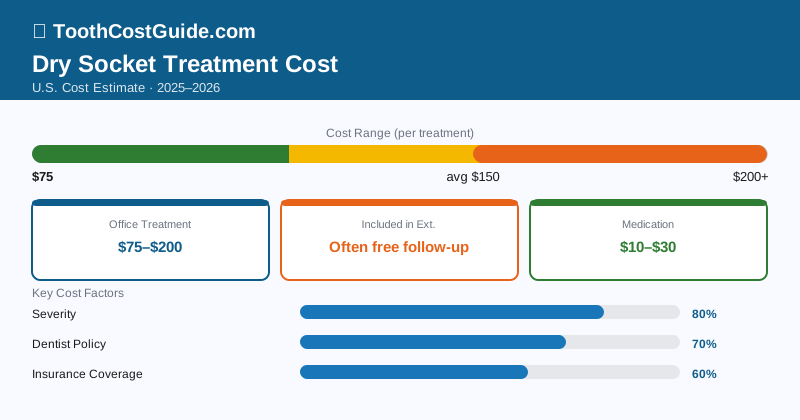
Dry socket treatment costs $75–$300 per dental visit. Most patients need 1–3 visits for dressing changes. And here’s something worth knowing before you even get there: many dentists include the first dry socket follow-up at no charge as part of their post-extraction care. Ask when you call.
How Common Is Dry Socket?
More common than most patients expect — but only in certain situations. A 2020 systematic review published in the Journal of the American Dental Association (JADA) found dry socket occurs in 2–5% of routine tooth extractions and in 20–30% of mandibular (lower jaw) wisdom tooth removals. That’s a meaningful risk for anyone having their lower wisdom teeth out, and it’s worth knowing the signs before you get home.
What Goes Wrong
After a tooth is pulled, a blood clot forms in the empty socket. That clot is everything — it protects the underlying bone and soft tissue while new cells migrate in and healing begins. Dry socket (alveolar osteitis) occurs when the clot fails to form, gets dislodged, or dissolves before healing is complete. The result is exposed bone. That’s the source of the pain.
Risk factors that matter:
- Smoking — nicotine restricts blood supply; suction from inhaling pulls clots loose. Smokers develop dry socket at roughly twice the rate of nonsmokers.
- Oral contraceptives — elevated estrogen accelerates fibrinolysis, breaking down clots faster.
- Lower jaw extractions — the dense bone and reduced blood supply in the mandible mean slower clot formation and more fragile healing.
- Difficult or traumatic extractions — longer procedure time correlates with higher dry socket risk per the JADA review.
Normal extraction pain: peaks at day 1–2, dull to moderate ache, manageable with ibuprofen, gradually improves.
Dry socket: starts or intensifies at day 3–5, throbbing and severe, may radiate toward the ear or temple, often accompanied by a bad taste or odor, and the socket may look empty or grayish rather than filled with dark clot tissue. If that describes what you’re experiencing, call your dentist today — not tomorrow.
What Treatment Costs
| Service | Estimated Cost | Notes |
|---|---|---|
| First follow-up visit (post-extraction) | $0–$75 | Often included in extraction fee |
| Dry socket evaluation + first dressing | $75–$150 | Includes irrigation and medicated packing |
| Repeat dressing change | $50–$100 per visit | Most cases need 1–3 changes |
| Prescription pain medication | $10–$40 | Usually ibuprofen 800 mg or short course |
| OTC clove oil / eugenol paste | $8–$15 | Temporary relief only |
| Total (typical 1–2 visit case) | $75–$300 |
What the Dentist Does
The treatment is effective and almost immediately relieving. Your dentist irrigates the socket with saline to remove debris, then places a medicated dressing — typically Alvogyl or a similar paste combining eugenol (clove oil’s active compound), iodoform, and a topical anesthetic. Pain relief usually kicks in within 30–60 minutes of placement. Most patients describe the relief as dramatic.
The dressing is changed every 1–3 days until the socket begins to granulate — typically 3–10 days total. Some dentists send you home with an irrigation syringe to flush the socket with saline between visits, which helps keep debris out.
OTC eugenol products (clove oil, Red Cross Toothache Kit) can provide temporary relief if you can’t reach your dentist immediately. They’re genuine stopgaps. They don’t heal the socket, and you still need the professional dressing.
Do NOT Skip the Dentist
Dry socket is not something OTC remedies fix. The socket won’t close on its own without that medicated dressing initiating the healing cascade. And while dry socket isn’t dangerous in itself, leaving it untreated for days means unnecessary suffering that’s completely avoidable.
Do not attempt to treat dry socket at home by placing anything in the socket yourself. Disturbing the socket area — even to rinse aggressively — can worsen the condition. OTC pain relief is acceptable while waiting for your appointment, but the professional irrigation and medicated dressing are what actually heal the socket. Also: dry socket does not require the ER. Emergency rooms can’t pack sockets with medicated gauze — they’ll prescribe pain medication and refer you back to a dentist, and you’ll have paid an ER copay for nothing.
Insurance and Costs
Most dental plans cover post-extraction follow-up at 100%. Dry socket packing is typically billed under ADA code D9930 (treatment of complications, post-surgical) or bundled into the global post-operative care for the extraction. Call your office the moment symptoms start — don’t wait to see if it gets better on its own.
If you’re uninsured, negotiate directly. You’re an established patient, this is a complication of their procedure, and many dentists will significantly reduce or waive the fee when you explain your situation.
Prevention for Next Time
If another extraction is in your future: stop smoking at least 72 hours before the procedure and 48–72 hours after — ideally longer. Skip straws for the first week entirely. Avoid vigorous rinsing for the first 24 hours. These steps reduce dry socket risk substantially. The ADA’s post-extraction care guidelines also recommend sticking to soft foods, keeping your head elevated, and following up if pain increases after day two instead of decreasing.
The condition resolves with proper treatment. Most cases are fully healed within 7–10 days of starting dressing changes.
Frequently Asked Questions
Expect to pay $75–$300 per dental visit for irrigation and medicated dressing. Most cases require 1–3 visits. Many dentists include the first follow-up visit at no charge after an extraction.
OTC clove oil provides temporary relief, but it doesn't heal dry socket. You need professional irrigation and a medicated dressing from a dentist — home treatment alone isn't sufficient.
Normal extraction pain peaks at day 1–2 and gradually fades. Dry socket pain typically starts or worsens at day 3–5, throbs intensely, may radiate toward the ear, and often comes with a bad taste or odor from the socket.