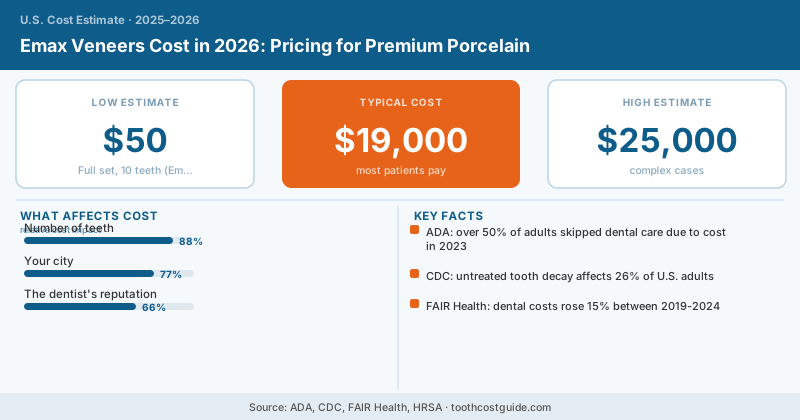
Emax veneers run $1,300 to $2,500 per tooth. That’s the headline, and it puts them at the upper end of the porcelain veneer market. Emax isn’t a brand of dentist — it’s a specific material called lithium disilicate, made by Ivoclar Vivadent. The name shows up constantly in cosmetic dentistry because it’s strong, translucent, and looks remarkably like real enamel. But does the premium price buy you something a standard porcelain veneer can’t? Let’s find out.
| Emax Veneer Detail | Typical Cost |
|---|---|
| Emax veneer (per tooth) | $1,300–$2,500 |
| Standard feldspathic porcelain (per tooth) | $900–$2,000 |
| Full set, 8 upper teeth (Emax) | $10,400–$20,000 |
| Full set, 10 teeth (Emax) | $13,000–$25,000 |
| Temporary veneers (during fabrication) | $50–$150 per tooth |
| Replacement (single Emax veneer) | $1,300–$2,500 |
What Makes Emax Different
Most porcelain veneers are layered ceramic. Emax is pressed or milled from a single block of lithium disilicate glass-ceramic, which gives it two advantages. First, strength — Emax resists chipping and fracturing better than traditional feldspathic porcelain, so it holds up on people with heavier bites. Second, translucency — the material lets light pass through similar to natural enamel, which is why dentists reach for it on front teeth where realism matters most.
The trade-off is that Emax is slightly less translucent than the thinnest hand-layered porcelain, so for the most delicate front-tooth work some dentists still prefer feldspathic. For most patients, though, Emax is the sweet spot of strength and beauty.
Emax is the most common veneer material in the U.S. for a reason: it balances durability and natural appearance better than the alternatives. The premium over standard porcelain is real but modest — usually a few hundred dollars per tooth — and it buys meaningfully better fracture resistance.
How Long Do Emax Veneers Last?
With good care, Emax veneers commonly last 10 to 15 years, and many go longer. The AACD points to porcelain veneers as among the most durable cosmetic restorations available when properly bonded and maintained. Lithium disilicate’s strength is a big part of why Emax sits at the durable end of that range. Grinding, biting hard objects, and poor oral hygiene all shorten lifespan — none of those are the material’s fault.
Emax vs. Your Other Options
If you’re weighing Emax against the broader category, our full dental veneers guide covers every material. The short version:
- Composite/bonding is cheapest but stains and chips fastest. See dental bonding.
- Standard porcelain costs a bit less than Emax and looks great, with slightly lower strength.
- Emax is the premium middle — strong, beautiful, widely available.
- Zirconia is even stronger but less translucent, often used where bite force is extreme.
For purely cosmetic front teeth, Emax wins most comparisons. For a molar dental crown under heavy chewing load, zirconia might edge it out.
What Drives Your Quote Up
Number of teeth. Eight to ten veneers is a typical “smile zone” set, and that’s where costs hit five figures.
Your city. Major metros charge more than smaller markets — sometimes 30–50% more for identical work.
The dentist’s reputation. Cosmetic specialists with portfolios full of celebrity-grade smiles charge premium fees, and for irreversible front-tooth work, experience genuinely matters.
Saving Money
Get it right the first time. Emax permanently removes enamel. Consider a digital preview or trial smile before committing, especially for a full set.
Treat only what shows. You may not need 10 veneers if only 6 teeth show when you smile.
Finance large cases. A full Emax set is a major expense — CareCredit offers 0% promotional periods, and a dental savings plan can trim 10–20% at participating offices.
Don’t confuse Emax with a full makeover. If you also want whitening and gum work, price the whole smile makeover before adding pieces one at a time.
Ask whether your veneers will be milled in-office or sent to a dental lab. Lab-fabricated Emax veneers, hand-finished by a skilled ceramist, often look more natural on front teeth than same-day milled versions — and that craftsmanship is a big part of what you’re paying the premium for.
Veneers are irreversible — enamel removed for them never grows back, and the teeth will always need to be covered afterward. Before committing to a full Emax set, confirm you’re a good candidate (healthy gums, no untreated decay or active grinding), get a written treatment plan, and see real before-and-after photos from the dentist who’ll do your case.
Frequently Asked Questions
Emax veneers cost between $1,300 and $2,500 per tooth, placing them at the premium end of porcelain veneer pricing. Most patients pay $1,500–$2,000 per tooth for this lithium disilicate material, which is $400–$800 more than standard porcelain veneers.
Most dental insurance plans classify veneers as cosmetic and do not cover them, leaving patients responsible for the full $1,300–$2,500 per tooth cost. Some plans may offer partial coverage (20–50%) if veneers are placed for structural or medical reasons, but you should verify with your insurer before treatment.
Emax veneers typically last 10–15 years with proper care, longer than standard porcelain veneers due to their superior strength. The procedure itself takes 2–3 weeks total (including lab time), with no downtime after placement, though you should avoid very hard foods for the first 24 hours.