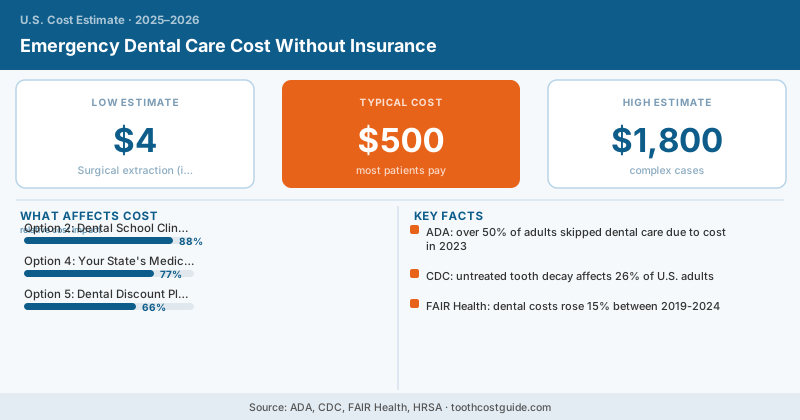
You’re up at 2 a.m. with a throbbing tooth, no dental insurance, and no idea what this is going to cost. Here’s the honest picture: a basic emergency exam and X-ray runs $100–$250 at most dental offices. If you need a tooth pulled that same day, add $150–$400. A root canal on an infected molar without insurance? That’s $900–$1,800 — sometimes more. Pain relief alone (antibiotics + prescription painkillers) can often be handled for under $100.
The good news is there are legitimate low-cost options that don’t require going to an ER — where dental problems are typically handled with pain medication and a referral anyway.
Typical Emergency Dental Costs Without Insurance
| Emergency Service | Cost Range (No Insurance) |
|---|---|
| Emergency exam + X-rays | $100–$250 |
| Temporary filling (lost filling) | $65–$175 |
| Dental abscess drainage | $150–$350 |
| Prescription antibiotics (amoxicillin) | $4–$30 (pharmacy) |
| Simple tooth extraction | $150–$400 |
| Surgical extraction (impacted) | $300–$700 |
| Emergency root canal (front tooth) | $700–$1,100 |
| Emergency root canal (molar) | $900–$1,800 |
| Broken tooth repair (bonding) | $100–$400 |
| Knocked-out tooth reimplantation | $500–$1,500 |
Your Real Options When You Don’t Have Insurance
Option 1: Community Health Centers (FQHCs)
Federally Qualified Health Centers operate on a sliding-scale fee model based on your income. According to the Health Resources and Services Administration (HRSA), over 1,400 health center organizations operate more than 14,000 service delivery sites across the U.S., many including dental care. You may pay as little as $20–$40 for a visit. Find one at findahealthcenter.hrsa.gov.
Option 2: Dental School Clinics
Accredited dental schools provide emergency care at 40–70% below private practice prices. Procedures are performed by supervised dental students or residents. For a throbbing molar, this can mean a $200–$400 root canal instead of $1,400. The trade-off is time — appointments are longer and often require multiple visits.
Option 3: Stand-Alone Urgent Care Dental Clinics
A growing number of urgent care dental clinics operate on a walk-in or same-day basis. They typically charge $150–$350 for an emergency visit. Look for “emergency dentist” or “urgent dental care” in your city — chains like Aspen Dental often have same-day slots for new patients with pain.
Option 4: Your State’s Medicaid Program
If your income qualifies, Medicaid covers emergency dental in most states — at minimum, extractions and pain relief. The CDC reports that approximately 36% of adults under 65 in the U.S. have some form of Medicaid, yet many don’t realize dental may be included. Check your state’s Medicaid portal to confirm coverage.
Option 5: Dental Discount Plans
These aren’t insurance — they’re membership programs. You pay $100–$200/year and get 20–40% off listed fees at participating dentists. For an emergency visit, that could mean $150 instead of $250 for the exam, plus meaningful discounts on whatever treatment follows. Aetna Vital Savings, Careington, and Cigna Dental Savings are widely available plans.
Technically yes — but practically, no. ERs can treat dental infections that have spread (cellulitis, Ludwig’s angina), prescribe antibiotics, and provide pain management. They cannot perform dental procedures. You’ll pay an ER facility fee of $300–$1,500 and leave without the underlying problem fixed. Going to the ER for a dental emergency makes sense only if you have facial swelling spreading toward your throat or eye, fever above 103°F, or difficulty breathing or swallowing.
Managing Pain While You Wait for Care
If you can’t get in immediately, here’s what actually helps:
- OTC ibuprofen (Advil/Motrin) is the most effective OTC option for dental pain — more so than acetaminophen. Take 400–600mg every 6 hours with food.
- Clove oil (eugenol) applied directly to the painful area with a cotton swab provides temporary numbing. Available at pharmacies for $5–$10.
- Temporary filling material (Dentemp, available at pharmacies for $6–$12) can seal a broken or lost filling temporarily and reduce sensitivity.
- Don’t ignore infection signs. If you have facial swelling, fever, or pus, antibiotics are needed. Some Telehealth services (Teladoc, MDLive) can prescribe antibiotics for confirmed dental infections without an in-person visit — typically $75–$150 for the consult.
Don’t put aspirin directly on the gum near a painful tooth — this is a common folk remedy that causes chemical burns to the soft tissue and makes things worse, not better.
Preventing the Next Emergency
The CDC estimates that emergency dental visits cost Americans $2.1 billion annually — most of it for problems that could have been prevented or caught early with regular cleanings. Even without insurance, preventive care is almost always cheaper than emergency care:
- A twice-yearly cleaning at a dental school or community health center costs $20–$80
- Catching a cavity early (small filling: $150) beats waiting until it abscesses (root canal: $1,400)
- A dental discount plan costing $150/year can cover most of your preventive needs at reduced cost
The most expensive dental care is always the emergency kind. Getting ahead of problems — even on a tight budget — is the smartest financial move you can make.
Frequently Asked Questions
A basic emergency exam and X-ray typically costs $100–$250 at most dental offices. If you need additional imaging or a more complex evaluation, costs may reach the higher end of that range or beyond.
Most dental insurance plans do cover emergency care, usually at 50–80% after you meet your deductible, leaving you with significant out-of-pocket costs. However, without insurance, you pay 100% of the bill upfront, which can range from $100–$2,500+ depending on the procedure needed.
You can seek care at urgent care dental clinics or dental schools, which typically charge 30–50% less than private practices, or ask your dentist about payment plans and financing options. Over-the-counter pain management with ibuprofen or clove oil can provide temporary relief while you arrange payment.