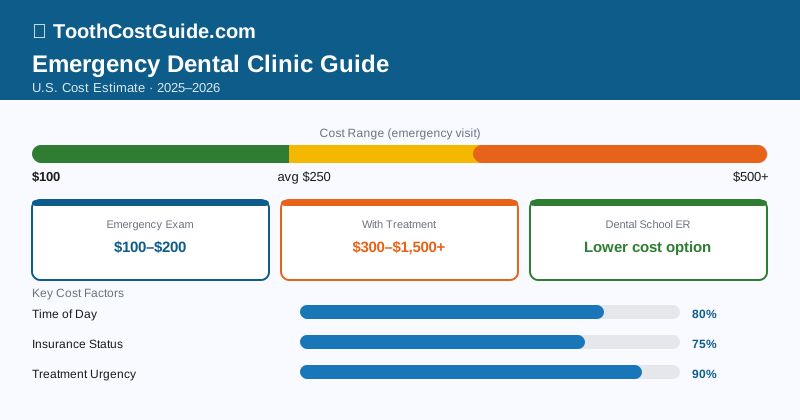
You have a dental emergency. Where you go determines how much you pay — and that gap is enormous. Emergency dental care costs $100–$1,500+ depending on the treatment, but the same root canal can cost $1,200 at one type of clinic and $350 at another. Here’s how to navigate that quickly.
| Provider Type | Emergency Exam + X-ray | Extraction (Simple) | Root Canal (Molar) |
|---|---|---|---|
| Private dentist (emergency) | $100–$250 | $200–$400 | $1,000–$1,500 |
| Dental chain (Aspen, Comfort) | $75–$200 | $150–$350 | $800–$1,300 |
| Dental school clinic | $40–$100 | $75–$200 | $350–$600 |
| FQHC (community health center) | $0–$50 | $0–$100 | $100–$500 |
| Urgent care (Rx only, no dental Tx) | $100–$250 | N/A | N/A |
| Hospital ER (pain management only) | $800–$2,500 | Rarely available | Not available |
Your Options, Ranked by Speed and Cost
Your Regular Dentist
Call them first, even after hours. Most practices have a recorded emergency line or on-call dentist. They already have your X-rays, your medical history, and your chart — which means a shorter visit and sometimes lower fees. Ask when you first establish care: “What’s your emergency after-hours protocol?” so you’re not figuring it out at midnight on a Sunday.
Private Emergency Dental Practices
Some dentists run specifically after-hours operations — open evenings, weekends, and holidays. They exist to fill exactly this gap. Fees are standard private practice rates plus an emergency surcharge of $100–$300. To find one fast: search “emergency dentist open now [your city]” or call 1-800-DENTIST (1-800-336-8478).
Cost: $100–$250 exam + treatment + $100–$300 surcharge
Dental Chains with Extended Hours
Aspen Dental, Comfort Dental, Western Dental, DentalWorks, and Heartland Dental affiliates operate across the country with hours built around working people — many are open 7 AM–7 PM and Saturdays without emergency surcharges. Same-day slots for urgent cases are standard at most locations.
Cost: $75–$200 exam, no emergency upcharge, treatment at regular rates
Dental School Clinics
Every accredited dental school in the U.S. runs a patient clinic where supervised students provide care at 40–70% below private practice prices. Most have a dedicated urgent care clinic that prioritizes acute pain. Appointments run long — 2–3 hours for procedures that take 45 minutes in private practice — but quality is closely supervised.
Cost: $40–$100 exam; $75–$200 extractions; $350–$600 root canals
Major dental school cities: Boston (Tufts, BU, Harvard), New York (NYU, Columbia, Touro), Los Angeles (UCLA, USC, LLU), Chicago (UIC, Loyola, Midwestern), Houston (UTHealth), Dallas (Baylor), Seattle (UW), Portland (OHSU).
To find the nearest one: ADEA directory at adea.org, or Google “[your city] dental school patient clinic.”
Federally Qualified Health Centers (FQHCs)
These federally funded community health centers serve uninsured, underinsured, and low-income patients with dental care on a sliding-scale fee. At or below 100% of the federal poverty level, cost is minimal. Above 200%, fees are reduced from private rates but not free. Staffed by licensed dentists — not students.
Cost: $0 to modest fees, depending on income
Find one: Call 1-800-275-4772 or visit findahealthcenter.hrsa.gov and enter your zip code.
Free Dental Clinics
- Remote Area Medical (RAM) — free dental events in underserved areas: ramusa.org
- Mission of Mercy — free dental clinics across many states: missionofmercydentalcare.org
- Give Kids a Smile (AADA) — free pediatric dental care through volunteer dentists
- State-specific programs — search “[your state] free dental clinic”
Urgent Care Centers
Urgent care can prescribe antibiotics and pain medication. They cannot perform extractions, place fillings, or do root canals. Appropriate when no dental provider is available overnight or on a holiday and you just need prescription access until you can get to a dentist.
Cost: $100–$250 visit; $0–$40 for prescriptions with GoodRx
Teledentistry
Apps like Teladoc, 1-800-Dentist’s live video service, and Aspen Dental’s virtual care connect you with a licensed dentist who can assess your situation via photos and, in most states, prescribe medications.
Cost: $50–$100 per consultation
Best used for: figuring out urgency, getting antibiotics when no in-person option is immediately available.
Which Path to Take Based on Your Situation
Have insurance? Your in-network dentist is almost always your best first call — familiar fees, covered by your plan, your records on file. If you can’t reach them, dental chains and emergency-hour private dentists are next. Confirm in-network status before treatment.
No insurance? Work this sequence: FQHC → dental school → discount plan + dental chain → negotiate directly with a private dentist. Use GoodRx for every prescription. Apply for Medicaid if you might qualify — coverage can be retroactive.
On Medicaid? All 50 states cover emergency dental at minimum. Many cover more. Call your state Medicaid office to confirm what’s included.
Step-by-Step When Pain Hits
- Call your regular dentist — emergency line or first slot the next morning
- Call 1-800-DENTIST (336-8478) for same-day provider referral
- Search dental school emergency clinics in your area
- Call the nearest FQHC (findahealthcenter.hrsa.gov)
- Check dental chain extended-hours locations nearby
- Urgent care — for antibiotics only, if above options are unavailable tonight
- ER — only if you have spreading infection, fever, swelling in the neck or face, or trouble breathing or swallowing
Three Ways to Pay Less
Join a dental discount plan before the problem worsens. Plans like Careington and Aetna Dental Access activate within 24–72 hours and offer 15–50% off at participating dentists. No waiting periods. No claims. $80–$150 per year.
Ask every provider about their self-pay price. Uninsured patients often get 10–20% discounts for upfront cash payment — but you have to ask.
Use GoodRx for every prescription. Antibiotics for dental infections cost $4–$15 with GoodRx versus $40–$80 without. Free at goodrx.com.
For uninsured patients, an FQHC (community health center) is almost always the best emergency dental resource — lowest cost, real licensed dentists, and no appointment backlog for acute pain cases. Find yours at findahealthcenter.hrsa.gov before you need it.
Emergency dental clinics manage pain, infection, and acute dental problems. For dental emergencies with spreading facial or neck swelling, fever above 102°F, difficulty breathing or swallowing, or rapid swelling progression, skip the dental clinic and go directly to a hospital emergency room or call 911. These symptoms indicate a serious infection that requires emergency medical care.
Emergency dental care runs the full spectrum from free (FQHCs, dental schools, free clinics) to expensive (private after-hours dentists, hospital ERs). The options exist — finding them fast is what this guide is for. Bookmark findahealthcenter.hrsa.gov and your nearest dental school’s urgent care line today. You’ll be glad you did when something breaks at 10 PM on a Friday.
Frequently Asked Questions
An emergency dental exam with X-rays typically costs $100–$300 at private practices, $50–$150 at federally qualified health centers (FQHCs), and $75–$200 at dental schools. The exact price depends on your location and the clinic type, but going to an FQHC or dental school can cut costs in half compared to a private emergency dental office.
Most dental insurance plans do cover emergency treatment like extractions and root canals, typically at 50–80% after your deductible is met, leaving you with $200–$800 out-of-pocket for complex procedures. However, many plans exclude cosmetic emergencies or have waiting periods, so call your insurer immediately to confirm coverage before seeking care.
Most emergency dental clinics can see you the same day or next morning—many have extended evening and weekend hours specifically for urgent cases. Dental schools and FQHCs may have longer wait times (1–3 days) but charge significantly less, while private practices and urgent care chains typically get you in within 2–4 hours.