15 million root canals are performed in the US each year, according to the American Association of Endodontists — and a meaningful share of those happen not on a scheduled Tuesday morning, but at 9pm on a Friday when the pain becomes unbearable. That timing difference is exactly what makes an emergency root canal cost more than the same procedure booked two weeks in advance.
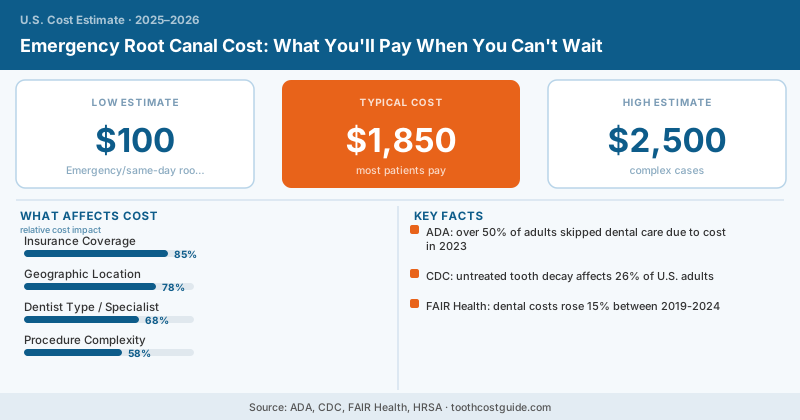
An emergency root canal runs $1,200-$2,500, with the premium over a scheduled appointment usually coming from after-hours or same-day emergency fees rather than a fundamentally different procedure.
| Root Canal Scenario | Typical Cost |
|---|---|
| Scheduled root canal, front tooth | $700–$1,200 |
| Scheduled root canal, molar | $1,000–$1,800 |
| Emergency/same-day root canal, front tooth | $900–$1,600 |
| Emergency/same-day root canal, molar | $1,200–$2,500 |
| After-hours/urgent care fee (added on top) | $100–$300 |
| ER visit for tooth pain (no root canal performed) | $500–$2,000+ |
Why “Emergency” Adds to the Price
The root canal procedure itself — cleaning out infected or inflamed pulp tissue, disinfecting the canals, and sealing them — doesn’t fundamentally change whether it’s done as a scheduled or emergency appointment. What changes is everything around it: an after-hours or weekend appointment often requires the dentist or endodontist to open the office outside normal hours, sometimes calling in staff on short notice, which typically carries its own fee separate from the procedure cost.
Emergency same-day appointments also sometimes skip a preliminary consultation visit that a scheduled root canal would normally include, compressing diagnosis and treatment into a single visit — which can affect pricing depending on how the practice bills exam and diagnostic imaging.
Why the ER Isn’t the Answer
A severe toothache at 2am understandably sends people toward the emergency room, but this is usually the more expensive, less effective path. ERs are staffed by physicians, not dentists, and lack the specialized equipment to perform a root canal or extraction. What an ER visit typically provides: pain medication, antibiotics if infection is present, and a recommendation to see a dentist as soon as possible — at a cost of $500-$2,000+ that still leaves you needing to find and pay for actual dental treatment afterward.
Finding a 24-hour emergency dentist or an endodontist with same-day emergency slots is almost always the more direct and cost-effective route for a genuine dental emergency.
Not every toothache requires treatment within hours. A dentist or endodontist reached by phone can often help assess urgency — severe swelling, fever, or facial swelling near the eye or throat are signs that genuinely warrant same-night care, while a persistent ache without these signs may safely wait for the next business day at standard pricing, with over-the-counter pain relief in the meantime as advised by the provider.
Why Molars Cost More in Any Scenario
Molars typically have 3-4 canals, compared to a single canal in most front teeth, meaning more time, more careful navigation of curved canal anatomy, and a higher risk of complexity requiring specialist referral to an endodontist rather than a general dentist. This cost difference holds true whether the root canal is scheduled or an emergency — it’s about the tooth’s anatomy, not the appointment timing.
Insurance and Emergency Appointments
Most dental insurance covers root canals under major restorative benefits regardless of whether the appointment was scheduled or an emergency, typically at 50-80% after any deductible. However, after-hours or emergency appointment fees specifically are sometimes excluded or only partially covered — check your plan’s specific language around “emergency care” fees versus the procedure cost itself.
Facial swelling, fever, or difficulty swallowing or breathing alongside severe tooth pain are signs of a potentially serious spreading infection and warrant immediate emergency care — call an emergency dentist or go to an ER specifically for these symptoms, not just for pain management. A dental infection that spreads to deeper facial or neck spaces is a genuine medical emergency, not just a scheduling inconvenience.
The Bottom Line
An emergency root canal at $1,200-$2,500 typically costs a modest premium over the same scheduled procedure, driven mainly by after-hours fees rather than a different treatment approach. When genuine dental emergencies strike, calling an emergency dentist or endodontist directly is almost always faster, cheaper, and more effective than an ER visit that can’t actually perform the root canal you need.
Frequently Asked Questions
An emergency root canal typically costs $1,200–$2,500, similar to or slightly higher than a scheduled root canal, with the difference usually coming from after-hours or emergency appointment fees ($100–$300) rather than the procedure itself. Molars, which have more canals, cost more than front teeth in both emergency and scheduled settings.
Sometimes, if the after-hours fee is avoidable and the infection isn't actively spreading, but waiting carries real risk — an untreated infection can spread to surrounding bone and tissue, or in rare serious cases, become a medical emergency requiring hospitalization. A dentist can advise whether your specific situation genuinely requires same-day treatment or can safely wait a day or two for a regular appointment.
Emergency rooms can prescribe pain medication and antibiotics for a dental infection but generally cannot perform a root canal or extraction, since ERs don't have dental equipment or dentists on staff. An ER visit for a toothache commonly costs $500–$2,000 or more and still requires a follow-up with a dentist for actual treatment, making it a more expensive and less effective option than an emergency dental visit.