What if $300 could remove the white spots that have bothered you for years — in a single appointment, with no drilling?
Enamel microabrasion is one of dentistry’s most underutilized cosmetic procedures. It’s not right for every discoloration, but when it is the right tool, the results are immediate and permanent.
What Does Enamel Microabrasion Cost?
| Service | Typical Cost |
|---|---|
| Microabrasion per tooth | $50–$150 |
| Full anterior segment (6 front teeth) | $300–$900 |
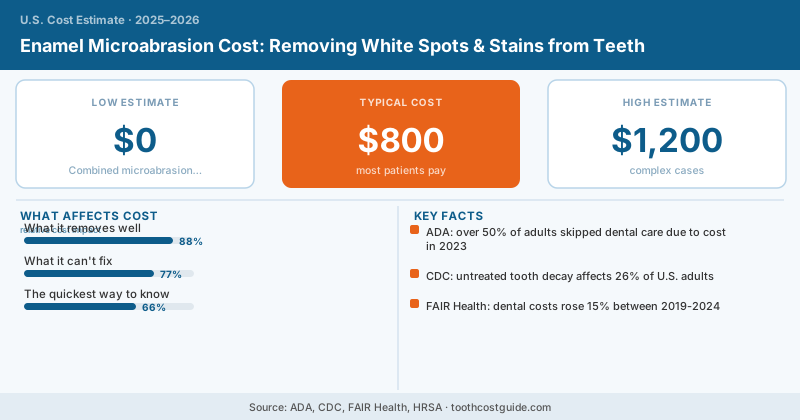
| Combined microabrasion + whitening | $400–$1,200 |
| Initial cosmetic consultation | $0–$200 |
| Touch-up session (if needed) | $150–$400 |
Most patients treating a moderate case of fluorosis or white spot lesions on 4–6 front teeth pay $300–$700. A single isolated white spot is often treated for under $200.
What Is Enamel Microabrasion?
Enamel microabrasion combines a mild abrasive (usually pumice) with a weak acid (hydrochloric or phosphoric acid) to gently remove a thin outer layer of enamel — the layer where stains or discoloration live. The result is a smoother, more uniformly colored surface.
The procedure takes 30–60 minutes for most cases. No anesthesia is needed. After treatment, a fluoride varnish is applied to remineralize the treated surface.
What it removes well:
- Fluorosis white spots (mild to moderate)
- White spot lesions after braces (demineralization)
- Superficial brown stains from minerals or mild developmental defects
- Some surface-level tetracycline staining
What it can’t fix:
- Deep enamel defects (amelogenesis imperfecta)
- Staining originating in the dentin layer (below enamel)
- Severe tetracycline staining
- Very large or deep white spots that extend through the full enamel thickness
The Post-Braces White Spot Problem
Here’s a scenario that plays out in orthodontic offices constantly: a patient gets their braces off after 18–24 months of treatment, only to find white spots where the brackets were. These spots are decalcification lesions — areas where acid from plaque accumulated under or around the bracket and dissolved mineral from the enamel surface.
According to a study published in the American Journal of Orthodontics, approximately 73% of patients have at least one white spot lesion after fixed orthodontic treatment. For most patients, microabrasion reduces these spots dramatically in a single appointment.
Teeth whitening brightens the overall tooth color by oxidizing stains throughout the enamel and dentin. Microabrasion physically removes the outermost enamel layer where surface discolorations live. For isolated white spots, whitening alone often makes them MORE visible — because it brightens the surrounding tooth while leaving the already-white spots unchanged. The correct sequence: microabrasion first, then whitening if a brightness boost is wanted.
Fluorosis: The Most Common Indication
Dental fluorosis develops when children ingest too much fluoride during tooth development, typically from swallowing fluoridated toothpaste, drinking very high-fluoride well water, or taking fluoride supplements alongside fluoridated water.
The CDC reports that 23% of Americans ages 6–49 have some degree of dental fluorosis. Mild fluorosis appears as faint white lines or specks and typically isn’t treated. Moderate fluorosis shows more obvious white or brown patchy spots that many patients want corrected.
Mild-to-moderate fluorosis on anterior teeth responds very well to microabrasion. Severe fluorosis with brown staining and pitting of the enamel surface may need additional procedures (resin infiltration, veneers) for full correction.
Resin Infiltration: An Alternative Worth Knowing
For white spot lesions where microabrasion alone isn’t sufficient — particularly deeper demineralization after braces — resin infiltration (Icon by DMG) is an alternative. This involves etching the lesion, then infiltrating the porous enamel with a clear resin that optically matches surrounding tooth structure.
Cost: $100–$300 per tooth.
Resin infiltration reaches deeper than microabrasion and is particularly effective for subsurface lesions. Some cases benefit from a combination: microabrasion first to remove the surface layer, then resin infiltration to treat the subsurface.
Will Insurance Cover Microabrasion?
Almost never. Microabrasion is classified as cosmetic by nearly all dental insurance plans. A rare exception: if white spots are associated with documented fluorosis in a child patient, some plans cover a portion as preventive/restorative. In practice, expect to pay out of pocket.
Enamel microabrasion removes a very thin layer of enamel — typically 100–200 microns, less than the thickness of a sheet of paper. Done correctly, it doesn’t compromise tooth strength. But it shouldn’t be repeated excessively. If multiple sessions don’t fully resolve the discoloration, a different approach (resin infiltration, composite bonding, or veneers) is more appropriate than continuing to abrade enamel.
Is Microabrasion Right for You?
Good candidates are patients with:
- White spots from post-braces demineralization
- Mild-to-moderate fluorosis on front teeth
- Surface brown stains not responding to whitening
- Isolated discolorations that don’t require major cosmetic work
Poor candidates include patients whose discoloration is deep in the enamel or dentin, patients with very thin enamel, or patients expecting a full-brightness transformation (whitening or veneers are better).
The quickest way to know: A cosmetic consultation with your dentist or a prosthodontist. Most can tell you within minutes whether your spots are superficial enough for microabrasion to work. Given the low cost and immediate results when it’s the right treatment, it’s worth the conversation before spending thousands on veneers.
Frequently Asked Questions
Enamel microabrasion typically costs $50–$150 per tooth, though many patients treat multiple front teeth in one session. A full anterior segment covering 6 front teeth generally ranges from $300–$600 depending on the extent of discoloration and your dentist's location and expertise.
Most dental insurance plans classify enamel microabrasion as a cosmetic procedure and do not cover it, meaning you'll pay the full cost out-of-pocket. Some plans may offer partial coverage if the discoloration is deemed medically necessary rather than purely cosmetic, so it's worth contacting your insurer before your appointment.
Yes, enamel microabrasion results are permanent because the procedure physically removes the outer layer of enamel where white spots and stains live. A typical session takes 30–60 minutes and requires no drilling, anesthesia, or recovery time, allowing most patients to return to normal activities immediately.