What’s the actual difference between the clear tray you got after braces and the aligners you wore during treatment? Visually, almost nothing — an Essix retainer looks nearly identical to a clear aligner tray, and that similarity is exactly the point.
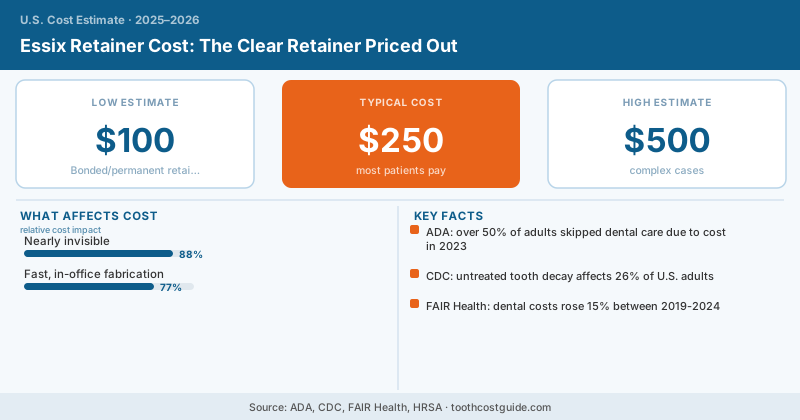
An Essix retainer is a thin, clear, vacuum-formed plastic retainer that fits snugly over your teeth, holding them in position after orthodontic treatment. It costs $150-$400 per arch, and most orthodontists include the first set in the total braces or aligner treatment fee.
| Retainer Type | Typical Cost (Per Arch) | Typical Lifespan |
|---|---|---|
| Essix retainer (clear plastic) | $150–$400 | 1–2 years |
| Hawley retainer (wire and acrylic) | $200–$500 | 5–10 years |
| Bonded/permanent retainer | $150–$350 | Indefinite (with maintenance) |
| Replacement Essix retainer | $100–$300 | 1–2 years |
Why Essix Retainers Are So Popular
Nearly invisible. Because it’s clear and form-fitted, an Essix retainer is far less noticeable than a Hawley’s visible wire across the front teeth — a significant reason many adult patients, especially those who chose clear aligners for treatment in the first place, prefer to continue with a similarly discreet retainer.
Full coverage protects against relapse effectively. Because it covers the entire biting surface of every tooth, an Essix retainer holds teeth firmly in position immediately after treatment, when relapse risk is highest.
Fast, in-office fabrication. Many orthodontic offices can fabricate an Essix retainer same-day using an in-office vacuum-forming machine and a model or digital scan of your teeth — no external lab required for a straightforward case.
Where Essix Falls Short Over Time
The thin plastic that makes Essix retainers comfortable and nearly invisible also makes them less durable than a Hawley’s wire-and-acrylic construction. Heavy teeth grinders can wear through an Essix retainer in months rather than years. The material can also cloud, discolor, or develop a persistent odor faster than Hawley’s more easily-cleaned acrylic, especially with inconsistent cleaning habits.
Because Essix retainers fully cover the biting surface, some patients also notice they interfere more with normal biting sensation and speech clarity in the first few days, compared to a Hawley’s more open wire design that leaves the biting surfaces of the front teeth largely uncovered.
Most orthodontic treatment includes one retainer set in the total fee, but replacement retainers — needed as Essix material wears, cracks, or no longer fits precisely as any minor tooth movement occurs — are typically billed separately for the rest of your life. Ask your orthodontist upfront: what’s the expected retainer replacement schedule, and what does each replacement cost after the initial set?
The Case for Switching to a Different Retainer Type Later
Many orthodontists recommend Essix retainers for the first several months post-treatment — when relapse risk is highest and full-coverage protection matters most — then transition patients to a Hawley retainer or a bonded permanent retainer for the long-term maintenance phase. This staged approach balances Essix’s strong initial holding power against its shorter overall lifespan.
Caring for an Essix Retainer to Maximize Its Lifespan
- Clean with a soft toothbrush and lukewarm (never hot) water daily — hot water can warp the plastic permanently
- Use a dedicated retainer or denture cleaning tablet weekly to reduce odor and bacterial buildup
- Store in the provided case whenever not worn — Essix retainers are frequently lost or damaged when wrapped in a napkin and accidentally discarded
- Avoid chewing gum or eating while wearing it, which accelerates wear and can distort the fit
Missing more than a few days of consistent Essix retainer wear, especially in the first year post-treatment, can allow teeth to begin shifting back toward their pre-treatment position. If a retainer suddenly feels tight after a period of inconsistent wear, don’t force it — see your orthodontist before continuing, since forcing a retainer that no longer fits can itself cause unwanted tooth movement.
The Bottom Line
Essix retainers at $150-$400 per arch offer a nearly invisible, effective way to protect orthodontic results immediately after treatment, though their 1-2 year lifespan means replacement costs add up over the years. Ask your orthodontist about a long-term retainer plan — many patients do best transitioning to a more durable Hawley or bonded retainer once the highest-risk relapse period has passed.
Frequently Asked Questions
An Essix retainer typically costs $150–$400 per arch, though many orthodontists include the first set in the total cost of braces or Invisalign treatment. Replacement Essix retainers, needed periodically since they wear out faster than other retainer types, usually cost $100–$300 each.
An Essix retainer typically lasts 1–2 years with consistent nightly wear, though heavy grinders or clenchers may wear through one in under a year. The thin clear plastic is more prone to cracking and clouding over time compared to a Hawley retainer's wire-and-acrylic construction.
Neither is universally better — Essix retainers are less visible and don't affect speech as much initially, while Hawley retainers are more durable, allow minor bite adjustments, and typically last longer overall. Many orthodontists recommend Essix for the first several months post-treatment, then transition patients to a Hawley or a permanent bonded retainer for long-term wear.