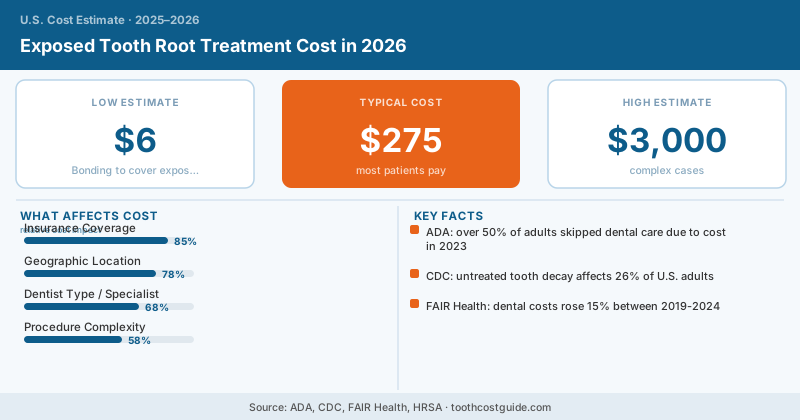
That sharp twinge when cold water hits a certain spot — and you notice the tooth looks longer than it used to, with a yellowish band near the gumline? That’s an exposed tooth root. The gum has pulled back and uncovered the root surface, which has no protective enamel. What it costs to treat ranges from a $50 toothpaste to a $2,000 surgical graft, depending on how far it’s gone.
Treatment Costs
| Treatment | Typical Cost (No Insurance) |
|---|---|
| Desensitizing toothpaste | $6–$15 |
| In-office desensitizing treatment | $50–$150 |
| Fluoride varnish | $30–$80 |
| Bonding to cover exposed root | $150–$400 per tooth |
| Deep cleaning (gum-disease cause) | $200–$1,200 |
| Gum graft surgery | $600–$3,000 per area |
Why Roots Get Exposed
The root sits below the gumline, protected. When the gum recedes — pulls back — the root surface gets uncovered. According to the CDC, gum disease affects nearly half of adults over 30, and recession is one of its visible signatures. But gum disease isn’t the only cause:
- Aggressive brushing with a hard brush, which literally wears the gum away
- Gum disease eroding the supporting tissue
- Grinding/clenching that stresses the gumline
- Genetics — some people just have thin gum tissue
- Aging — the old saying “long in the tooth” describes exactly this
Because the root has no enamel — just softer cementum and dentin — it’s far more sensitive and far more prone to decay than the crown of the tooth.
For mild sensitivity from an exposed root, desensitizing toothpaste (like those with potassium nitrate) is the first move. Used twice daily for a few weeks, it blocks the sensation for a lot of people — for under $15. An in-office desensitizer or fluoride varnish ($50–$150) steps it up. Don’t book a $2,000 graft before trying the cheap options; many exposed roots are managed without surgery.
Fixing the Cause Comes First
Treating the exposed root without stopping the recession is pointless — it’ll just keep creeping. If you’re brushing too hard, switch to a soft brush and lighter pressure (free). If gum disease is the driver, you’ll need scaling and root planing — and our gum recession treatment cost guide covers the broader picture. If grinding’s involved, a night guard protects the gumline.
When Bonding or a Graft Is Worth It
- Bonding ($150–$400 per tooth): Your dentist covers the exposed root with tooth-colored composite — similar to bonding for chips. It seals out sensitivity and protects against root decay. Good for a tooth or two.
- Gum graft ($600–$3,000 per area): A periodontist moves or adds gum tissue to cover the root. This is the gold standard for significant recession — it protects the root, reduces sensitivity, and improves appearance. Costlier, but it actually restores the lost coverage.
The Decay Risk You Can’t Ignore
Exposed roots decay faster than enamel-covered crowns. A cavity that forms on a root can quickly need a filling or even a root canal if it reaches the nerve. That’s why ignoring an exposed root isn’t just about sensitivity — it’s a head start for decay in the most vulnerable part of the tooth.
Insurance and Savings
Desensitizing treatments and fluoride are cheap and sometimes bundled into a cleaning. Gum grafts are periodontal surgery, typically covered at 50% with a deductible if covered at all. Our how dental insurance works guide explains the reimbursement tiers. Uninsured? A dental savings plan discounts grafts and cleanings meaningfully.
An exposed root with constant throbbing pain (not just cold sensitivity), visible decay, or a darkening tooth may mean the decay has reached the nerve — that needs prompt care before it becomes an abscess. See our dental emergency cost guide.
Bottom Line
An exposed tooth root can cost as little as a $6 tube of toothpaste or as much as a $3,000 graft. Start cheap, fix what caused the recession, and step up to bonding or grafting only when sensitivity or decay risk demands it.
Frequently Asked Questions
A gum graft typically costs $1,500 to $2,000+ per tooth without insurance, as it requires surgery to move healthy gum tissue from another area of your mouth or use a donor graft. This is the most expensive treatment option and is usually reserved for severe recession or cosmetic concerns.
Most dental insurance plans cover gum grafts and root canals at 50% after meeting your deductible, but preventive treatments like desensitizing toothpaste or fluoride gel are often covered at 100%. However, cosmetic gum procedures may be excluded, so check your specific plan details before treatment.
Recovery typically takes 2 to 3 weeks for initial healing, though complete integration of the graft can take 3 to 6 months. You'll need to avoid the surgical area, stick to soft foods, and limit physical activity during the first week to ensure the graft takes properly.