What’s a dental flipper? Think of it as the cheapest, fastest way to not walk around missing a tooth. It’s a removable partial denture — usually acrylic — with one or more artificial teeth attached to a pink plastic base that fits against your palate or lower gum. Dentists have been using them for decades as a temporary gap-filler while patients wait for implants, bridges, or permanent dentures.
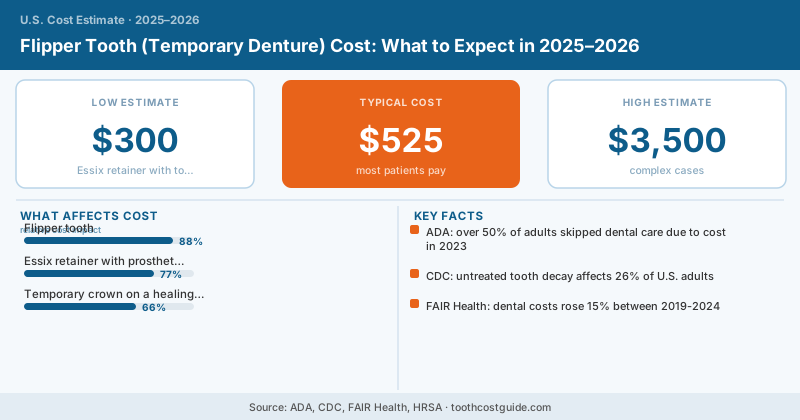
The name sounds casual because the appliance kind of is casual. It literally flips in and out of your mouth. And at $300–$900, it’s one of the most affordable temporary tooth replacement options available.
What Does a Flipper Tooth Cost?
| Option | Average Cost |
|---|---|
| Single-tooth flipper | $300–$600 |
| Multi-tooth flipper | $500–$900 |
| Essix retainer with tooth (similar appliance) | $350–$700 |
| Temporary partial denture (higher quality) | $700–$1,500 |
| Snap-on smile (cosmetic, non-dental) | $1,000–$3,500 |
Prices vary by region, number of teeth, and your dentist’s lab fees. Big cities run higher. Some dental offices charge $400–$500 flat; others break out the exam, impressions, and fitting as separate line items.
Insurance Coverage
Dental insurance often covers a flipper tooth as a partial denture — typically at 50% after your deductible under the major restorative benefit category. But there’s a common catch: many plans have a missing tooth clause that excludes coverage for teeth that were already missing before your policy started. If you’re insured and the tooth was recently extracted, you’re in better shape for coverage.
Pre-authorize before your appointment. It takes a week and can save you from a surprise bill.
Flippers are often used specifically while you’re waiting for a dental implant to heal (typically 3–6 months). In that context, think of the $400–$600 cost as part of your implant investment, not a separate expense. It keeps the space visible while osseointegration happens.
Flipper vs. Other Temporary Options
Flipper tooth — Cheapest, fully removable, fastest to make (1–2 weeks). Fragile if dropped. Not meant for chewing hard foods. Can cause gum irritation.
Essix retainer with prosthetic tooth — Similar concept, uses a clear tray instead of pink acrylic. Less visible. About the same cost, slightly more aesthetic.
Temporary partial denture (Valplast or similar) — More flexible, more durable. Costs more ($700–$1,500) but looks and feels better. Still removable.
Temporary crown on a healing implant — If your oral surgeon provides a temporary crown during osseointegration, that’s a different product entirely — typically $300–$600 just for the temporary crown, separate from implant fees.
Lifespan and Durability
Flippers are not built to last. They’re acrylic, which means they crack if dropped and wear down faster than more permanent materials. Most dentists consider them a 1–2 year maximum appliance under normal use.
Using a flipper for chewing anything hard — crusty bread, nuts, raw carrots — shortens that lifespan significantly. If your flipper breaks, repair is usually $50–$150 if it’s a simple crack, or you may need a replacement entirely.
Don’t sleep in your flipper unless your dentist specifically instructs otherwise. Wearing a removable appliance 24/7 increases your risk of fungal infection (denture stomatitis) and can irritate the underlying gum tissue. Most dentists recommend 6–8 hours out of the mouth daily.
How to Get the Best Price on a Flipper
- Check dental school clinics — supervised students fabricate flippers at 40–60% of private-practice prices
- Ask for a quote with impressions included — some offices itemize everything separately, driving up apparent cost
- Use your FSA or HSA — flippers are covered expenses
- Ask if insurance pre-authorization is possible — if covered at 50%, you’re looking at $150–$450 out-of-pocket
The bottom line: a flipper tooth is an affordable, practical short-term solution. It won’t feel or look exactly like a natural tooth, but it’s a whole lot better than an obvious gap while you save up for something permanent.
Frequently Asked Questions
A flipper tooth typically costs between $300 and $900, depending on the number of teeth, material quality, and your location. Most patients pay $400–$600 for a single-tooth flipper at an average US dental practice. Rush orders or multiple teeth can push costs toward the higher end of that range.
Many dental insurance plans cover 50% of flipper tooth costs since they're considered medically necessary temporary prosthetics, though some plans classify them as cosmetic and cover nothing. You'll typically pay $150–$450 out-of-pocket after insurance, depending on your plan's coverage percentage and annual deductible. Check with your insurance provider first, as coverage rules vary significantly by plan.
A flipper tooth can be fabricated in 24–48 hours at most dental offices, making it the fastest temporary solution while waiting for implants or bridges. Same-day flipper teeth are possible at some practices but usually cost an additional $100–$200 rush fee. The entire fitting and adjustment appointment typically takes 30–60 minutes.