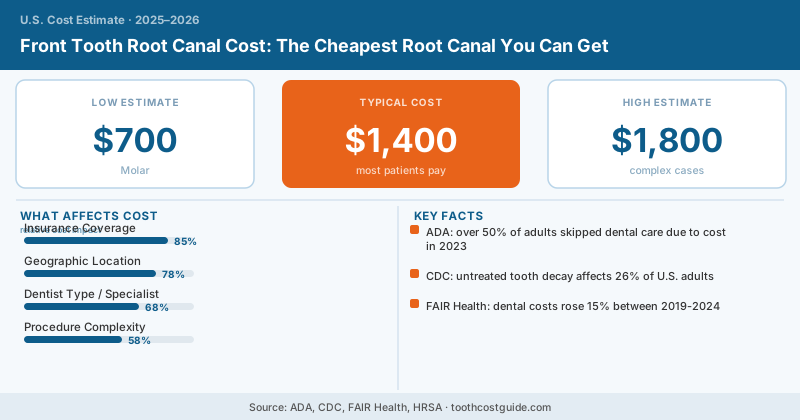
Most people assume a root canal is a four-figure nightmare no matter which tooth it is. Wrong — at least for your front teeth. A front tooth root canal is the cheapest version of the procedure, running $700–$1,000 without insurance, because incisors and canines usually have just one canal.
Single canal, single root, easy access right at the front of your mouth. Your dentist can finish most front-tooth root canals in 30 to 45 minutes. Compare that to a molar buried at the back with four canals, and the price difference makes sense.
Front Tooth vs. Everything Else
| Tooth | Canals | Cost (No Insurance) |
|---|---|---|
| Front incisor/canine | 1 | $700–$1,000 |
| Premolar | 1–2 | $800–$1,100 |
| Molar | 3–4 | $1,000–$1,800 |
| Crown after front-tooth RCT | — | $1,000–$1,800 |
The American Association of Endodontists reports that single-canal teeth have some of the highest root canal success rates — above 90% over many years when restored properly. Your front tooth isn’t just the cheapest to treat; it’s also one of the most reliable.
Do You Even Need a Crown?
Here’s where front teeth save you again. Back teeth take heavy chewing force, so they almost always need a dental crown afterward. Front teeth don’t grind food the same way, so dentists sometimes restore them with a simple filling or veneer instead — especially if the tooth is otherwise intact.
If your front tooth still has most of its natural structure and the access hole is small, a bonded composite filling ($150–$400) may be enough. That can cut your total cost roughly in half compared with a molar that demands a full crown. Ask your dentist directly whether a crown is truly necessary.
Why Front Teeth Get Root Canals
Trauma is a big one. The CDC has reported that dental injuries are common in sports and falls, and a knocked or cracked front tooth can damage the pulp inside. The tooth might look fine but slowly darken over months as the nerve dies. That discoloration is often the first sign you need a root canal.
A darkening front tooth won’t fix itself. The longer an infected nerve sits, the more likely you’ll need tooth extraction instead of a simple root canal — and replacing a visible front tooth is far more expensive and complicated than treating it now.
What to Expect During the Visit
Because front teeth are simple, the appointment is usually quick. Your dentist numbs the area, makes a small opening in the back of the tooth, removes the dead or infected pulp through that single canal, cleans and shapes the space, then fills it with a rubber-like material called gutta-percha. Most people are surprised how routine it feels — closer to a long filling than the ordeal they imagined. Soreness for a day or two afterward is normal and handled with over-the-counter ibuprofen.
Paying for It
Most PPO dental plans cover root canals at 50% to 80% after the deductible. Since front-tooth treatment is the cheapest tier, your out-of-pocket share is usually manageable even after factoring in the annual maximum. No coverage? A dental savings plan trims 15% to 25%, and interest-free financing lets you spread the bill over several months.
Bottom Line
If you’re going to need a root canal, the front of your mouth is the best place to need one. You’re looking at the lowest price tier, a strong success rate, and a real chance to skip the crown entirely. Treat it early, while it’s still a $700 problem and not a $4,000 dental implant one.
Frequently Asked Questions
A front tooth root canal costs $700–$1,000 without insurance, making it the cheapest root canal option because incisors and canines typically have only one canal and root. This price covers the endodontic treatment itself, but does not include a crown, which usually costs an additional $800–$1,500.
Most dental insurance plans cover 50–80% of root canal costs after you meet your deductible, leaving you responsible for 20–50% out-of-pocket. However, many plans classify root canals as major services with annual maximums of $1,000–$1,500, so your actual coverage depends on your remaining benefits for the year.
Most front tooth root canals are completed in 30 to 45 minutes because incisors and canines are easier to access and have a single canal compared to back teeth. You can usually return to normal activities the same day, though you may experience mild sensitivity for a few days after treatment.