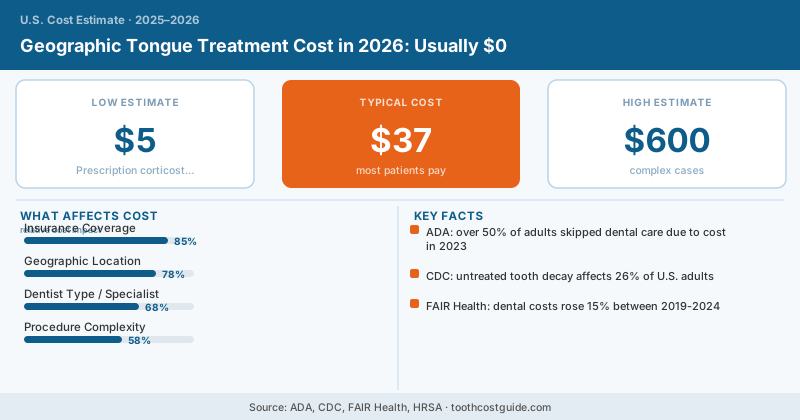
About 1 to 3% of people have it, most don’t even know the name, and the standard “treatment” costs exactly zero dollars. Geographic tongue — those map-like red patches with white borders that wander around your tongue — looks alarming and is almost always completely harmless. So why would you ever spend money on it? A few reasons, and they’re all optional.
Cost at a Glance
| Item | Typical Cost (No Insurance) |
|---|---|
| Reassurance / diagnosis exam | $75–$200 |
| OTC antihistamine rinse | $8–$20 |
| Topical numbing gel (if sore) | $5–$15 |
| Prescription corticosteroid rinse | $15–$60 |
| Zinc/vitamin supplements | $8–$30 |
| Biopsy (only if diagnosis unclear) | $200–$600 |
What Geographic Tongue Actually Is
The medical name is benign migratory glossitis — and “benign” is the key word. The surface of your tongue is normally covered in tiny bumps (papillae). In geographic tongue, patches of those bumps temporarily disappear, leaving smooth red areas ringed by raised white borders. The patches heal in one spot and pop up in another, so the “map” on your tongue keeps redrawing itself.
The National Institute of Dental and Craniofacial Research classifies it as a benign condition with no known cure and no need for one in most cases. It’s not an infection, not contagious, and not cancer. Many people have it for years without symptoms.
For most people, the only “cost” is a single exam to confirm what it is — and that confirmation is the whole point. Once a dentist tells you it’s harmless, you can stop worrying and stop spending. There’s no medication that cures geographic tongue, so anyone selling you an expensive “fix” is selling you nothing. Budget for one reassurance visit and call it done.
When People Do Spend a Little
A minority of people find their patches get sore or sensitive, especially with acidic, spicy, or hot foods. For them, low-cost symptom relief makes sense:
- Avoiding triggers (spicy, acidic, salty foods) — free
- OTC antihistamine or numbing rinses — $8–$20
- Prescription corticosteroid rinse for flare-ups — $15–$60
- Zinc supplements, which some studies suggest may help — $8–$30
None of these cure it; they just calm the soreness during a flare. We’re talking pocket change, not a treatment plan.
When a Biopsy Enters the Picture
Occasionally the patches don’t look textbook, or they’re in an unusual spot, and a dentist wants to rule out something else. A biopsy ($200–$600) is the only time geographic tongue gets expensive — and it’s about confirming the diagnosis, not treating the condition. If your dentist is confident on sight, you’ll skip this entirely.
Don’t Confuse It With Costlier Conditions
Geographic tongue is sometimes mistaken for oral thrush, which is a fungal infection that does need medication, or for the soreness of burning mouth syndrome. Getting the right diagnosis matters precisely because it saves you from paying to treat the wrong thing.
Insurance Angle
Since there’s rarely anything to treat, insurance barely matters here. The diagnostic exam is your standard checkup (often 80–100% covered if you’re due anyway). If you’re uninsured, the one exam is cheap, and a dental savings plan is more relevant for your bigger needs like fillings or cleanings. Curious how coverage applies to routine visits? Our how dental insurance works guide lays it out.
Geographic tongue is harmless, but a tongue patch that hardens, bleeds, doesn’t migrate or heal, or lasts unchanged for more than two weeks isn’t geographic tongue — it’s something that needs evaluation. The wandering, healing-and-reappearing pattern is what makes geographic tongue benign. A fixed, non-healing lesion is a different story.
Bottom Line
Geographic tongue is the rare oral condition where the right answer is usually to spend nothing. One reassurance visit, maybe a few dollars on a rinse during a flare — that’s it. Anyone charging you more for a “cure” is charging you for air.
Frequently Asked Questions
A diagnostic exam from a dentist or doctor typically costs $75–$150 without insurance, though many primary care visits are covered under standard insurance plans. If you already have a routine dental checkup scheduled, the diagnosis may be included at no additional cost since geographic tongue is identified through visual inspection alone.
Most insurance plans cover diagnostic exams and initial evaluation, but since geographic tongue is harmless and requires no standard treatment, insurance rarely covers optional symptom-relief options like topical medications or specialized rinses ($10–$50 per product). If a dentist or doctor recommends treatment only for comfort, you'll typically pay out-of-pocket for those elective products.
Start with over-the-counter solutions like SLS-free toothpaste, salt water rinses, or topical oral gels (typically $10–$30), which relieve irritation for most people within 1–2 weeks. If discomfort persists beyond two weeks, schedule a $75–$150 exam to rule out other conditions and discuss prescription-strength topical treatments that cost $50–$200.