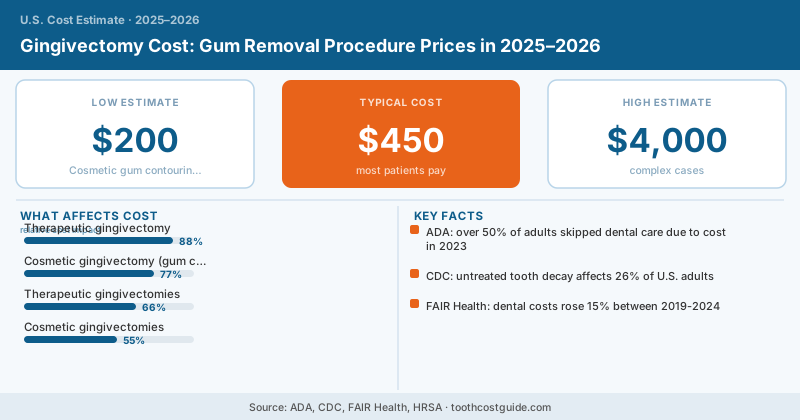
42% of Americans have some degree of periodontal disease — and for a significant portion of them, a gingivectomy becomes part of the treatment plan at some point. But this procedure does double duty: it’s used both to treat diseased gum pockets and to reshape healthy gums for cosmetic reasons.
That dual purpose means pricing varies wildly. A gingivectomy for crown lengthening before a filling is very different from a full cosmetic gum lift. Here’s the breakdown.
What Is a Gingivectomy?
A gingivectomy removes overgrown or diseased gum tissue. The periodontist or dentist cuts away excess tissue, reshapes the gumline, and allows the area to heal. It’s done under local anesthesia and takes anywhere from 30 minutes (single-tooth) to several hours (full-arch).
There are two main versions:
Therapeutic gingivectomy — Removes overgrown tissue (gingival hyperplasia) caused by medications (like cyclosporine, calcium channel blockers, or phenytoin), gum disease, or hormonal changes. The goal is eliminating deep pockets or removing tissue that’s trapping bacteria.
Cosmetic gingivectomy (gum contouring) — Reshapes an uneven or “gummy” smile. Purely aesthetic.
The CDT billing code is different for each type, and that affects insurance coverage significantly.
Gingivectomy Cost Without Insurance
| Scope | Estimated Cost |
|---|---|
| Single tooth (therapeutic) | $200–$400 |
| Per quadrant (1/4 of mouth) | $400–$1,000 |
| Full-mouth therapeutic | $1,000–$3,000 |
| Cosmetic gum contouring (per tooth) | $300–$600 |
| Full smile cosmetic gum lift | $1,000–$4,000 |
| Laser gingivectomy (per quadrant) | $500–$1,200 |
Pricing depends heavily on how much tissue needs to be removed, whether laser or traditional scalpel technique is used, and the practice’s location. Periodontists charge more than general dentists, but for complex cases they’re worth it.
Does Insurance Cover Gingivectomy?
Therapeutic gingivectomies for medically necessary gum disease are typically covered at 50–80% as a major procedure after deductible — similar to other periodontal surgeries. Your plan may require documentation of probing depths, failed conservative treatment, or a specific diagnosis like drug-induced gingival overgrowth.
Cosmetic gingivectomies — purely for smile aesthetics — are almost never covered. Insurers classify them as elective, so expect to pay 100% out of pocket.
The CDC’s 2023 data shows 47.2% of U.S. adults over 30 have periodontal disease, with severe disease in nearly 9% of the adult population. That severity is exactly what drives therapeutic gingivectomy referrals.
Before scheduling a therapeutic gingivectomy, ask your periodontist to submit a pre-authorization request to your insurer. Include X-rays, periodontal charting (probe depths), and clinical notes. Pre-auth isn’t a guarantee of payment, but it prevents nasty surprise denials and lets you budget accurately before treatment.
Scalpel vs. Laser Gingivectomy
Traditional scalpel-based gingivectomy and laser gingivectomy both work well — the choice comes down to the case, the clinician’s preference, and your budget.
Laser gingivectomy (typically using a diode or Nd:YAG laser) offers:
- Less bleeding during and after the procedure
- Reduced need for sutures
- Potentially faster healing for some patients
- Higher upfront cost ($500–$1,200 per quadrant vs. $400–$1,000 for scalpel)
For most routine cases, outcomes are similar. The clinical research comparing laser vs. scalpel gingivectomy shows comparable results at 6-month follow-up — the main difference is patient comfort in the immediate post-op period.
If cost is a concern, scalpel gingivectomy at a dental school or by a well-trained periodontist is an excellent choice.
Recovery and What to Expect
Expect 1–2 weeks of healing. You’ll have a dressing (periodontal pack) on the surgical area for the first week. Soft diet for 2 weeks. Some swelling and sensitivity is normal for the first 3–5 days.
Post-op medications — antibiotics, prescription-strength ibuprofen, or chlorhexidine rinse — may add $25–$75 to your total.
The final tissue contour takes 6–8 weeks to stabilize, which matters for cosmetic cases. Don’t judge the final result until healing is complete.
Alternatives and Combined Procedures
For mild gingival overgrowth, your dentist may try improved oral hygiene, medication changes (if drug-induced), or improved plaque control before resorting to surgery. Some cases resolve without cutting.
Gingivectomy is sometimes performed alongside:
- Crown lengthening — Exposing more tooth structure for a crown or filling; adds $500–$1,500 per tooth
- Osseous surgery — When bone reshaping is needed alongside tissue removal
- Frenectomy — When a frenum attachment is causing recession or gingival pull
Combined procedures can save you operatory time and anesthesia costs compared to separate visits.
Finding Lower-Cost Options
Dental schools with periodontal residencies perform gingivectomies at significantly reduced fees — often 40–60% less than private practice. Quality is supervised closely; the main trade-off is time.
HSA/FSA dollars cover therapeutic gingivectomies in full. Use pre-tax money and you’re effectively reducing your net cost by your marginal tax rate.
Dental savings plans (not insurance, but discount networks) typically negotiate 20–40% off standard fees with participating periodontists.
The therapeutic version of this procedure is one worth doing when your gums need it. Unresolved deep pockets don’t self-correct — and the infection they harbor contributes to bone loss that eventually costs far more to address.
Frequently Asked Questions
A gingivectomy typically costs $200–$400 per tooth for a single tooth or $1,000–$3,000 for a full-mouth procedure in 2025–2026. The final cost depends on the number of teeth treated, whether it's for periodontal disease or cosmetic reshaping, and your dentist's location and experience level.
Dental insurance usually covers gingivectomy when it's medically necessary to treat periodontal disease, though you'll typically pay 20–50% out-of-pocket after your deductible. Cosmetic gingivectomy for gum reshaping is generally not covered and is an out-of-pocket expense.
Most patients experience mild discomfort for 3–7 days after a gingivectomy, with complete healing taking 2–4 weeks depending on the extent of the procedure. You can return to normal eating and oral hygiene within a few days, though your dentist may recommend avoiding hot foods and aggressive brushing during the initial healing phase.