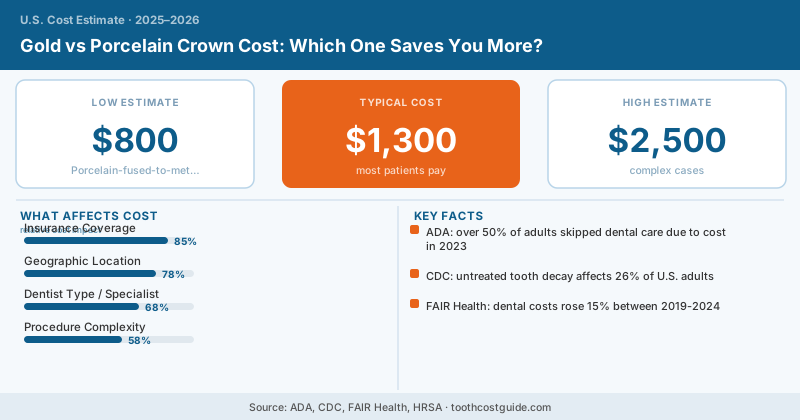
The $1,400 porcelain crown looks like the bargain next to the $2,000 gold one. Then it fractures in year nine, and you pay $1,400 again. Suddenly the “expensive” crown was the cheap one all along. That’s the trap most patients walk into when they compare gold and porcelain on price tag alone.
So let’s compare them the way you actually pay for them — over the life of the tooth, not the day of the visit.
What Each One Costs Up Front
| Crown Type | Cost (No Insurance) | With 50% Insurance |
|---|---|---|
| Full-cast gold | $900–$2,500 | $450–$1,250 |
| All-porcelain / all-ceramic | $800–$2,000 | $400–$1,000 |
| Porcelain-fused-to-metal (PFM) | $800–$1,800 | $400–$900 |
| Porcelain-fused-to-gold (PFG) | $1,000–$2,200 | $500–$1,100 |
On day one, porcelain usually wins by a few hundred dollars. The American Dental Association’s 2020 Survey of Dental Fees put the average single crown in the $1,000–$1,500 range nationally, and gold tends to sit at the higher end because of metal commodity costs — gold traded above $2,000 an ounce through much of 2024–2025, which pushed alloy surcharges up.
Where Gold Quietly Wins
Gold doesn’t chip. It bends before it breaks, and it almost never does either. Clinical data backs this up — full-cast metal crowns have shown 10-year success rates above 95%, a number no porcelain material has consistently matched over longer follow-up.
Gold also wears at roughly the same rate as natural enamel, so it’s gentle on the tooth biting against it. Porcelain — especially older PFM and very hard ceramics — can grind down the opposing tooth over years. If you clench or grind at night, that matters a lot.
The catch is obvious: gold is gold-colored. Nobody picks it for a front tooth.
A $2,000 gold crown lasting 30 years costs about $67 per year of service. A $1,400 porcelain crown lasting 12 years costs about $117 per year — and that’s if it never fractures early. For a hidden back molar where looks don’t matter, gold is frequently the cheaper crown over a lifetime, not the pricier one.
Where Porcelain Quietly Wins
Porcelain matches your natural tooth color, which is the whole reason it exists. For a front tooth or any tooth that shows when you smile, modern all-ceramic crowns look indistinguishable from enamel. That’s not vanity — it’s the standard of care for visible teeth.
Porcelain is also metal-free, which suits the small number of patients with metal sensitivities. And the price is genuinely a little lower for a basic single crown.
The trade-off is durability. Porcelain can chip under heavy bite force, and a fractured ceramic crown usually means redoing the whole thing rather than repairing it.
How Insurance Treats Each One
Most dental PPO plans cover crowns at 50% of the plan’s allowable fee. But watch for the “alternate benefit” clause — some insurers pay only the porcelain-equivalent benefit even when you choose gold, leaving you to cover the difference. The reverse can happen too on back teeth, where a few plans default to a metal benefit.
The fix is the same either way: ask your dentist to submit a written predetermination before scheduling. It’s free, takes a week or two, and tells you exactly what your plan pays for each material on your specific tooth. If you’re paying cash, look at a dental savings plan or financing through CareCredit before committing.
Which Should You Pick?
Think position first, then bite habits, then budget.
- Back molar, no one sees it — gold or PFG. Durability beats looks here.
- Front tooth or premolar that shows — all-porcelain. Looks win.
- Heavy grinder / clencher — gold. It survives the force and protects the opposing tooth.
- Tight budget, visible tooth — PFM is a reasonable middle ground.
If your tooth needs major rebuilding before the crown goes on, factor in extras like a core buildup — and compare it against simpler options in our crown vs filling breakdown. For multiple teeth, a dental bridge may change the math entirely.
Get a written, itemized treatment plan before any crown work — listing the procedure code, the material and alloy type, whether a core buildup is bundled in, and the fee for each line. Then submit it for predetermination. Those two steps kill nearly every billing surprise crowns are famous for.
Bottom Line
Porcelain crowns ($800–$2,000) usually cost a little less up front and look natural, making them the obvious pick for any tooth you can see. Gold crowns ($900–$2,500) cost a touch more but outlast everything — over 95% success at 10 years and real-world lifespans of 20–40 years — so for hidden molars and heavy grinders, gold is often the better long-term value. Match the material to the tooth, not to the sticker price. Both beat losing the tooth and needing a dental implant later.
Frequently Asked Questions
Gold crowns typically cost $900–$2,500, while porcelain crowns range from $800–$2,000. However, the initial price difference is often misleading; gold crowns last 20–40 years with minimal maintenance, whereas porcelain crowns typically need replacement every 10–15 years, making gold more cost-effective over a tooth's lifetime.
Most dental insurance plans cover 50% of crown costs after the deductible, up to an annual maximum of $1,000–$1,500, regardless of material. However, some plans classify gold as a cosmetic upgrade and cover only the cost of a standard porcelain crown, leaving you to pay the difference out-of-pocket.
A crown typically requires two visits: preparation and fitting takes 1–2 weeks for the lab to fabricate it. If a porcelain crown fractures (common after 9–12 years), you'll pay another $800–$2,000 for replacement, whereas gold crowns rarely fracture and may only need polishing or minor repair for $100–$300.