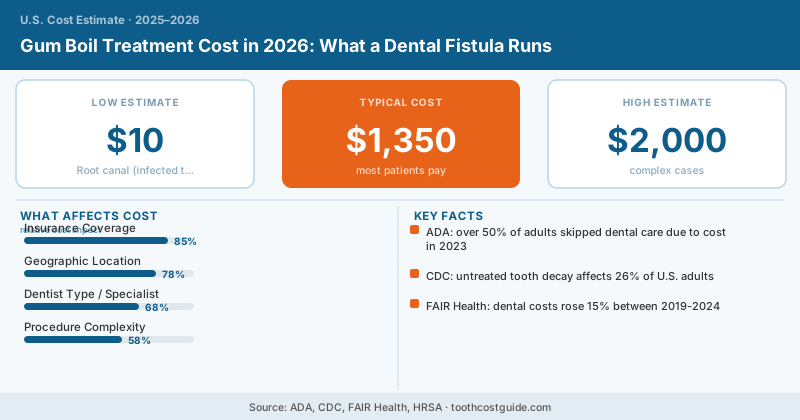
Most people assume a gum boil — that pimple-like bump on the gums — will pop and disappear like a regular zit. Wrong. A gum boil (technically a fistula) is the visible exit point of an infection draining out of your jaw, and the bump itself isn’t the problem. Killing the source is, and that’s where the cost comes from.
Treatment Costs at a Glance
| Treatment | Typical Cost (No Insurance) |
|---|---|
| Exam + x-ray to find the source | $100–$300 |
| Incision and drainage | $150–$400 |
| Antibiotics | $10–$60 |
| Root canal (infected tooth pulp) | $700–$2,000 |
| Crown after root canal | $1,000–$2,000 |
| Deep cleaning (gum-disease source) | $200–$1,200 |
| Extraction (tooth unsaveable) | $150–$650 |
Why the Boil Is Just the Symptom
A gum boil forms when pus from an infection needs somewhere to go. Instead of building pressure, it carves a channel through the gum and drains out — that’s the bump you see. Lance it and it may shrink for a day or two, but it’ll come right back unless you treat what’s feeding it.
The two usual sources:
- An infected tooth. Decay or a crack let bacteria reach the pulp, the nerve died, and infection pooled at the root tip. The fix is a root canal to clean out the dead pulp, or extraction if the tooth’s too far gone.
- A gum infection. Deep periodontal pockets trap bacteria. The CDC notes that gum disease affects nearly half of U.S. adults over 30, and advanced pockets are a classic source of recurring boils. Here the fix is scaling and root planing.
Your dentist might prescribe antibiotics to calm an active infection — but pills are a bridge, not a cure. They knock back the bacteria temporarily; the boil returns once you finish the course unless the underlying tooth or gum problem is treated. Budget for the real fix, not just the $10–$60 prescription.
The Root Canal Path
If the source is a dead tooth, expect the largest portion of the bill. A root canal runs $700–$2,000 depending on which tooth (molars cost more — more canals to clean), and you’ll usually need a crown afterward to protect the now-brittle tooth. That combination is the most common gum-boil resolution and the one that saves the tooth.
According to the American Association of Endodontists, root canals have a high long-term success rate, so this isn’t money thrown at a lost cause — it’s a tooth saved.
When Extraction Is the Cheaper Reality
Sometimes the infected tooth is cracked below the gumline or the bone support is gone. Pulling it ($150–$650) stops the infection at the source. It’s cheaper upfront than a root canal and crown, but then you’re facing the cost of replacing the gap — a bridge or implant — if it’s a visible or chewing tooth.
Insurance and Costs
Drainage, root canals, and extractions are generally covered, though root canals and crowns often sit at the 50% reimbursement tier with an annual maximum. Diagnostic x-rays land at 80–100%. If you’re uninsured, a dental savings plan typically shaves 15–40% off these procedures — useful when an unexpected boil shows up. Our how dental insurance works guide explains why timing your treatment around your annual maximum can save real money.
A gum boil with facial swelling, fever, difficulty swallowing, or pain spreading toward your eye or neck is a medical emergency — the infection may be spreading. Go to urgent care or an ER. Dental infections can become dangerous fast. See our dental emergency cost guide for what after-hours care runs.
Bottom Line
A gum boil costs $200 to $3,000+ to truly fix, and the price hinges on whether the source is a tooth or your gums. Don’t pop it and hope — that bump is a flag for an infection that won’t quit on its own. Get the x-ray, find the source, and treat it once.
Frequently Asked Questions
A simple incision and drainage of a gum boil typically costs $200 to $500 without insurance, making it the least expensive treatment option. However, if the boil returns or the underlying infection isn't addressed, you may need additional treatment like a root canal ($1,000–$1,500) or extraction ($150–$300), bringing total costs to $1,500–$3,000+.
Most dental insurance plans cover gum boil treatment as a necessary procedure, typically paying 50–80% of the cost after your deductible is met. Your out-of-pocket cost usually ranges from $100–$800 depending on your plan's coverage level and whether the underlying cause requires a root canal or extraction, which may have separate coverage limits.
You should see a dentist within 1–2 weeks of noticing a gum boil, as the infection can spread to your jawbone or sinuses if left untreated, leading to emergency procedures costing $2,000+. While a boil may drain on its own temporarily, the underlying infection will persist and return without professional treatment to address the source—typically a dead tooth requiring root canal therapy or extraction.