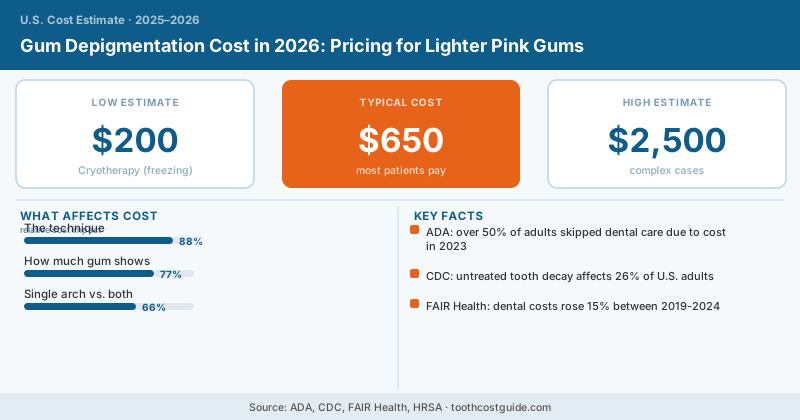
Dark patches on your gums aren’t a disease. They’re melanin — the same pigment that colors your skin — and millions of people have them naturally. But if those brown or black areas show every time you smile, gum depigmentation can lighten them to a uniform pink. Expect to pay $300 to $1,500 depending on the method and how much gum tissue your dentist treats.
That’s a wide range, so let’s break down where your money actually goes.
| Depigmentation Method | Typical Cost |
|---|---|
| Laser depigmentation (per arch) | $400–$1,200 |
| Scalpel/surgical technique (per arch) | $300–$800 |
| Microdermabrasion (bur) technique | $300–$700 |
| Cryotherapy (freezing) | $400–$900 |
| Both arches (upper + lower) | $800–$2,500 total |
| Touch-up/repigmentation revision | $200–$500 |
What Drives the Price
Three factors push your quote up or down.
The technique. Laser is the priciest because the equipment costs your dentist tens of thousands of dollars, and the results are precise with minimal bleeding. Scalpel and bur methods cost less but involve more healing time. Cryotherapy sits in the middle.
How much gum shows. Someone with a high lip line who shows a lot of gum needs more tissue treated than someone whose dark spots only peek out. More surface area means more chair time, and chair time is what you’re paying for.
Single arch vs. both. Most people only show pigment on the upper gums when they smile, so treating just the top arch is common and keeps the cost down. Doing both roughly doubles the price.
Gum depigmentation is almost always 100% cosmetic, which means dental insurance won’t cover a penny of it. Budget for the full out-of-pocket cost and ask whether your dentist bundles a follow-up touch-up into the original quote.
Does It Last?
Here’s the honest answer most ads won’t give you: results vary. Laser depigmentation tends to hold the longest, with many patients keeping lighter gums for several years. But melanin can return. Some people see repigmentation within 1–3 years, especially if they smoke. Smoking is a known trigger for gum pigmentation — the CDC reported in 2024 that roughly 11% of U.S. adults still smoke cigarettes, and that habit can darken gum tissue all over again after treatment.
If pigment comes back, a touch-up costs less than the original procedure since your dentist is treating a smaller area.
What Recovery Actually Feels Like
Most patients describe it as similar to a mild burn on the roof of your mouth — annoying for a few days, not agonizing. Laser cases heal fastest, often within a week. Scalpel techniques can take 10–14 days. You’ll want to avoid spicy food, acidic drinks, and crunchy chips while the tissue knits back together. Over-the-counter pain relievers usually handle the discomfort.
How This Fits Into a Bigger Smile Plan
Plenty of people get depigmentation as one piece of a smile makeover. If you’re already reshaping your gumline, it can make sense to combine it with gum contouring so you only go through one healing period. And if your teeth themselves are the bigger concern, you might prioritize teeth whitening or dental veneers first, since the contrast between bright teeth and dark gums is what makes pigment so noticeable in photos.
Saving Money Without Cutting Corners
Treat one arch only. If your dark spots only show on top when you smile, don’t pay to treat the bottom gums nobody sees.
Ask about bundling. Combining depigmentation with other gum work in a single visit spreads the setup cost across procedures.
Dental school clinics. Supervised programs sometimes offer cosmetic gum procedures at a fraction of private-practice pricing.
Skip the financing if you can. At a few hundred dollars per arch, most people pay out of pocket. But if you’re combining it with bigger work, CareCredit offers 0% promotional periods at most dental offices.
If you smoke, the single most effective thing you can do to make depigmentation last is to quit before treatment. Smokers see pigment return faster and more often, and no amount of laser work outruns the habit that caused the darkening in the first place.
Is It Worth It?
For people whose dark gums genuinely bother them in photos and conversation, the confidence boost is real and the procedure is relatively quick. For others, the pigment is barely noticeable and the money is better spent elsewhere. There’s no medical reason to do it — your gums are perfectly healthy with melanin in them.
Get a written treatment plan before you commit. Ask your dentist how many depigmentation cases they’ve personally done, which method they recommend for your gum type, whether a touch-up is included, and what their repigmentation rate looks like over a few years. Pigmentation can also rarely signal other conditions, so a healthy-tissue confirmation should come first.
Frequently Asked Questions
Gum depigmentation typically costs between $300 and $1,500, depending on the technique used and the surface area of gum tissue being treated. Laser depigmentation tends to fall on the higher end ($800–$1,500), while scalpel or microdermabrasion methods usually range from $300–$800. The final price depends on your dentist's location, experience level, and how extensive the pigmented areas are.
Most dental insurance plans do not cover gum depigmentation because it is considered a cosmetic procedure rather than medically necessary treatment. You should expect to pay the full cost out-of-pocket, though some practices offer payment plans or financing options to help spread the expense over 6–12 months. Always contact your insurance provider beforehand to confirm coverage, as policies vary.
The procedure itself typically takes 30–60 minutes depending on the method and area size. Results appear gradually over 1–2 weeks as the treated tissue heals, with final color settling around 3–4 weeks post-treatment. Most patients experience minimal discomfort and can return to normal eating and oral hygiene within a few days, though you should avoid hot foods and aggressive brushing during the first week.