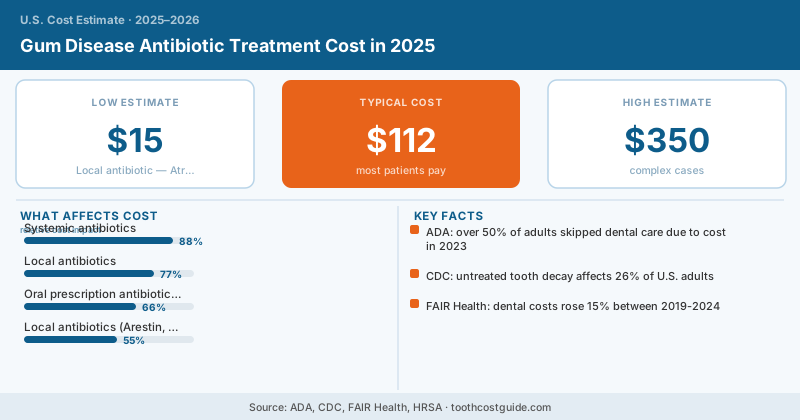
Here’s what surprises most patients: antibiotics alone don’t cure gum disease. They’re an adjunct — meaning they work alongside scaling and root planing, not instead of it. Understanding this upfront saves you from paying for antibiotic therapy that won’t actually resolve the infection without the mechanical treatment that has to accompany it.
With that context, here’s what the antibiotics themselves cost, and when they’re actually worth using.
Cost Breakdown
| Treatment | Average Cost |
|---|---|
| Oral antibiotic prescription (doxycycline, metronidazole) | $15–$75 at pharmacy |
| Systemic antibiotic (branded, in-office dispense) | $75–$350 |
| Local antibiotic — Arestin (minocycline microspheres) | $35–$75 per tooth |
| Local antibiotic — Atridox (doxycycline gel) | $75–$150 per site |
| Periostat (sub-antimicrobial doxycycline) | $50–$120/month |
| Scaling and root planing (required companion treatment) | $150–$350 per quadrant |
Systemic vs. Local Antibiotics: The Key Difference
Systemic antibiotics (pills you take orally) travel through your bloodstream and reach the gum pockets, but they also affect your entire body. They’re less targeted. Doxycycline and metronidazole are the most commonly prescribed. A typical course runs 7–14 days. At your pharmacy with a prescription, these are inexpensive — $15–$75 for a full course at most pharmacies, even without insurance.
Local antibiotics are placed directly into the periodontal pocket right after scaling and root planing. Arestin (minocycline microspheres) is the most widely used — your dentist or periodontist injects microspheres into the pocket where they dissolve over 21 days, releasing medication directly at the infection site. Cost is $35–$75 per tooth.
Local delivery is more expensive per tooth but more targeted. A 2019 systematic review in the Journal of Periodontology found that local antibiotic delivery after scaling and root planing significantly reduced probing depth compared to scaling alone — the clinical evidence supports it for moderate-to-severe periodontitis cases.
When Antibiotics Are Actually Recommended
Your periodontist or dentist should recommend antibiotic therapy in specific situations:
- Aggressive periodontitis — rapidly progressing disease, often with a systemic or genetic component
- Refractory periodontitis — disease that hasn’t responded to scaling and root planing alone
- Periodontal abscess — active acute infection
- Medically compromised patients — those with cardiac conditions requiring antibiotic prophylaxis, diabetics with poorly controlled blood sugar, or immunocompromised individuals
The CDC reports that 47.2% of American adults aged 30 and older have some form of periodontal disease. For mild-to-moderate cases, scaling and root planing without antibiotics is the first-line standard of care. Antibiotics are typically added for more severe or complicated presentations.
Periostat (sub-antimicrobial doxycycline, 20 mg twice daily) is classified as an antibiotic but works differently — at this dose, it inhibits collagenase enzymes that destroy gum tissue, without killing bacteria. It’s sometimes prescribed long-term (3–9 months) as a maintenance adjunct. Cost is $50–$120/month, and it’s not covered by dental insurance (it’s technically a systemic medication, so medical insurance or Part D may apply). Ask specifically about coverage before committing to a multi-month course.
Does Insurance Cover Antibiotic Treatment?
Coverage for periodontal antibiotics varies significantly:
Oral prescription antibiotics: Usually covered under your medical insurance prescription benefit, not dental. A standard doxycycline course may cost $10–$30 with a Rx copay, or $15–$75 if paying cash.
Local antibiotics (Arestin, Atridox): Often billed as a dental procedure. Some dental plans cover them; many don’t or limit the number of teeth covered per year. Call your insurer before treatment and ask specifically about the CDT code D4381 (Arestin) or D4381/D4322.
Scaling and root planing: Most dental insurance covers SRP at 50–80% under periodontal treatment coverage, with waiting periods and frequency limitations (often once every 24 months per quadrant). This is the primary procedure — the antibiotics are add-on costs.
Some dental offices upsell local antibiotics aggressively, placing Arestin in many teeth at $50–$75 each without a strong clinical indication. If your dentist recommends Arestin for 12+ teeth at once and you don’t have aggressive or refractory periodontitis, it’s reasonable to ask: “What clinical findings indicate this specific tooth needs local antibiotic placement?” Appropriate Arestin use targets specific sites with persistently deep pockets after SRP, not uniform placement across all treated teeth.
The Full Treatment Cost Picture
Antibiotic therapy is never the only line item. Here’s what a complete treatment for moderate periodontitis typically costs without insurance:
- Periodontal exam + x-rays: $75–$250
- Full-mouth scaling and root planing (all four quadrants): $600–$1,400
- Arestin placement (selected pockets, 6–10 teeth): $300–$750
- Oral antibiotics (if prescribed): $15–$75
- 3-month periodontal maintenance visits: $150–$350 per visit
Total out-of-pocket for moderate periodontitis treatment: roughly $1,000–$2,500, depending on severity and geographic location.
Ways to Save
Generic doxycycline and metronidazole are extremely inexpensive at pharmacies — if your dentist prescribes oral antibiotics, use GoodRx to compare pharmacy prices before filling. The $4 generic programs at Walmart and Target often cover these antibiotics.
For the overall periodontal treatment cost (the bigger number), dental school periodontics clinics offer treatment at significant discounts — 40–65% below private periodontist fees. The American Academy of Periodontology maintains a directory at perio.org. Waiting lists exist, but the savings are real.
Bottom Line
Antibiotic treatment for gum disease costs $15–$350 depending on whether you’re using oral prescriptions or locally placed agents. The more important costs are the scaling and root planing procedures that antibiotics accompany — totaling $600–$2,500 for a full course of periodontal treatment. The good news is that with proper treatment and consistent maintenance, periodontal disease is manageable. Skipping treatment because of cost leads to tooth loss, which costs far more.
Frequently Asked Questions
Prescription antibiotic pills typically cost $75–$350, while locally placed antibiotics like Arestin range from $50–$150 per tooth treated. The total cost depends on how many teeth need treatment and whether you're using systemic (pill) or local (placed directly on gums) antibiotics.
Most dental insurance plans cover antibiotic treatment for gum disease at 50–80% after meeting your deductible, though some plans classify it as a preventive service covered at 100%. However, coverage varies significantly by plan, and some insurers may require prior authorization or consider certain antibiotics as non-covered if alternatives exist.
No—antibiotics alone cannot cure gum disease and must be used alongside scaling and root planing (deep cleaning) to be effective. Skipping the mechanical cleaning means you'll pay for antibiotics that won't resolve the infection, making the combination treatment essential for success.