In 2015, gum grafting almost always meant tissue harvested from the roof of your own mouth, requiring two surgical sites and a longer, more uncomfortable recovery. Today, donor tissue options and techniques like the pinhole surgical technique have changed both the experience and, in some cases, the timeline — though the underlying cost has stayed in a similar range.
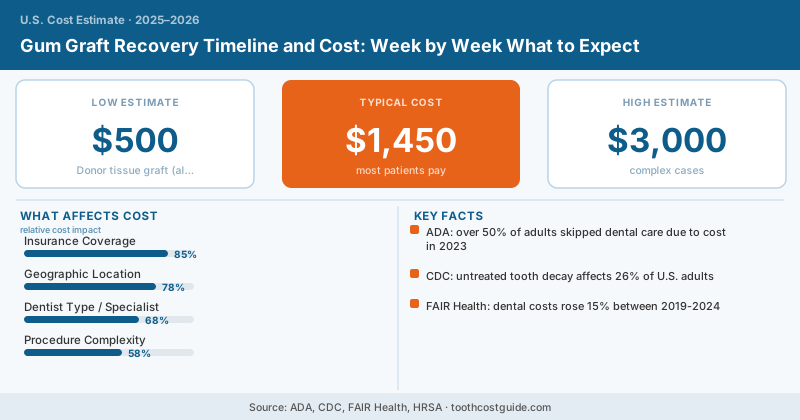
Gum grafting costs $700-$3,000 per site, and recovery unfolds in fairly predictable stages that are worth understanding before surgery day.
| Graft Type | Typical Cost (Per Site) | Recovery Highlights |
|---|---|---|
| Connective tissue graft (from palate) | $700–$1,600 | Two surgical sites, moderate discomfort |
| Free gingival graft | $600–$1,400 | Similar to connective tissue, thicker tissue result |
| Donor tissue graft (allograft) | $900–$2,000 | Single surgical site, often less discomfort |
| Pinhole surgical technique | $1,500–$3,000 | Minimally invasive, faster initial recovery |
| Multiple adjacent sites (per site, bundled) | $500–$1,200 | Often discounted vs. treating separately |
Week-by-Week Recovery Timeline
Days 1-3: Expect swelling, mild-to-moderate discomfort, and some bleeding or oozing at both the graft site and donor site (if tissue was taken from your palate). Soft, cool foods only — no chewing near the surgical area. Prescribed or over-the-counter pain medication typically manages discomfort well during this period.
Days 4-7: Swelling begins subsiding noticeably. The palate donor site (if applicable) is often the most uncomfortable part during this stretch, sometimes described as feeling like a pizza-burn sensation. A protective palatal stent, if provided, should stay in place as directed.
Week 2: Most patients return to normal daily activities and diet, gradually reintroducing firmer foods as comfort allows. The graft site looks visibly different from healthy gum tissue at this stage — often pale or slightly swollen — which is a normal part of the healing process, not a sign of failure.
Weeks 3-6: The graft integrates with surrounding tissue, and blood supply to the area re-establishes. Follow-up visits during this window let your periodontist confirm the graft is “taking” properly.
Weeks 6-12: Full tissue maturation occurs, with the graft site gradually taking on the color, texture, and firmness of surrounding healthy gum tissue. Final cosmetic and functional results are typically assessed around the 3-month mark.
If you’re dreading the idea of two surgical sites, ask your periodontist specifically about donor (allograft) tissue options, which eliminate the need to harvest tissue from your own palate. This often means a notably more comfortable recovery, since the palate donor site is frequently the more uncomfortable part of a traditional connective tissue graft. Not every case is a candidate, but it’s worth asking directly.
Why Grafting Costs What It Does
The price reflects the periodontist’s specialized surgical training, the precision required to secure viable tissue with sutures at the recession site, and in cases using your own tissue, the additional time needed for the donor site procedure. Donor allograft tissue, while eliminating a second surgical site, carries its own material cost from the tissue bank that processes and sterilizes it, which factors into that option’s price.
Signs Recovery Is on Track vs. Signs to Call Your Periodontist
Normal: mild swelling improving day over day, some tenderness at the donor site for 1-2 weeks, gradual color change in the graft tissue from pale to healthy pink over several weeks.
Call your periodontist: increasing (not decreasing) pain after day 3-4, significant continued bleeding beyond the first 24-48 hours, visible separation of the graft from the surrounding tissue, or fever — any of these could indicate infection or graft failure requiring prompt evaluation.
Insurance Coverage for Gum Grafting
When gum recession is documented with root exposure, sensitivity, or a risk of further bone loss, most dental insurance plans cover a portion of grafting under periodontal surgery benefits, commonly 50% after deductible. Purely cosmetic requests — grafting to even out gum line appearance without a functional recession diagnosis — see less consistent coverage. Get a pre-treatment estimate that documents the clinical reason clearly.
Avoid smoking and using straws for at least the first 1-2 weeks after gum grafting — both can dislodge the healing graft tissue or introduce complications that significantly slow healing. Follow your periodontist’s specific post-operative instructions exactly, since they vary somewhat based on graft type and surgical technique used.
The Bottom Line
Gum grafting costs $700-$3,000 per site, with recovery generally allowing a return to normal activities within 1-2 weeks, though full tissue maturation takes up to 3 months. Ask about donor tissue options if avoiding a second surgical site on your palate matters to you, and don’t hesitate to call your periodontist if pain increases rather than decreases after the first few days.
Frequently Asked Questions
A gum graft typically costs $700–$3,000 per site, depending on the graft type (connective tissue, free gingival, or pinhole surgical technique) and the number of teeth involved. Multiple adjacent sites treated in one procedure sometimes cost less per site than treating them separately over multiple visits.
Most patients return to normal daily activities within 1–2 weeks, though the surgical site continues healing internally for 6–8 weeks, and full tissue maturation can take up to 3 months. A donor site on the roof of the mouth (if tissue was taken from there) typically feels tender for 1–2 weeks and heals faster than the graft recipient site.
Dental insurance often covers a portion of gum grafting when it's performed to treat documented gum recession causing sensitivity, root exposure, or bone loss risk — typically 50% after any deductible, similar to other periodontal surgery. Purely cosmetic gum grafting requests without a functional or health-related diagnosis are less likely to be covered.