42% of Americans say their smile is the first thing they notice about someone. If yours shows more gum than you’d like, you’re not stuck with it — but treatment costs vary dramatically depending on the underlying cause.
A “gummy smile” (technically called excessive gingival display) isn’t one problem with one fix. That’s why prices range from $300 to $4,000+ and why your neighbor paid so little while you got a much bigger quote.
What Causes a Gummy Smile?
Before pricing anything, your dentist needs to identify the cause:
- Excess gum tissue covering teeth that are actually normal-sized (most common)
- Short upper lip that rises too high when smiling
- Vertical maxillary excess — the upper jaw bone protrudes downward
- Hyperactive lip elevator muscle — the lip pulls up more than normal
Each cause has a different fix at a different price point.
Cost by Treatment Type
| Treatment | Cost Per Arch | Best For |
|---|---|---|
| Laser gum contouring | $300–$1,200 | Excess gum tissue only |
| Surgical crown lengthening | $1,000–$4,000 | Deeper bone/gum repositioning |
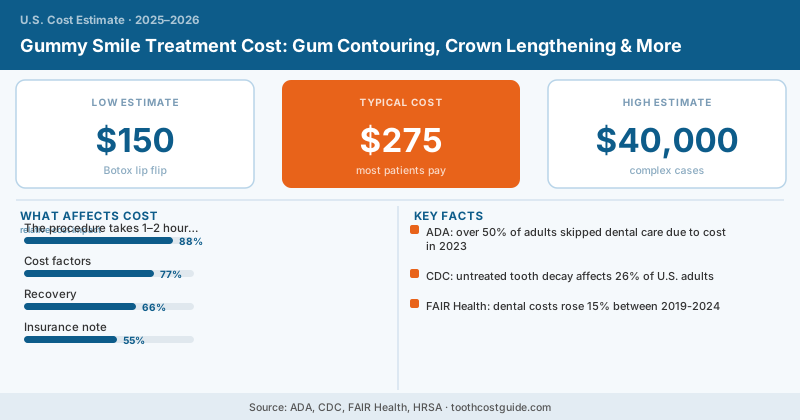
| Botox lip flip | $150–$400 | Hyperactive lip muscle |
| Lip repositioning surgery | $1,500–$4,000 | Short upper lip |
| Orthognathic surgery (jaw) | $20,000–$40,000 | Vertical maxillary excess |
Most patients with a simple gummy smile caused by excess tissue pay $600–$1,800 total.
Laser Gum Contouring: The Most Common Option
If your teeth are genuinely normal-sized and just covered by too much gum tissue, laser contouring is the go-to fix. A periodontist or cosmetic dentist uses a soft-tissue diode laser to sculpt the gum line, removing excess tissue and revealing more tooth surface.
The procedure takes 1–2 hours. Recovery is typically 2–3 days of mild soreness and sensitivity — far faster than traditional scalpel surgery.
Cost factors:
- Number of teeth being treated (per-tooth pricing is common at $150–$400 per tooth)
- Dentist vs. periodontist (specialists charge more)
- Metro location vs. rural area
Yes — once gum tissue is removed by laser, it doesn’t grow back. However, if the underlying bone level is too high, gum tissue can partially regrow over time. Your dentist will check with X-rays before recommending laser-only treatment. If the bone is involved, you need crown lengthening instead.
Crown Lengthening: When It’s More Than Gum Tissue
Crown lengthening goes deeper. Your periodontist removes both gum tissue and a small amount of supporting bone to expose more tooth structure. It’s more involved than laser contouring, requires sutures, and costs more — but it’s the correct treatment when bone is the limiting factor.
According to the American Academy of Periodontology, crown lengthening is one of the most frequently performed periodontal procedures in the US.
Recovery: 2–4 weeks for full healing, though most patients return to normal activity within a few days.
Insurance note: Crown lengthening is covered by many dental plans when done for restorative purposes (to accommodate a crown or filling). Purely cosmetic crown lengthening is typically not covered.
Botox for Gummy Smile: The Budget Option
If your gummy smile is caused by a lip that rises too high — not by excess gum tissue — Botox injections into the muscles that elevate the upper lip can limit how high it travels.
The appeal: low cost, no downtime, no cutting. The drawback: results last only 3–6 months, meaning you’ll pay $150–$400 every few months for maintenance. Over several years, this adds up fast.
Many patients use Botox as a “preview” before committing to permanent lip repositioning surgery.
What Insurance Covers
Purely cosmetic gummy smile treatments — laser contouring for aesthetics, lip repositioning, Botox — are not covered by dental insurance. Crown lengthening for restorative purposes (to restore a broken tooth or place a crown) often IS covered, typically at 50–80% after deductible. If your gummy smile treatment can be tied to a restorative need, ask your dentist to document it that way.
Reducing Your Cost
Get a periodontist consultation first. Even if you plan to use a general dentist, a periodontist’s assessment ensures you’re treating the right cause. A misdiagnosis leads to results that don’t meet expectations — and more money spent.
Combine with other cosmetic work. If you’re already getting veneers or bonding, your dentist may bundle gum contouring at a reduced rate. Ask specifically — dentists don’t always volunteer this.
Dental school clinics. Periodontics departments at accredited dental schools perform crown lengthening and gum contouring at 40–60% of private practice rates. Treatment is supervised by faculty periodontists.
Dental savings plans. If you’re paying cash, a dental discount plan (typically $100–$150/year) provides 15–30% discounts at participating providers — useful for cosmetic procedures insurance won’t touch.
A gummy smile is one of the most satisfying conditions to treat in cosmetic dentistry. The change is immediate, dramatic, and permanent in most cases. Know your cause, match it to the right treatment, and you’ll spend the right amount — not more.
Frequently Asked Questions
Laser gum contouring typically costs $300–$1,500 per tooth, making it one of the most affordable gummy smile treatments. A full smile makeover involving multiple teeth usually falls between $1,000–$3,000 depending on how many teeth need treatment and your geographic location.
Most dental insurance plans classify gummy smile treatments as cosmetic and do not cover them, leaving you responsible for 100% of the cost. However, if crown lengthening is medically necessary to support a crown or bridge, some plans may cover 50–80% after you meet your deductible.
Laser gum contouring is typically completed in one 30–60 minute appointment, with visible results immediately after treatment. Most patients experience full healing within 2–4 weeks, though you should avoid hard foods and maintain gentle oral hygiene during recovery.