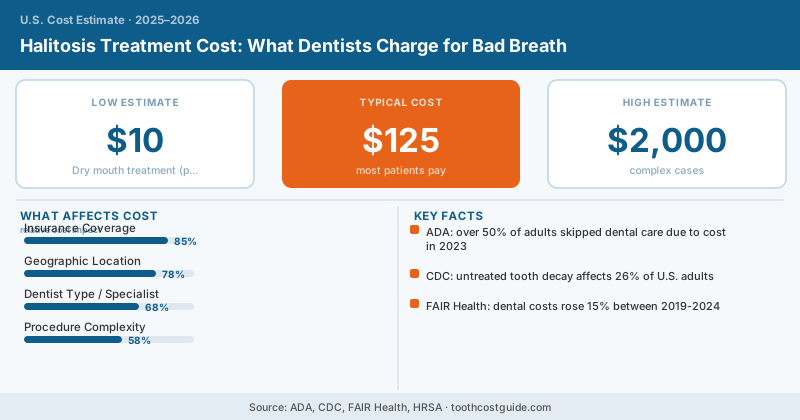
What does bad breath actually cost to fix? That question has a wildly different answer depending on whether your dentist finds a $200 problem or a $2,000 one — and sometimes the problem isn’t dental at all. Let’s work through the real costs and what’s actually driving most cases of chronic halitosis.
The Source of 90% of Cases
Roughly 85–90% of chronic bad breath originates in the mouth, according to the NIH National Institute of Dental and Craniofacial Research. The primary culprits:
- Volatile sulfur compounds (VSCs) produced by bacteria on the tongue, especially the back third
- Gum disease — active periodontal infection creates a consistently foul odor
- Tooth decay — cavities harbor bacteria
- Poorly fitting or unclean dentures/appliances
- Dry mouth (xerostomia) — reduced saliva flow allows bacterial overgrowth
The remaining 10–15% of cases stem from non-dental sources: respiratory infections, acid reflux, sinus problems, liver or kidney disease, and certain medications.
Halitosis Treatment Costs by Cause
| Cause and Treatment | Estimated Cost |
|---|---|
| Professional cleaning (removes bacterial buildup) | $75–$200 |
| Tongue scraper + chlorhexidine rinse (home protocol) | $10–$30 |
| Deep cleaning / scaling and root planing (gum disease) | $200–$400 per quadrant |
| Cavity treatment (filling) | $150–$300 per tooth |
| Dry mouth treatment (prescription saliva stimulants) | $50–$200/month |
| Tonsil stone removal (ENT procedure) | $150–$600 |
| Antibiotic treatment for oral infection | $20–$100 |
| Dental crown replacement (old leaking crown) | $1,000–$2,000 |
The cheapest fix — if the cause is tongue bacteria — is a $6 tongue scraper used daily. The most expensive — if the cause is advanced gum disease requiring full-mouth debridement or crown replacement — can run into the thousands.
The Diagnostic Visit: What to Expect
A halitosis evaluation typically starts as a standard dental exam ($50–$150 without insurance). Your dentist will:
- Take a full history (onset, timing, medications, diet)
- Assess the tongue for bacterial coating
- Probe gums for periodontal pockets
- Check for cavities, failing restorations, and poorly fitting appliances
- Ask about dry mouth symptoms
Some dental schools and specialty halitosis clinics use a Halimeter — a device that measures VSC concentration in breath — for a quantified baseline. That adds roughly $50–$100 to the appointment. It’s not standard at most general practices.
Most dentists find that a thick coating on the posterior tongue is the primary driver of bad breath in patients without active gum disease. Brushing the tongue removes surface bacteria but doesn’t reach the microgrooves where VSC-producing bacteria live. A stainless steel or plastic tongue scraper used from back to front clears significantly more bacterial load than brushing. This costs $6–$15 and takes 30 seconds.
Gum Disease Treatment for Halitosis
If gum disease is the culprit, bad breath won’t resolve without treating the periodontitis itself. A full-mouth deep cleaning (scaling and root planing) costs $800–$1,600 for all four quadrants and is the entry point for moderate periodontitis. More severe cases may require periodontal surgery ($1,000–$3,000 per arch) or LANAP laser treatment.
For patients with documented gum disease, most PPO insurance plans cover deep cleaning at 50–80% after the deductible — making this one of the more insurance-friendly halitosis treatments available.
When It’s Not a Dental Issue
If your dentist clears you — no gum disease, no significant cavities, tongue scraping hasn’t helped — the source is likely non-dental. Common medical causes:
- GERD (acid reflux): Gastric acid reaching the throat creates a sour, acidic odor. Treated with PPIs or H2 blockers through a gastroenterologist.
- Sinusitis: Post-nasal drip creates bacterial substrate in the throat. ENT evaluation and antibiotic treatment if bacterial.
- Tonsil stones (tonsilloliths): Calcified deposits in tonsillar crypts that smell strongly sulfuric. ENT removal is minor and inexpensive ($150–$600).
- Medications: Diuretics, antihistamines, and some blood pressure drugs cause dry mouth as a side effect.
Mouthwash masks bad breath for 30–90 minutes but doesn’t address the bacterial source. Alcohol-based rinses can actually worsen dry-mouth-related halitosis over time. If you’re using mouthwash multiple times daily and still struggling, it’s a sign you need to treat the underlying cause, not continue covering it up.
Insurance Coverage
Dental insurance covers the conditions causing bad breath — not halitosis itself as a diagnosis. Preventive cleanings, deep cleaning, fillings, and crown replacement are covered procedures. The cleaning that happens to resolve your bad breath gets billed as a cleaning; insurance doesn’t care that the reason you came in was bad breath.
Bottom Line
Most chronic bad breath resolves with a $75–$200 professional cleaning, a tongue scraper, and consistent oral hygiene — total investment under $250. When gum disease is driving it, expect $800–$1,600 for deep cleaning, often partially covered by insurance. Non-dental causes require medical evaluation and referral. Start with a dental exam to rule out the oral sources before spending money on specialty testing or supplements.
Frequently Asked Questions
Halitosis treatment ranges from $75 to $2,000+ depending on the underlying cause. Simple cases like professional cleaning and plaque removal cost $75–$300, while treating gum disease or underlying infections can reach $500–$2,000+. If the problem originates outside the mouth (medical issue), you may need referrals to other specialists with separate costs.
Most dental insurance plans cover diagnostic visits ($0–$50 copay) and professional cleanings as preventive care at 100%. However, coverage for treating underlying causes like gum disease or tooth decay varies by plan, typically covering 70–80% after your deductible. Cosmetic or specialty treatments for halitosis are usually not covered.
Initial diagnosis and professional cleaning take 1–2 visits over 1–2 weeks and can improve mild bad breath immediately. If gum disease is present, treatment may require multiple appointments over 2–3 months with results appearing as gums heal. Most patients notice significant improvement within 2–4 weeks of completing recommended treatment.