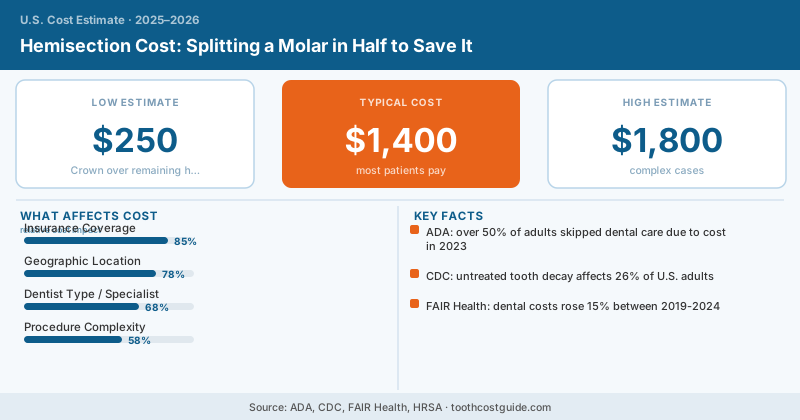
A hemisection literally cuts a molar in two. The surgeon splits the tooth through the middle, removes the diseased half — root and all — and keeps the healthy half functioning. It costs $900–$1,600 without insurance, and for the right lower molar, it can mean the difference between saving and losing the tooth.
Think of it as a step beyond root amputation. Amputation removes one root; hemisection removes a root and the chunk of crown sitting on top of it. It works best on lower molars, which typically have two roots split front-to-back.
Hemisection Cost Breakdown
| Item | Detail | Cost (No Insurance) |
|---|---|---|
| Hemisection surgery | Split and remove half | $900–$1,600 |
| Root canal (the kept half) | Usually required first | $1,000–$1,500 |
| Crown over remaining half | Restore function | $1,000–$1,800 |
| CBCT imaging | Plan the split | $250–$600 |
The American Association of Endodontists lists hemisection among the conservative surgical options aimed at retaining natural teeth rather than extracting them. The AAE has long stressed that a well-restored natural tooth, where it can be saved, generally outperforms removal followed by an artificial replacement in the same spot.
How the Full Treatment Stacks Up
Like root amputation, hemisection rarely stands alone. The half you’re keeping needs a root canal so it’s sealed and stable, then a dental crown to restore chewing function. Add the imaging, and the realistic all-in total often lands between $2,500 and $4,500. Budget for the sequence, not the single surgery.
The competing option is pulling the whole molar and placing a dental implant ($3,000–$5,000) or a fixed bridge. Hemisection can come out cheaper and keeps part of your natural tooth — but only if the remaining half is genuinely sound. When in doubt, get a second opinion comparing both paths.
Who’s a Good Candidate
Hemisection suits a lower molar where one half is destroyed by decay, fracture, or bone loss while the other half has solid bone support. If both halves are failing, splitting won’t rescue it — full tooth extraction becomes the sensible move instead.
The retained half of a hemisected tooth is essentially a small standalone tooth and needs meticulous flossing around the new gap. Poor hygiene is the leading reason these procedures fail. If you won’t keep up the cleaning, the surgery may not be worth the cost.
Insurance Considerations
Because hemisection is uncommon, coverage varies widely. Some plans cover it under surgical or endodontic benefits at 50% to 80%; others classify it as non-covered. Always request pre-authorization. Understanding how your dental plan’s annual maximum and surgical benefits work helps you confirm the procedure code is eligible before you proceed.
Lowering the Bill
No insurance? University endodontic and oral surgery programs perform hemisections at reduced supervised rates. A dental savings plan cuts 15% to 25% off specialist fees with no waiting period, and interest-free financing can spread the multi-stage cost over several months.
Bottom Line
Hemisection is a creative way to keep half a molar working when the other half is beyond help. It demands a sound remaining root, careful restoration, and dependable home care. Get those three things right, and you’ll likely spend less than a full removal-and-replacement — while keeping a piece of your own tooth in the bargain.
Frequently Asked Questions
A hemisection typically costs $900–$1,600 without dental insurance. The final price depends on tooth location, complexity of the diseased root, and your dentist's or oral surgeon's fees in your region.
Most dental insurance plans cover 50–80% of hemisection costs since it's considered a surgical procedure, though some plans may classify it as major surgery with a separate deductible. You'll want to check your specific policy, as some plans exclude or limit coverage for root removal procedures.
Hemisection works best on lower molars with two separate roots where one root is diseased but the other is healthy and can support a crown. Recovery typically takes 1–2 weeks, with most patients returning to normal eating within 7–10 days after the surgical site heals.