Here’s the good news upfront: a well-placed dental implant can last 25 years or longer — many patients keep them for life. The titanium post that fuses to your jaw is essentially permanent. What eventually wears out is the crown on top, which typically needs replacement after 10–15 years depending on your bite habits.
The not-so-good news: about 5–10% of implants fail within the first few years, usually due to infection, poor bone integration, or underlying health issues. Knowing the difference between a long-lasting implant and a failing one can save you thousands.
Implant vs. Crown Lifespan — They’re Different
| Component | Expected Lifespan | Replacement Cost |
|---|---|---|
| Titanium implant post | 25 years to lifetime | $1,500–$3,000 (surgery only) |
| Abutment (connector) | 15–25 years | $275–$450 |
| Implant crown (porcelain/zirconia) | 10–15 years | $1,000–$2,000 |
| Full implant replacement (failed) | N/A | $3,000–$7,000 total |
| Bone graft if bone lost | N/A | $300–$3,000 additional |
Most patients will need to replace the crown at some point, but never touch the post again. Think of it like a car: the engine (post) is built to last decades; the tires (crown) wear down and need swapping.
What the Research Actually Says
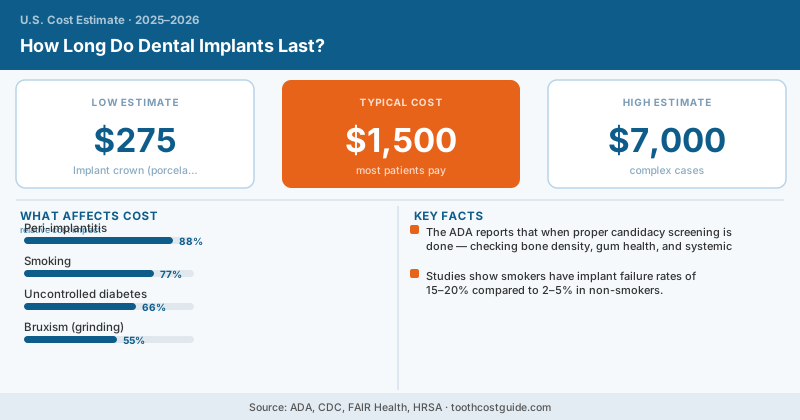
A 2023 systematic review published in the International Journal of Oral & Maxillofacial Implants found that implant survival rates at 10 years average 94–97% across healthy patients. The ADA reports that when proper candidacy screening is done — checking bone density, gum health, and systemic conditions — long-term success rates exceed 95%.
That doesn’t mean 5% of implants just randomly fail. Most failures cluster around specific risk factors that are largely preventable.
What Causes Early Implant Failure?
Peri-implantitis is the #1 cause of late implant failure — it’s essentially gum disease around an implant. Bacteria accumulate at the gumline, cause bone loss, and the implant loses its foundation. Regular professional cleanings every 3–6 months dramatically lower this risk.
Smoking cuts success rates significantly. Studies show smokers have implant failure rates of 15–20% compared to 2–5% in non-smokers. The chemicals in tobacco impair blood supply to healing tissue and slow osseointegration.
Uncontrolled diabetes affects bone healing and immune response. Patients with well-controlled diabetes (HbA1c below 7%) have success rates comparable to non-diabetics. Poorly controlled diabetes doubles or triples failure risk.
Bruxism (grinding) applies extreme lateral forces that can crack the crown or even loosen the implant over time. Wearing a custom night guard is non-negotiable if you grind.
Watch for: persistent pain or throbbing more than a week post-surgery, the implant feeling loose or wobbly at any point, gum swelling or pus around the site, or a metallic taste. Early-stage peri-implantitis is treatable; advanced peri-implantitis may require implant removal.
How to Make Your Implant Last as Long as Possible
The practices that extend implant life aren’t complicated, but they require consistency:
- Brush twice daily with a soft-bristle brush, paying close attention to the gumline around the implant
- Floss or use an interdental brush daily — bacteria love the gap between the implant crown and gum
- Get professional cleanings every 3–4 months if you have any history of gum disease, or every 6 months if your mouth is healthy
- Wear a night guard if you grind — your dentist can custom-fit one for $400–$700
- Don’t smoke — or if you currently do, quitting before implant placement meaningfully improves outcomes
- Keep diabetes and other systemic conditions managed through your primary care doctor
What If an Implant Fails?
If the titanium post itself fails (not just the crown), you’re looking at removal and possible regrafting before a new implant can be placed. That’s not a minor expense.
| Failed Implant Scenario | Cost Range |
|---|---|
| Crown replacement only | $1,000–$2,000 |
| Abutment replacement only | $275–$450 |
| Full implant removal | $500–$1,500 |
| Bone graft after removal | $300–$3,000 |
| New implant placement (after healing) | $1,500–$3,000 |
| Complete redo (all components) | $3,500–$7,000+ |
Some implant manufacturers and dental practices offer warranties — typically 1–5 years on the crown and lifetime on the fixture if you can document regular maintenance visits. Ask your dentist before placement whether any warranty applies.
Dental insurance rarely covers implant failure or replacement costs, especially if the original implant was considered cosmetic or wasn’t covered. Check your plan’s language on “replacement of existing prosthetics” before assuming you’re covered.
The Bottom Line
With proper hygiene and maintenance, it’s realistic to expect 20–25 years or more from a dental implant. Most people will eventually replace the crown; far fewer ever need to replace the post. The biggest threats to longevity — gum disease, smoking, grinding, and uncontrolled chronic disease — are all addressable. Treat your implant like a permanent investment, not a set-and-forget solution, and it’ll almost certainly outlast your expectations.
Frequently Asked Questions
A replacement crown typically costs $1,500–$3,000, which is significantly less than the initial implant placement ($3,000–$6,000 for the post and abutment). Since the titanium post usually lasts a lifetime, you're only paying to replace the crown portion after 10–15 years of wear.
Most traditional dental insurance plans do not cover implants, classifying them as cosmetic or elective procedures. However, some PPO plans or employer-sponsored plans may cover 10–50% of the cost; Medicare does not cover dental implants, and you should expect to pay 50–100% out-of-pocket unless you have specialized dental coverage.
The surgical placement typically takes 1–2 hours per implant, but you must wait 3–6 months for osseointegration (bone fusion) before the crown is attached. You can return to soft foods within a few days and progress to normal eating once the crown is placed, though the complete healing process takes several months.