Dental caries — cavities — is the most prevalent chronic disease in the United States. The CDC reports that 91% of U.S. adults aged 20–64 have had cavities in their permanent teeth, and 27% have untreated tooth decay right now. Yet cavities are almost entirely preventable with tools that cost less than $1 per day.
That gap between prevalence and preventability is what makes this worth understanding deeply.
What Actually Causes Cavities
It’s not sugar itself — it’s the acid produced when Streptococcus mutans and other oral bacteria ferment carbohydrates. Here’s the mechanism:
- You eat or drink something with fermentable carbohydrates (sugars, refined starches)
- Bacteria in your biofilm ferment those carbohydrates and produce acid
- Acid lowers your oral pH below 5.5 — the demineralization threshold for enamel
- At that pH, calcium and phosphate leach out of enamel (demineralization)
- If this happens repeatedly without remineralization intervals, a cavity forms
The critical insight: frequency of exposure matters more than quantity. Sipping a 12-oz soda over three hours creates a sustained acid attack. Drinking that same soda in 15 minutes and then letting saliva remineralize your enamel is significantly less damaging. This is why dentists focus on snacking habits as much as total sugar consumption.
The Four Evidence-Based Pillars of Prevention
1. Fluoride — Your Most Powerful Tool
Fluoride works in two ways: it incorporates into enamel during formation (making it harder and more acid-resistant) and it promotes remineralization of early lesions that haven’t yet become cavities. Importantly, it inhibits S. mutans metabolism, directly reducing acid production.
What the evidence shows: A 2016 Cochrane systematic review of 96 trials found fluoride toothpaste significantly reduced the number of decayed, missing, and filled tooth surfaces in children versus non-fluoride toothpaste. The effect in adults is consistent.
What to use:
- Regular fluoride toothpaste (1,000–1,500 ppm): covers most adults
- Prescription fluoride toothpaste (5,000 ppm, Prevident): for high-cavity-risk patients, receding gums, dry mouth, or patients in orthodontic treatment
- Fluoride mouthwash (ACT, 226 ppm): additional daily protection for moderate-to-high risk patients (~$6/bottle)
One non-negotiable: spit, don’t rinse. After brushing, spit out excess toothpaste but don’t rinse your mouth with water. Rinsing washes the fluoride away before it can fully absorb into enamel. This single change measurably improves fluoride’s protective effect.
2. Diet — It’s About Timing
You don’t have to eliminate sugar. You do need to understand when and how you eat it.
Minimize snacking frequency. Every time you eat carbohydrates, you trigger a 20–30 minute acid attack. Three snacks between meals means three separate acid attacks. Consolidating snacking to mealtime limits those attacks to 3 per day.
Rinse with water after eating. Not immediately brushing (wait 30 minutes after acidic foods — the enamel is temporarily softened), but rinsing with water raises oral pH, dilutes acid, and dislodges food particles.
Dangerous habits: Sipping sugary coffee all morning. Grazing on crackers throughout the day. Going to bed after a late-night sugary drink without brushing. Saliva flow drops dramatically during sleep, eliminating your primary natural defense against acid.
3. Xylitol — Genuinely Effective, Not Just Marketing
Xylitol is a sugar alcohol that S. mutans can’t metabolize for energy. It actually inhibits bacterial growth and, in sufficient doses, interferes with the bacteria’s ability to adhere to enamel.
The dose that works: Studies support 6–10 grams of xylitol per day, split across multiple exposures. Chewing 2 pieces of xylitol gum for 5 minutes after each meal achieves this.
What to buy:
- Trident Original (xylitol as first sweetener): ~$2–$3 per pack, widely available
- Spry xylitol gum ($8–$12 for 100-count): higher xylitol concentration per piece
- Xlear nasal spray and mints also contribute to daily total
Not all “sugar-free” gum contains meaningful xylitol. Check that xylitol is the first listed sweetener, not sorbitol.
4. Mechanical Plaque Removal — Twice Daily, Two Minutes
Everything above works better when biofilm is regularly disrupted. An electric toothbrush (see our full comparison) removes 21% more plaque than manual brushing. At minimum: soft-bristle manual or electric, twice daily, two full minutes, plus daily interdental cleaning.
Sealants: The Underused Prevention Tool
Dental sealants are thin resin coatings applied to the chewing surfaces of molars — the deep grooves (pits and fissures) that trap food and bacteria and account for 80% of cavities in children.
The ADA recommends sealants for children as soon as their permanent molars erupt (around ages 6 and 12). The evidence is strong: sealants reduce the risk of molar decay by 80% and are far cheaper than filling a cavity.
Adult sealants are also an option on molar surfaces that are cavity-free. If your dentist identifies deep grooves they consider high-risk, sealing them costs $30–$60 per tooth — much less than the $150–$300 to fill a cavity that forms there.
MI Paste: For High-Risk Patients
MI Paste (Recaldent/CPP-ACP technology) is a remineralization cream applied to teeth — used in-office or at home with trays. It delivers calcium and phosphate directly to enamel and works synergistically with fluoride.
Who it’s for: Patients with dry mouth (xerostomia), chemotherapy patients, patients with high cavity rates despite good hygiene, and patients in orthodontic treatment at risk for white spot lesions. It’s not for everyone, but for high-risk patients it’s a meaningful addition.
Cost: ~$20–$30 per tube, often available through your dentist or online.
The Cost Comparison: Prevention vs. Treatment
| Prevention Tool | Annual Cost | What It Prevents |
|---|---|---|
| Fluoride toothpaste | $15–$25 | First line cavity defense |
| Xylitol gum (daily) | $40–$80 | Reduces S. mutans colonization |
| Electric toothbrush (amortized) | $25–$50 | 21% better plaque removal |
| Fluoride mouthwash | $20–$35 | Extra fluoride contact |
| Dental sealants (one-time, per tooth) | $30–$60 | 80% reduction in molar cavities |
| Total prevention: ~$100–$190/year | ||
| Composite filling | $150–$300 | — |
| Root canal + crown | $1,700–$3,200 | — |
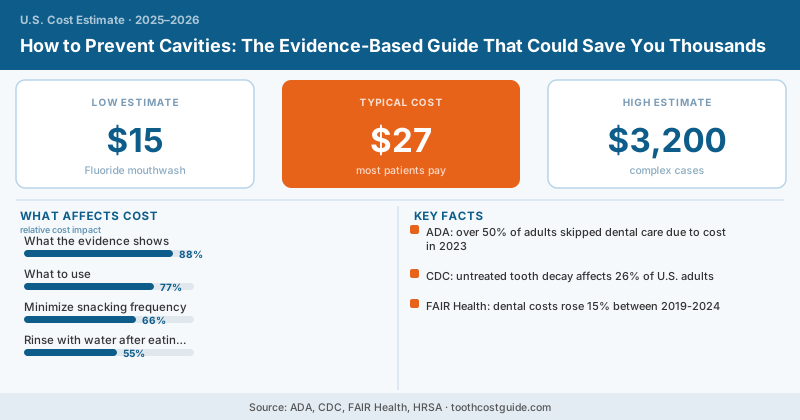
Prevention costs roughly $0.30–$0.55 per day. A single root canal costs more than 5–10 years of that daily investment.
You’re high-risk if you have: dry mouth (from medications or radiation), frequent decay despite good hygiene, active gum disease, removable partials or dentures, or you’re undergoing cancer treatment. Extra measures: prescription 5,000 ppm fluoride toothpaste, daily fluoride mouthwash, MI Paste with trays, and more frequent dental cleanings (every 3–4 months instead of 6).
Charcoal toothpaste is not a cavity preventive. Several formulations lack fluoride entirely and some are abrasive enough to remove enamel over time. The ADA has not accepted any charcoal-based toothpaste for cavity prevention. If you want whitening, use a fluoride toothpaste with added whitening agents — not charcoal.
The One Thing Most People Miss
You can have a perfect brushing and flossing routine and still develop cavities if you’re a frequent snacker or sip sugary drinks throughout the day. Diet frequency is the most underestimated cavity risk factor — and the cheapest to fix.
Track your eating pattern for one day. Count the number of times you consume carbohydrates between meals. That number is roughly the number of sustained acid attacks your enamel is sustaining daily. Reducing it to 3–4 carbohydrate exposures per day (meals, one snack) is one of the most effective preventive care decisions you can make.
Frequently Asked Questions
A single cavity filling typically costs $150–$300 depending on the filling material (composite resin is more expensive than amalgam) and tooth location. Root canals, which become necessary if cavities progress untreated, cost $800–$1,500 per tooth, making prevention dramatically cheaper.
Most dental insurance plans cover 80% of cavity filling costs after you meet your deductible (typically $50–$100), leaving you with $30–$60 out-of-pocket per filling. However, many plans exclude or limit coverage for cosmetic composite fillings, covering only amalgam at the higher percentage.
Most dentists recommend professional fluoride treatments twice yearly during regular cleanings for moderate cavity risk, though high-risk patients may benefit from four treatments annually. At-home fluoride toothpaste (0.15% sodium fluoride) used daily costs under $1 per month and is the most cost-effective daily prevention tool available.