Walking out of the extraction appointment without a single visible gap in your smile — that’s the entire value proposition of an immediate denture, and it’s why patients pay a premium for it. You never have to go out in public, or even look in the mirror, with missing teeth during the healing period.
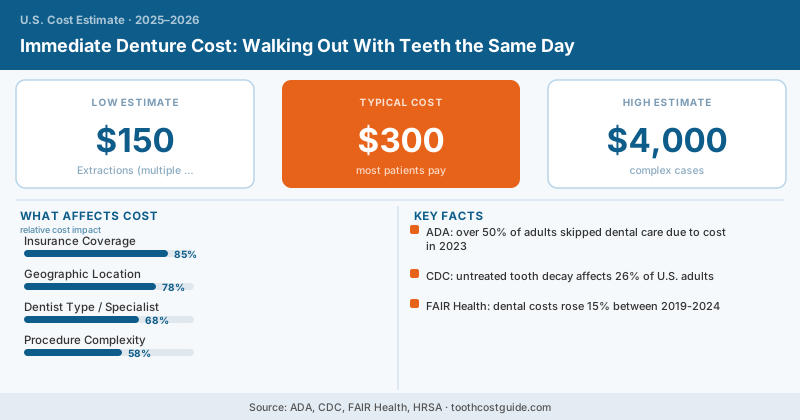
That convenience costs $1,800-$4,000 per arch, roughly $300-$800 more than a conventional denture made after healing is complete — because it requires additional appointments and a near-certain reline down the road.
| Item | Typical Cost |
|---|---|
| Immediate denture (per arch) | $1,800–$4,000 |
| Conventional denture (post-healing, comparison) | $1,500–$3,500 |
| Extractions (multiple teeth, same visit) | $150–$450 per tooth |
| Post-healing reline (around 6 months) | $150–$500 |
| Eventual conventional denture replacement | $1,500–$3,500 |
Why Immediate Dentures Cost More
The process starts weeks before any teeth come out. Your dentist takes impressions and measurements of your mouth while your natural teeth are still present, then a dental lab fabricates the denture in advance based on where your teeth currently sit and a prediction of how your gums will look post-extraction. On extraction day, the teeth come out and the pre-made denture goes in immediately — all in the same appointment.
That advance planning and lab work is why immediate dentures cost more than conventional ones: you’re paying for an additional round of impressions, a try-in fitting before extraction day, and the coordination between the extraction and the denture placement happening in the same visit.
The Healing Reality Nobody Skips
Here’s the part that surprises people: an immediate denture is never the final, permanent fit. Your gums and the underlying bone ridge shrink significantly during the first 6-12 months after extraction — this is simply how the body remodels after losing teeth, and it happens whether or not you’re wearing a denture. Because the immediate denture was made based on pre-extraction measurements, it fits loosely as healing progresses.
Almost every immediate denture patient needs a reline around the 3-6 month mark to add material and restore a snug fit as the gums settle. Some patients ultimately choose a brand-new conventional denture once healing is fully complete (usually by 12 months), rather than continuing to reline the original immediate denture indefinitely.
Ask your dentist directly how many follow-up adjustments and relines are included in your immediate denture fee versus billed separately. Some practices bundle the first reline into the original price; others bill it as a separate visit. Get this in writing before extraction day so there are no surprises during the healing months.
What Makes Someone a Good Candidate
Immediate dentures work best for patients extracting multiple teeth or a full arch at once, who have realistic expectations about the fit changing during healing, and who value never having a visible gap over minimizing total cost. Patients with significant gum disease or infection at the extraction sites may need to wait for healing before any denture — immediate or otherwise — can be properly fitted, since active infection complicates both the extraction and the fit.
Managing the First Few Weeks
The first 24-48 hours after extraction with an immediate denture in place typically involves more swelling-related adjustment than a conventional denture fitted onto already-healed gums. Soft foods are essential for the first 1-2 weeks. Some minor bleeding or soreness under the denture is normal initially — but persistent pain, unusual odor, or fever should prompt a call to your dentist rather than waiting for the scheduled follow-up.
Insurance Considerations
Dental insurance typically covers immediate dentures similarly to conventional dentures as a major service, usually at 50% after your deductible. However, some plans have specific waiting periods for denture benefits, and the extractions themselves are billed and covered separately from the denture fabrication — confirm both portions with your insurer before extraction day.
Don’t skip the recommended follow-up reline appointments even if the denture still feels reasonably comfortable. A denture that no longer matches your healed gum shape can cause pressure sores and accelerate uneven bone loss underneath — problems that are much easier to prevent with a timely reline than to fix later.
The Bottom Line
An immediate denture costs more than a conventional one — $1,800-$4,000 per arch versus $1,500-$3,500 — but it buys you something conventional dentures can’t: never being without teeth during the healing period. Budget for a reline around 6 months and understand upfront that this isn’t your final, permanent fit — it’s a bridge to it.
Frequently Asked Questions
An immediate denture is fabricated in advance from measurements and impressions of your mouth before your remaining teeth are extracted, then placed the same day as the extraction. It costs more than a conventional denture — $1,800-$4,000 per arch — because it requires extra appointments and a reline after healing.
Yes, almost always. As your gums and bone heal and shrink over the first 6-12 months after extraction, the immediate denture's fit changes. Most patients need a reline ($150-$500) around 6 months post-extraction, and sometimes a completely new conventional denture after healing is fully complete.
For most patients, yes — the ability to never be without teeth, maintaining normal appearance and some chewing function during the weeks-to-months healing period, is worth the added cost of the extra fitting and eventual reline for the vast majority of patients.