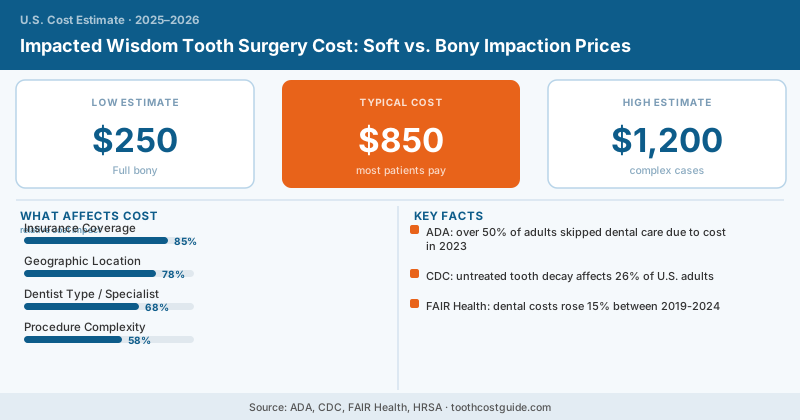
Not all impacted wisdom teeth cost the same — and the gap is bigger than most people expect. Surgery on a soft-tissue impaction runs as little as $250, while a fully bony impaction can hit $1,100 per tooth. The deeper the tooth is buried, the harder it is to remove, and the more you pay.
That’s the key thing dentists rarely explain upfront. “Impacted” isn’t one thing. It’s a spectrum, and where your tooth sits on that spectrum decides the bill.
The Three Impaction Types
| Impaction Type | What It Means | Cost Per Tooth |
|---|---|---|
| Soft-tissue | Covered by gum only | $250–$450 |
| Partial bony | Partly under bone | $350–$700 |
| Full bony | Fully encased in jawbone | $600–$1,100 |
| IV sedation (all four) | Add-on | $300–$800 |
| Bone graft if needed | Add-on | $250–$1,200 |
The American Association of Oral and Maxillofacial Surgeons estimates roughly 10 million wisdom teeth are removed in the US each year. A meaningful share are impacted to some degree, which is exactly why your surgeon stages the price by difficulty rather than charging one flat rate.
Why Bony Impactions Cost Double
A soft-tissue impaction just needs the gum opened. A full bony impaction means the tooth is locked inside the jaw — the surgeon removes overlying bone, often sections the tooth into pieces, and lifts each fragment out. That’s significantly more chair time and surgical skill, which is where the extra cost goes.
If multiple wisdom teeth need to go, removing them in a single visit usually costs less per tooth than separate appointments — you pay one sedation fee instead of several. All-four removal under IV sedation commonly totals $1,500–$3,500 depending on how impacted each tooth is. Ask for a per-tooth and a bundled quote.
Sedation Is a Real Line Item
Most impacted wisdom tooth surgery is done under IV sedation, especially for bony impactions or all-four cases. That sedation runs $300–$800 on top of the surgical fee. It’s not always required for a single soft-tissue impaction, so ask whether local anesthetic alone is an option for your case.
Impacted wisdom teeth left in place can damage the neighboring molar, cause cysts, or trigger repeated infection. If you’re getting recurring pain or swelling, don’t wait — an emergency removal costs more than a planned one. See our guide on wisdom tooth removal for the full picture.
Will Insurance Cover It?
Many plans cover impacted wisdom tooth surgery as a basic or major service at 50% to 80%, and medical insurance sometimes pays when the impaction causes a documented medical problem. Coverage varies a lot, so it helps to understand how dental insurance works before you book.
Bringing the Cost Down
No coverage? Dental schools and oral surgery training programs remove impacted wisdom teeth at 40% to 60% below private rates. A dental savings plan trims 15% to 25% with no waiting period. And CareCredit lets you finance the surgery over interest-free months.
The Bottom Line
The phrase “impacted wisdom tooth” can mean a $250 procedure or a $1,100 one. Get the impaction type in writing, ask whether sedation is truly needed, and consider bundling all four. A planned removal beats waiting for the infected, emergency version every time — and it costs a lot less than dealing with tooth extraction complications later.
Frequently Asked Questions
Impacted wisdom tooth surgery costs $250–$1,100 per tooth depending on impaction severity. Soft-tissue impactions typically run $250–$400, while bony impactions that require bone removal can reach $800–$1,100 per tooth. Most patients have 1–4 impacted wisdom teeth, making total costs range from $250 to $4,400.
Most dental insurance plans cover 50–80% of surgical extraction costs after you meet your deductible, though impacted wisdom teeth are often classified as major/surgical procedures with lower coverage rates. Out-of-pocket costs typically range from $200–$600 per tooth after insurance, depending on your plan's annual maximum and coverage percentage.
Recovery from impacted wisdom tooth extraction typically takes 7–10 days for initial healing and 2–4 weeks for complete bone healing. Bony impactions usually require longer recovery time than soft-tissue impactions due to the extent of surgical intervention needed.