Your implant went in months ago. Now your dentist mentions a “second-stage surgery” — and another charge. Wait, didn’t you already pay for the implant? Here’s what that step is, why it sometimes shows up as a separate line item, and what it should cost.
Second-stage surgery is the minor procedure that uncovers a buried implant once it’s healed, so a healing abutment can be attached and the gum can shape around it. Not every implant needs it — and that’s the first thing to understand.
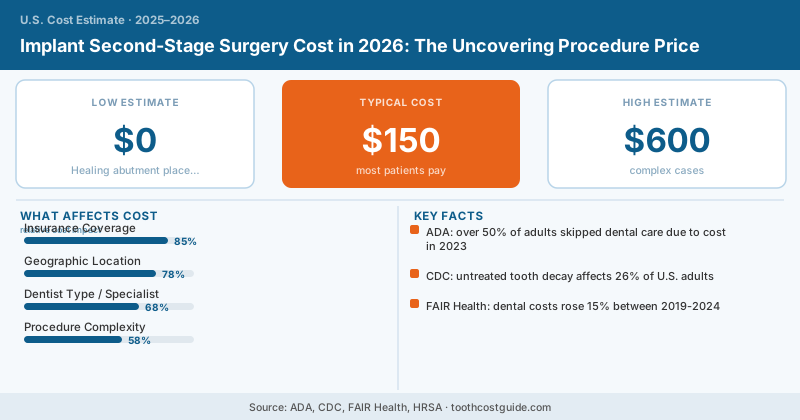
What Second-Stage Surgery Costs
| Item | Typical Cost |
|---|---|
| Second-stage uncovering (per implant) | $200–$600 |
| Healing abutment placement | $0–$300 (often included) |
| Soft-tissue laser uncovering (alternative) | $150–$400 |
| Local anesthesia | Usually included |
| Follow-up suture removal | Usually included |
It’s one of the cheaper steps in the whole dental implant cost journey — but only when it’s actually needed.
One-Stage vs Two-Stage: Why It’s Sometimes Free
Implants are placed one of two ways:
One-stage (single surgery). The implant and a healing abutment go in together, with the abutment poking through the gum from day one. No uncovering needed later. Many modern implants are placed this way.
Two-stage (buried). The implant is fully covered by gum tissue to heal protected. Months later, a second minor surgery reopens the gum to attach the abutment. That second surgery is what you’re being billed for.
If your dentist used a one-stage protocol, there’s no second-stage surgery and no extra charge — the abutment was already accessible. If you’re being quoted for an uncovering, ask whether your original implant package already bundled it. Some all-inclusive implant fees cover everything; itemized fees don’t.
Why Surgeons Choose to Bury an Implant
Two-stage placement isn’t padding the bill — it’s a clinical decision. Surgeons bury implants when they want maximum protection during healing, often because:
- A bone graft was done at the same time and needs to heal undisturbed
- A sinus lift was performed and the site needs to stay sealed
- The bone was soft and primary stability was borderline
Burying the implant keeps biting forces and bacteria away while osseointegration happens. The American Academy of Implant Dentistry recognizes both protocols as standard; the choice depends on your anatomy.
What Happens at the Appointment
It’s quick — usually 15 to 30 minutes under local anesthesia. The dentist makes a small opening in the gum over the implant, removes the cover screw, and threads in a healing abutment that sticks up through the gum. The tissue heals around it over a couple of weeks, creating the gum contour your final crown will sit against.
Don’t confuse second-stage surgery with the crown placement. Uncovering comes first; the impression and final crown come a few weeks later, after the gum heals around the healing abutment. Each is a separate step with its own (small) fee — make sure your treatment plan lists them so there are no surprises.
Laser Uncovering: A Cheaper Sometimes-Option
For shallow cases, some practices use a soft-tissue laser instead of a scalpel to expose the implant. It can be slightly cheaper ($150–$400), often needs no sutures, and heals fast. It’s not right for every case, but it’s worth asking about if your implant sits just under the gum surface.
Insurance Coverage
Dental plans handle this inconsistently. Some bundle second-stage surgery into the implant procedure code; others treat it as a separate minor surgery subject to your annual maximum. Knowing how dental insurance works helps you predict whether this $200–$600 step counts against your cap.
How to Avoid Overpaying
- Ask up front whether your implant is one-stage or two-stage.
- Confirm whether uncovering is bundled in your original implant fee.
- Get the full step-by-step plan so each charge is visible before you start.
- Ask about laser uncovering if your case is shallow — it can save a little.
Bottom Line
Second-stage implant surgery costs $200–$600 per implant — a small but real step that only applies to buried, two-stage implants. If your implant was placed one-stage, you won’t pay it at all. The key move is clarity: ask which protocol your surgeon used and whether the uncovering was already part of your quoted implant price.
Frequently Asked Questions
Second-stage implant surgery (uncovering) typically costs $200–$600 per implant in 2026. Some practices bundle this into the initial implant cost, while others charge it separately; always confirm with your dentist whether the quoted implant price includes or excludes this step.
Most dental insurance plans do not cover implant-related procedures, including second-stage surgery, since implants are often classified as cosmetic or elective. You should expect to pay the full $200–$600 out-of-pocket unless your plan explicitly includes implant coverage.
Second-stage surgery is needed 3–6 months after the initial implant placement, once the implant has integrated with the jawbone. This minor procedure uncovers the implant so a healing abutment can be attached and gum tissue can properly contour around it before crown placement.