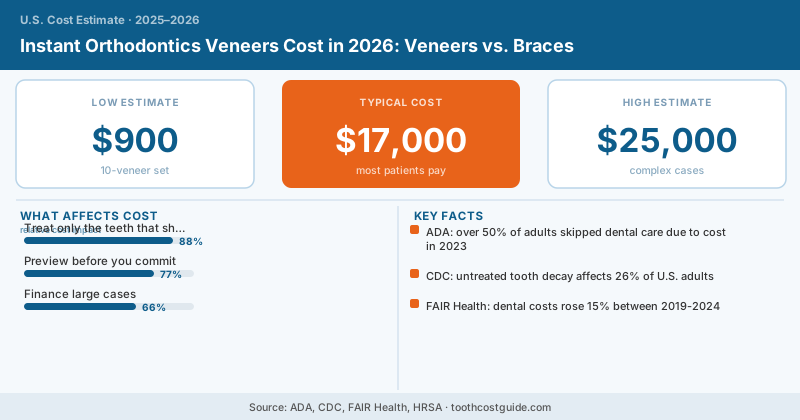
In 2010, fixing crooked front teeth meant two years in braces. Today, “instant orthodontics” promises the same straight-looking smile in two visits — by covering the teeth with veneers instead of moving them. A full set runs $8,000 to $25,000. It’s fast and the results are immediate. But the word “orthodontics” is doing some heavy lifting here, because nothing actually gets straightened. Let’s unpack what you’re really buying and whether it’s the right call.
| Instant Orthodontics Option | Typical Cost |
|---|---|
| Per veneer (porcelain) | $900–$2,500 |
| 6-veneer “social smile” set | $5,400–$15,000 |
| 8-veneer set | $7,200–$20,000 |
| 10-veneer set | $9,000–$25,000 |
| Traditional braces (for comparison) | $3,000–$7,000 |
| Invisalign (for comparison) | $3,000–$7,000 |
What “Instant Orthodontics” Actually Means
It’s a marketing term, not a recognized specialty. Instead of moving teeth into alignment with braces or aligners, the dentist reshapes and covers slightly crooked teeth with dental veneers so they look straight. For minor crowding, small rotations, or gaps, this can produce a beautifully even smile in a couple of weeks rather than a couple of years.
The appeal is obvious: speed. The catch is just as important.
Instant orthodontics doesn’t fix your bite — it disguises the appearance of crooked teeth. For minor cosmetic misalignment in the front, that’s fine. But if your teeth are significantly crowded or your bite is off, covering the problem with veneers can hide a functional issue that real orthodontics would actually solve.
The Irreversible Part
Here’s the trade-off that matters most. Braces and Invisalign move your real teeth and leave them intact. Veneers require permanently shaving down a layer of enamel — and once that’s gone, your teeth will need to be covered for the rest of your life. Veneers also need replacing every 10 to 15 years, so “instant orthodontics” commits you to a lifelong cycle of replacements that braces don’t.
The American Dental Association consistently emphasizes choosing the most conservative treatment that achieves the goal. For straightening teeth, moving them is more conservative than grinding them down. That’s worth sitting with before you choose speed over reversibility.
When Instant Orthodontics Makes Sense
It’s a legitimately good option when:
- Your misalignment is minor and purely cosmetic
- You also want to change tooth color or shape (something braces can’t do)
- You genuinely can’t commit to months of orthodontic treatment
- Your bite is healthy and the issue is appearance-only
It’s the wrong call when your teeth are significantly crowded, your bite needs correcting, or you’re young enough that real orthodontics would give a lasting, intact-tooth result. In those cases, braces or aligners cost less and preserve your natural teeth.
The Cost Comparison That Surprises People
Notice the table: a full veneer set ($8,000–$25,000) often costs more than braces or Invisalign ($3,000–$7,000) — and the orthodontic route keeps your natural teeth while veneers replace their surface forever. You’re frequently paying a premium for speed and a cosmetic upgrade, not a discount. If color and shape don’t bother you, real orthodontics is usually both cheaper and more conservative.
That said, if you want straightening and a color/shape transformation, veneers do both in one shot — which is why they’re often folded into a full smile makeover.
Saving Money
Consider aligners first for pure straightening. If your only goal is straight teeth, Invisalign is cheaper and keeps your enamel.
Treat only the teeth that show. A 6-veneer “social smile” set covers what most people reveal when they smile, for less than a 10-tooth set.
Preview before you commit. A trial smile or digital design prevents a costly redo on irreversible work.
Finance large cases. CareCredit offers 0% promotional periods, and a dental savings plan can trim 10–20% at participating offices.
Get a consult with both a cosmetic dentist and an orthodontist before choosing instant orthodontics. The dentist sells veneers; the orthodontist sells alignment. Hearing both pitches side by side is the only way to know whether you’re paying a premium to skip braces you might not actually need.
Veneers permanently remove enamel and commit you to lifelong replacements — a serious decision for teeth that could be straightened instead. If your misalignment is more than minor, or your bite is involved, get an orthodontic opinion first. Insist on a written treatment plan, a preview of the result, and a clear explanation of how covering crooked teeth affects your long-term bite.
Frequently Asked Questions
A full set of instant orthodontics veneers typically costs $8,000 to $25,000, depending on the number of teeth treated and your location. This price is significantly higher upfront than traditional braces ($3,000–$7,000), but the results appear in just two visits instead of 18–24 months.
Most dental insurance plans do not cover instant orthodontics veneers because they are considered cosmetic rather than medically necessary, leaving you responsible for the full $8,000–$25,000 cost out-of-pocket. Some plans may cover a small portion if veneers are placed for structural damage, but you should verify with your insurer before treatment.
No—instant orthodontics veneers are permanent because the procedure requires removing tooth structure to place them, making the process irreversible. Veneers typically last 10–15 years before needing replacement, which means you will face additional costs ($500–$2,500 per tooth) for maintenance or removal in the future.