Only 32% of American adults floss daily, according to a survey published in the Journal of Dental Hygiene. The other 68% are leaving their dentist with a guilt trip — and with plaque between their teeth that a toothbrush physically can’t reach.
Here’s the real problem with the standard advice to “just floss more”: it assumes string floss is the right tool for everyone. It’s not. Gap size, restorations, dexterity, braces, implants — all of these change what works. Picking the right interdental tool matters more than picking any tool and abandoning it in week two.
Why Interdental Cleaning Matters
Approximately 35% of your tooth surface sits between teeth. Your toothbrush can’t access it. Plaque left in those spaces causes interproximal cavities (the cavities that start between teeth and only become visible on X-rays) and gingivitis in the interdental papilla — the gum tissue between teeth.
A 2011 Cochrane review of 12 randomized trials found that flossing in addition to brushing significantly reduced gingivitis compared to brushing alone. Effect on plaque: modest. Effect on gum health: meaningful, particularly at the gumline.
The takeaway: interdental cleaning’s biggest payoff is gum health, not plaque scores. Any tool you use consistently beats the one you find annoying and skip.
Your Options: What Works for What
Traditional String Floss: $3–$8
The original tool. Works best in tight contacts — teeth with no or minimal spacing, no restorations, and no recession. String floss wraps around the tooth surface and physically scrapes plaque off with a C-shaped motion at the gumline.
Best options:
- Oral-B Glide Pro-Health ($4–$7): thin, waxed, slides through tight contacts easily
- Johnson & Johnson Reach Waxed ($3–$5): classic, widely available
- GUM Expanding Floss ($5–$8): expands on contact for wider coverage on exposed root surfaces
Technique matters: Curve the floss into a C-shape against each tooth surface. Go slightly below the gumline (1mm) without forcing. Snap-through technique — snapping floss through tight contacts — is the leading cause of gum tissue damage from flossing.
Not ideal for: Bridges (can’t thread under the pontic), implants (can damage peri-implant tissue if used aggressively), orthodontic brackets (requires a threader), large interdental spaces (covers too little surface area).
Floss Picks: $5–$10
Pre-threaded plastic picks hold a short section of floss stretched between two prongs. More convenient than string floss — no wrapping around fingers, one-handed use, easy to carry.
The clinical problem: Because the floss section is fixed and short, you can’t form the C-shape properly or adapt to the tooth surface the way you can with string floss. You’re cleaning less tooth surface per pass. Studies comparing floss picks to traditional floss show picks are modestly less effective — though considerably more effective than no interdental cleaning.
Best for: People who won’t use string floss. Lunch-hour maintenance. Kids learning to floss. Travel.
Cost: GUM Soft-Picks Advanced ($8–$12), Oral-B Glide Floss Picks ($5–$8 for 75-count).
Interdental Brushes (Proxabrush/TePe): $6–$12
Tiny cylindrical or tapered brushes on wire handles — available in sizes from 0.4mm to 1.5mm diameter. These are the best choice for patients with:
- Spacing between teeth (any gap wider than ~0.5mm)
- Gum recession that has created open triangle spaces
- Bridgework
- Implants
- Periodontal maintenance patients
A 2015 systematic review found interdental brushes were more effective than floss for plaque removal in patients with open embrasure spaces. The brush physically fills the space and cleans the concave tooth surfaces that string floss misses.
Sizing is critical. The brush should fit into the space without forcing and without excessive slack. Most people need 2–3 different sizes for different areas. TePe brand provides color-coded sizing guides; your hygienist can identify the right sizes at your cleaning appointment.
Cost: TePe Interdental Brushes ($7–$12 for 8-pack), Oral-B Interdental Brushes ($8–$10 for 8), GUM Proxabrush Go-Betweens ($6–$9 for 10-pack). Each brush lasts 1–3 days of use.
Water Flosser: $40–$80
Pressurized pulsating water stream that flushes the sulcus and disrupts bacteria. See the full water flosser review for detailed model comparisons.
Best for: Orthodontic patients, implant patients, bridges, patients with deep periodontal pockets, anyone who has tried all of the above and won’t maintain a consistent habit with any of them.
Limitation: Less effective than string floss or interdental brushes for mechanical plaque removal between teeth with tight contacts. Best used alongside another interdental method or as the sole option for patients who literally won’t floss otherwise.
GUM Soft-Picks: $8–$15
Rubber-coated toothpick-style tools with soft flexible nubs — designed for the space between teeth and for massaging the interdental gum tissue. Less intensive than an interdental brush; more substantial than a toothpick.
Good for on-the-go cleaning after meals. Not typically sufficient as a primary daily interdental cleaning tool for most adults, but useful as a supplement.
| Tool | Cost | Annual Cost | Best For |
|---|---|---|---|
| String floss (Oral-B Glide) | $4–$7/pkg | $15–$30 | Tight contacts, no restorations |
| Floss picks | $5–$10/pkg | $20–$40 | Convenience, kids |
| Interdental brushes (TePe) | $7–$12/8-pk | $60–$120 | Gaps, recession, bridges |
| Water flosser (Waterpik WP-660) | $55–$80 (unit) | $10–$15 tips/yr | Braces, implants, non-flossers |
| GUM Soft-Picks | $8–$15/pkg | $30–$60 | Supplemental/travel |
What to Use With Implants
String floss can damage the peri-implant tissue if used with an incorrect technique or if you allow the floss to snap under the implant crown. Many implant manufacturers and the ADA recommend using unwaxed tape floss or implant-specific floss (Oral-B Superfloss) with a gentle back-and-forth motion — not a C-shape — and avoiding snapping through the contact.
Water flossers with low-to-medium pressure are the safest and most effective option for most implant patients. Interdental brushes that fit without touching the implant surface are also appropriate.
Ask your oral surgeon or implant dentist specifically what they recommend — implant designs vary and some are more floss-sensitive than others.
What to Use With Bridges
A dental bridge covers the missing tooth space with a pontic (the artificial tooth) fused between two crowns. String floss can’t be threaded through the bridge contact without a floss threader.
Oral-B Superfloss ($3–$6 for 50 pre-cut pieces) has a stiff threader end that passes under the bridge, a spongy floss section for cleaning the pontic area, and regular floss for the adjacent crowns. It’s the classic solution.
Water flossers work well for flushing under bridges. For patients who won’t use Superfloss regularly, a Waterpik cleans under bridges effectively in a fraction of the time.
TePe sizes range from Pink (0.4mm) to Black (1.5mm). Start with the smallest size that fits into your interdental space without forcing. The brush should contact both tooth surfaces as it passes through. Most adults with normal spacing use Pink through Green (0.4–0.8mm); patients with recession or larger spaces often need Yellow or Red (0.7–0.5mm). Your hygienist can identify the right sizes and demonstrate technique at your next visit.
Don’t use metal interdental brushes around implants. The wire core can scratch the implant surface or damage soft tissue. Use rubber-coated TePe brushes specifically labeled “implant safe” or a water flosser for implant maintenance.
The Honest Recommendation
For healthy adults with no restorations and normal spacing: string floss is the least expensive and most effective option. GUM Expanding Floss if you have any recession. Take 2 minutes, do it correctly, every day.
For anyone with bridges, implants, significant spacing, recession, or who won’t maintain a string floss habit: an interdental brush (sized by your hygienist) and/or a water flosser will serve you better.
The goal is daily interdental cleaning using the tool you’ll actually use. The preventive care savings from preventing one interproximal cavity ($150–$300) or avoiding escalating gum disease treatment ($600–$2,000) dwarf the cost of any of these tools.
Frequently Asked Questions
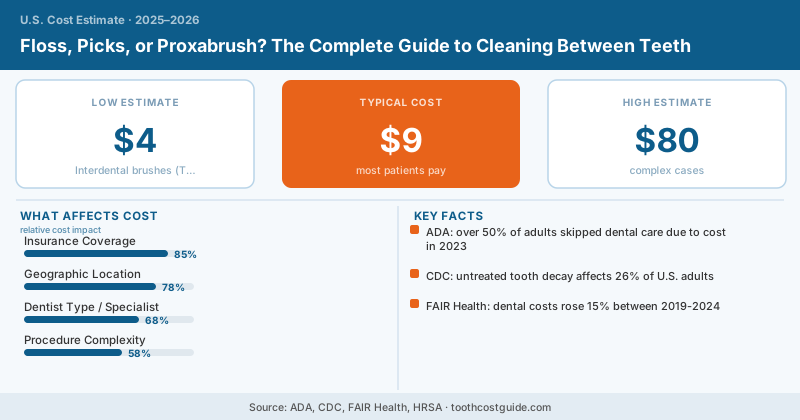
Traditional floss costs $3–$8 per container, interdental picks run $5–$10 per pack, proxabrushes (interdental brushes) range from $6–$12 per set, and water flossers typically cost $25–$75 for a basic model. Most Americans spend $5–$15 monthly on whichever tool they choose, making these among the cheapest preventive dental care options available.
Dental insurance does not typically cover the purchase of floss, picks, or proxabrushes since they are considered over-the-counter preventive supplies rather than professional services. However, using these tools regularly can help you avoid costly fillings, root canals, and extractions—meaning your out-of-pocket savings on major dental work often far exceed the $50–$100 annual cost of these tools.
People with implants, bridges, or crowns should clean between teeth at least once daily—ideally water flossers or proxabrushes work better than traditional floss in these cases because they avoid getting caught on restorations. Daily use takes 2–5 minutes and is crucial to prevent peri-implantitis (implant infection) and decay under bridgework, which can cost $1,500–$6,000+ to repair.