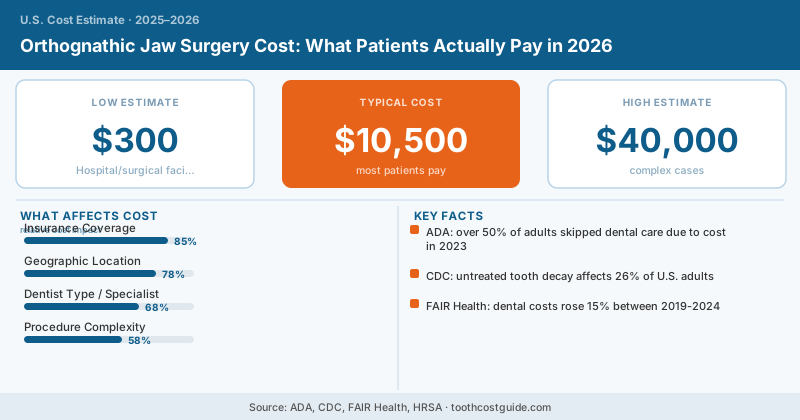
Here’s something most patients discover too late: the sticker price on orthognathic surgery is almost never what you actually pay. Unlike most dental procedures, jaw surgery routinely involves medical insurance when it’s medically necessary — and “medically necessary” covers more situations than most people think. The total out-of-pocket, with good planning, can be a fraction of the $20,000–$40,000 full-treatment figure.
What Orthognathic Surgery Is
Orthognathic surgery (from the Greek orthos — straight — and gnathos — jaw) repositions the upper jaw, lower jaw, or both to correct structural misalignment that orthodontics alone cannot fix. It treats:
- Severe overbite or underbite from skeletal jaw discrepancy
- Open bites (upper and lower front teeth don’t meet)
- Facial asymmetry from jaw misalignment
- Sleep apnea caused by jaw anatomy restricting the airway
- Chewing dysfunction, chronic TMJ problems
- Cleft palate-related jaw issues
The surgery is performed by an oral and maxillofacial surgeon (OMFS) in a hospital or surgical center, under general anesthesia, typically requiring 1–3 days inpatient.
Full-Treatment Cost Breakdown
| Component | Typical Cost Range |
|---|---|
| Pre-surgical orthodontics (12–18 months) | $3,000–$6,000 |
| OMFS surgeon’s fee | $6,000–$12,000 |
| Anesthesiologist fee | $1,500–$3,000 |
| Hospital/surgical facility fee | $6,000–$15,000 |
| Post-surgical orthodontics (6–12 months) | $2,000–$4,000 |
| Imaging (CBCT scans, cephalometric X-rays) | $300–$800 |
| Total (uninsured, full price) | $20,000–$40,000 |
Upper jaw surgery (Le Fort I osteotomy), lower jaw surgery (BSSO — bilateral sagittal split osteotomy), and combined double-jaw surgery (bimaxillary osteotomy) each have different complexity and time profiles — double-jaw cases cost more and carry longer recovery.
Medical Insurance: The Key to Affordability
Orthognathic surgery is where the medical/dental insurance divide matters enormously. When surgery is performed to correct:
- Functional chewing impairment
- Documented sleep apnea
- Severe malocclusion affecting speech
- Post-traumatic jaw deformity
- Cleft-related defects
…most medical insurance plans — including employer-sponsored plans and ACA marketplace plans — cover the surgical and hospital fees as a medical procedure. Orthodontics remains dental, but the surgery component (often $15,000–$25,000 of the total) routes through medical, not dental.
A 2019 survey from the American Journal of Orthodontics and Dentofacial Orthopedics found that roughly 60% of orthognathic surgery patients had significant medical insurance coverage for the surgical component when a clear functional indication was documented.
Before scheduling a surgery date, your OMFS should submit a pre-authorization request to your medical insurer with full documentation: cephalometric analysis showing the skeletal discrepancy, records of chewing dysfunction or sleep study results, photos, and a detailed letter of medical necessity. Without pre-auth, you risk paying the full surgical and hospital fees out of pocket. Pre-auth can take 2–6 weeks — build it into your timeline.
“Cosmetic” jaw surgery — requested solely to improve facial appearance without a documented functional problem — is not covered by medical insurance. Some patients pursue surgery for aesthetic reasons (chin projection, facial symmetry, profile improvement) and these cases are fully out-of-pocket. Be honest with yourself about which category your situation falls into before expecting medical coverage.
What Out-of-Pocket Actually Looks Like
Assume your medical insurance covers 80% of in-network surgical and hospital fees after your deductible:
- Deductible: $2,000–$4,000 (varies by plan)
- 20% coinsurance on, say, $20,000 in medical claims: $4,000
- Medical out-of-pocket maximum: often limits exposure to $5,000–$8,000 total for the surgery year
Add orthodontics (unlikely to be covered beyond a small lifetime dental benefit): $3,000–$8,000
Realistic total out-of-pocket for well-insured patients: $8,000–$16,000. For patients without medical insurance, or with plans that exclude orthognathic surgery, the full $20,000–$40,000 applies.
Recovery Timeline
Recovery from jaw surgery is significant:
- Weeks 1–3: Jaw wired or banded shut or semi-restricted. Liquid/soft diet mandatory.
- Weeks 4–6: Gradual return to soft chewing. Swelling still noticeable.
- Months 2–6: Gradual return to full chewing function. Numbness in lower lip/chin (from the BSSO) can persist 3–18 months and usually, but not always, fully resolves.
- 12–18 months post-op: Final orthodontic refinement completes; bite fully settled.
Time off work: most patients take 2–4 weeks for desk work, 4–6 weeks for physical labor.
Financing
Given the total treatment timeline of 2–4 years from start of orthodontics to final retainers, most practices offer financing through CareCredit, LendingClub, or in-house payment plans. The surgery itself can often be billed through your surgeon’s office on an installment basis.
Bottom Line
Orthognathic surgery runs $20,000–$40,000 for the full treatment, but medical insurance frequently covers the surgical and hospital components when functional necessity is documented — reducing patient out-of-pocket to $8,000–$16,000 for those with good insurance. Pre-authorization is essential. Orthodontic costs remain your responsibility regardless. Get your surgeon and orthodontist communicating before you start pre-surgical braces — the treatment sequence requires tight coordination.
Frequently Asked Questions
The full treatment cost ranges from $20,000 to $40,000, which typically includes the surgical procedure itself ($15,000–$30,000), pre-surgery orthodontics ($3,000–$8,000), and post-operative care. Your actual out-of-pocket expense is often significantly lower because medical insurance frequently covers a substantial portion when the surgery is deemed medically necessary, potentially reducing your costs to $5,000–$15,000 depending on your plan.
Yes, medical insurance often covers orthognathic surgery when it's medically necessary to correct functional problems like severe bite misalignment, sleep apnea, or breathing difficulties—not just cosmetic concerns. Most plans cover 50–80% of surgical costs after you meet your deductible, though orthodontics may be covered under dental insurance instead, leaving you responsible for copays and any out-of-network fees.
The complete treatment timeline is typically 18–36 months: pre-surgery orthodontics usually takes 12–24 months, the surgery itself is one day, and recovery with braces or aligners continues for 6–12 months afterward. Most patients can return to normal activities within 2–4 weeks, though full bone healing takes 3–6 months.