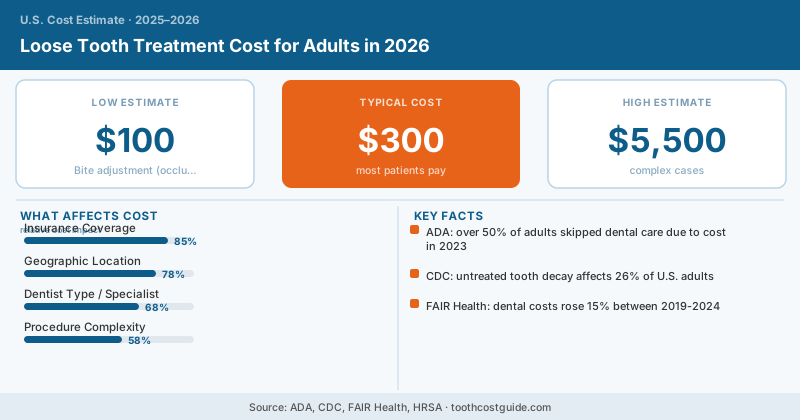
A wiggly tooth is normal when you’re seven. When you’re forty-seven, it means something’s wrong with the bone or ligament holding it in place — and what that something is determines whether you’re paying $300 or $2,500 to keep the tooth. Let’s get into the numbers.
Cost by Cause
| Cause / Treatment | Typical Cost (No Insurance) |
|---|---|
| Exam + x-rays to diagnose | $100–$300 |
| Deep cleaning (gum disease cause) | $200–$1,200 |
| Splinting (bonding tooth to neighbors) | $300–$1,000 |
| Bite adjustment (occlusal equilibration) | $100–$500 |
| Night guard (grinding cause) | $300–$800 |
| Gum/bone grafting surgery | $600–$3,000 |
| Extraction + implant (tooth unsaveable) | $3,000–$5,500 |
The Most Common Culprit: Gum Disease
For adults, the number one reason a tooth loosens is advanced periodontal disease. The CDC reports that nearly half of adults 30 and older — about 47% — have some form of gum disease, and in severe cases the supporting bone erodes until teeth literally start to move.
If gum disease is the cause, the first step is almost always scaling and root planing — a deep cleaning below the gumline that runs $200–$1,200 depending on how many quadrants need work. Catching it here can stop the looseness from getting worse. Our full gum disease treatment cost guide covers the surgical options if it’s progressed further.
A tooth that’s loose because of inflammation can often tighten back up once the infection is controlled — bone and ligament recover when the disease stops. But a tooth loose because the bone is already gone may need extraction. Only x-rays tell you which situation you’re in, which is why that $100–$300 diagnostic visit comes first.
Other Causes (and Their Price Tags)
- Trauma: A blow to the mouth can loosen a tooth. If the root isn’t fractured, your dentist may splint it — bonding it to neighboring teeth for a few weeks while the ligament heals. $300–$1,000.
- Grinding (bruxism): Chronic clenching overloads teeth and can wiggle them loose. A night guard plus a bite adjustment usually solves it for $400–$1,300 combined.
- Failed restoration: Sometimes a tooth feels loose but it’s actually a crown or filling that’s come unseated. Re-cementing is cheap — $75–$250 — but it has to be diagnosed correctly.
What Splinting Actually Does
Splinting is the workhorse fix for a salvageable loose tooth. Your dentist bonds a thin wire or composite material across the loose tooth and its sturdy neighbors, spreading the bite force so the wobbly one can stabilize. It’s quick, painless, and runs $300–$1,000 depending on how many teeth are linked. Some splints are temporary; others stay permanently.
Think of it like a cast for a broken arm. The splint doesn’t heal the tooth — it just holds everything still so your body can do the healing. The ligament and bone need stability to reattach, and a tooth that keeps wiggling never gets the chance. That’s why your dentist may also tell you to lay off chewing on that side and skip hard or sticky foods for a few weeks while it settles.
Insurance and Saving Money
Deep cleanings and gum surgery are usually covered, but at varying rates — diagnostic and preventive care at 80–100%, periodontal surgery often at just 50% with a deductible. Splinting falls into a gray zone; some plans cover it as a periodontal service, others don’t.
If you’re uninsured, don’t sit on a loose tooth waiting to afford it. A dental savings plan can trim the cost of cleanings and surgery, and many offices offer payment plans. Understanding how dental insurance works helps you predict your out-of-pocket before you commit.
A loose tooth with throbbing pain, swelling, or pus points to an active infection or abscess — that’s an emergency, not a routine appointment. Left alone, the infection can spread to bone and surrounding teeth. Check our dental emergency cost guide for urgent-care pricing.
Bottom Line
A loose adult tooth is a warning light, not a death sentence. Treated early — usually for $300 to $1,200 — the tooth often survives. Ignored, it slides toward a $3,000+ extraction-and-implant. The diagnostic visit is the move that protects both your tooth and your wallet.
Frequently Asked Questions
A deep cleaning to treat gum disease typically costs $200 to $1,200 without insurance, depending on the severity and number of teeth affected. If splinting is needed afterward to stabilize the tooth, add another $300 to $500 for that procedure.
Most dental insurance plans cover diagnostic exams and x-rays at 100% and deep cleanings at 50–80%, but many exclude or limit coverage for splinting and bone grafting procedures. You should expect to pay out-of-pocket for stabilization treatments that exceed your plan's annual maximum, which typically ranges from $1,000 to $2,000.
Splinting (bonding the loose tooth to a neighboring tooth) is the quickest fix and can be completed in one visit for $300–$500, while deeper issues like bone loss or severe gum disease may require multiple appointments and gum surgery costing $800–$2,500 over several weeks or months. Your dentist will recommend the appropriate treatment after x-rays determine whether the problem is ligament damage, gum disease, or bone loss.