42% of Americans are dissatisfied with their smile, according to the American Academy of Cosmetic Dentistry — and Lumineers are one of the most searched cosmetic dental products online. The pitch sounds irresistible: ultra-thin porcelain shells with no shots, no drilling, no sensitivity.
But the price tag surprises most people. Here’s what you’ll actually pay, what you get for it, and whether the premium over regular veneers is justified for your situation.
What Are Lumineers?
Lumineers are a brand of ultra-thin dental veneers — about 0.2mm thick, roughly the thickness of a contact lens — made from patented Cerinate porcelain by the DenMat Corporation. They’re bonded directly over existing teeth with minimal or no tooth reduction.
Traditional porcelain veneers require the dentist to shave off 0.3–0.7mm of enamel to make room for the veneer’s thickness. Skip that step and you’d end up with teeth that look bulky. Lumineers solve this with extreme thinness — you can bond them over existing teeth without (usually) altering the tooth beneath.
That no-prep or minimal-prep process is the Lumineers selling point. It’s also what makes them genuinely different from traditional veneers — and the source of both their advantages and limitations.
Lumineers Cost vs. Traditional Veneers
| Procedure | Cost Per Tooth | Total (8 teeth) |
|---|---|---|
| Lumineers | $800–$2,000 | $6,400–$16,000 |
| Traditional porcelain veneers | $950–$2,500 | $7,600–$20,000 |
| Composite veneers (direct bonding) | $250–$1,500 | $2,000–$12,000 |
| Dental bonding (single tooth) | $300–$700 | N/A |
| Teeth whitening (in-office) | $300–$1,000 | Treats all teeth |
Lumineers are generally priced similarly to — or slightly below — traditional porcelain veneers. The gap is less significant than many people expect.
What drives cost variation:
- Number of teeth: Most people treat 6–10 front teeth for a full smile makeover; some only treat 2–4 for spot corrections
- Dentist’s cosmetic experience: Lumineers require an authorized trained provider; cosmetic specialists charge more than general dentists
- Geographic location: Expect $1,400–$2,000 per tooth in major coastal markets; $800–$1,200 in smaller cities and the South
- Lab fees: DenMat’s Cerinate lab charges more than generic dental labs; that cost passes through
The No-Prep Advantage — and Its Limits
Let’s be honest about what “no drilling” actually means in practice.
In ideal candidates — teeth that are straight, properly positioned, and don’t protrude — Lumineers can genuinely be placed with minimal or no tooth preparation. This preserves enamel, keeps the procedure reversible, and eliminates the need for temporary veneers during the lab fabrication period.
But teeth aren’t always ideal. If yours are:
- Already slightly bulky or forward-positioned
- Severely discolored from tetracycline or fluorosis
- Significantly misaligned
…your dentist may still need to do some preparation, negating the no-prep advantage. Or the Lumineers result may look opaque, thick, or unnatural because there’s no room to create depth and translucency.
Lumineers are a material and a brand, not a guarantee of results. A skilled cosmetic dentist working with traditional veneers will get better outcomes than an inexperienced dentist working with Lumineers — and vice versa. When evaluating providers, ask to see their before-and-after photo portfolio specifically for Lumineers cases. Look for natural translucency, gumline fit, and shade matching. That portfolio tells you more than any brand marketing.
Who’s a Good Candidate?
Lumineers work best when:
- Teeth are close to ideal alignment
- Discoloration is mild to moderate (not severe tetracycline staining)
- You want to close small gaps or correct minor chips
- You want a conservative option without enamel reduction
- You’re willing to pay a premium for reversibility
Traditional veneers may be better when:
- Teeth need significant shade correction (Lumineers can look chalky over very dark teeth)
- Tooth reduction is already needed for other restorative reasons
- Maximum customization and translucency are priorities
Does Insurance Cover Lumineers?
No. Like all purely cosmetic dental procedures, Lumineers aren’t covered by dental insurance. They’re elective treatments with no medically necessary indication.
Your options for managing the cost:
- CareCredit or Lending Club dental financing: Many cosmetic dental practices offer 12–18 months same-as-cash financing
- HSA/FSA: Not eligible. Cosmetic procedures don’t qualify as medical expenses under IRS guidelines
- In-house payment plans: Some practices allow monthly installments, especially for full-mouth cases
- Dental schools: Some accredited dental schools with cosmetic dentistry residency programs offer Lumineers and veneers at reduced fees under faculty supervision
The Lumineers Timeline
Understanding the process helps you budget accurately.
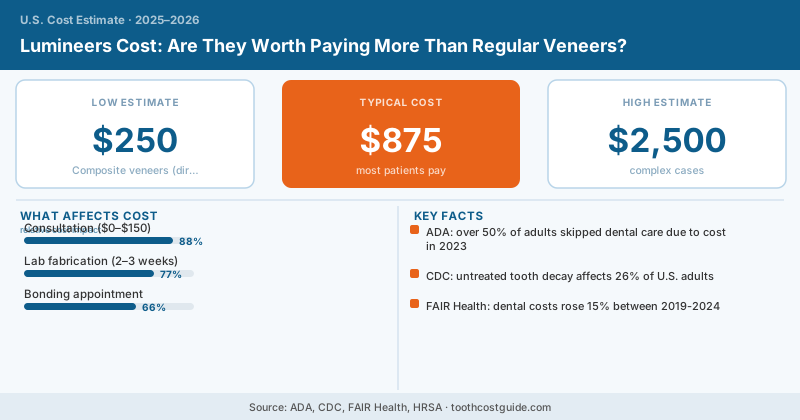
Consultation ($0–$150): Your dentist examines your teeth, takes photos and impressions, and discusses whether Lumineers are appropriate for your goals. Some practices offer free consultations.
Tooth preparation and impressions ($0 extra if minimal prep): The dentist does any minimal preparation needed, takes precise impressions (or digital scans), and selects your shade. Temporary veneers may or may not be needed.
Lab fabrication (2–3 weeks): Your Lumineers are custom-made at DenMat’s California lab.
Bonding appointment: The Lumineers are permanently bonded to your teeth. The dentist checks fit, shade, and bite before cementing.
Be skeptical of “no-prep Lumineers” promises made before your dentist has examined your specific teeth. Some providers use this as a marketing line without assessing whether your anatomy actually supports a no-prep approach. If your consultation doesn’t include a thorough examination of tooth position, gumline health, and bite, find a different provider. A good cosmetic dentist will be honest with you if Lumineers aren’t the right fit — they don’t need to sell you a specific product.
Bottom Line
Lumineers cost $800–$2,000 per tooth — comparable to traditional veneers in many markets. The real value proposition isn’t the price; it’s enamel preservation and the theoretical reversibility. For the right candidate with mild cosmetic concerns and well-positioned teeth, they’re an excellent option. For patients needing significant correction, traditional veneers may deliver better esthetics. Either way, this is a decision worth making after a consultation with a dentist who has demonstrated experience with both options — not just the one they’re certified to sell.
Frequently Asked Questions
Not universally. Lumineers require little to no tooth preparation, which preserves enamel and keeps the option reversible. But their thinness can also be a limitation — they don't mask severe staining or significant discoloration as effectively as traditional veneers, and they can look slightly opaque or bulky on some teeth because the dentist can't reduce the existing tooth structure. Traditional veneers allow more customization. The right choice depends entirely on your starting tooth anatomy and aesthetic goals.
Technically yes — because minimal tooth structure is removed, there's something to reattach to. But removal is not simple. The bonding adhesive is designed to be permanent, and separating the veneer from the tooth requires careful technique to avoid enamel damage. 'Reversible' means 'theoretically possible,' not 'easy or cheap.' Plan to have them for 10–20 years either way.
Lumineers are made from patented Cerinate porcelain by the DenMat lab. The manufacturer cites clinical data showing functional results beyond 20 years. Real-world longevity depends on bite forces, grinding, oral hygiene, and bonding technique. Most cosmetic dentists report seeing Lumineers last 10–15 years with proper care before replacement or rebonding becomes necessary.