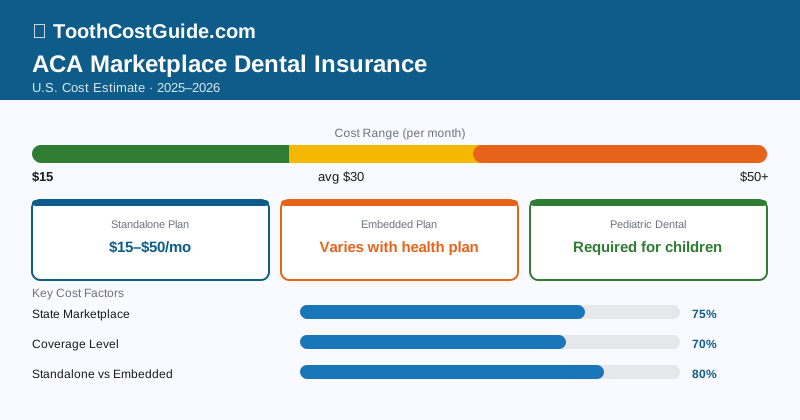
Buying dental insurance on healthcare.gov sounds simple. It’s mostly straightforward — but there’s one distinction that trips up a lot of families: the difference between “standalone” dental plans and “embedded” pediatric dental in health plans. Miss it and you either pay for duplicate coverage your child doesn’t need, or end up with a gap you didn’t know existed.
ACA marketplace dental plans run $20–$50/month for adults and offer standardized coverage with strong consumer protections. Here’s everything you need to navigate the system correctly in 2025.
| Plan Type | Monthly Cost | Annual Max | Who It Covers | Available On Exchange? |
|---|---|---|---|---|
| Standalone adult dental (low tier) | $20–$35 | $1,000 | Adults 19+ | Yes |
| Standalone adult dental (high tier) | $35–$50 | $1,500–$2,000 | Adults 19+ | Yes |
| Standalone pediatric dental | $20–$40 | $1,000–$1,500 | Children under 19 | Yes |
| Embedded pediatric in health plan | Part of health premium | Varies (EHB standard) | Children under 19 | Yes (automatic) |
| Standalone family dental | $60–$120 | $1,000–$2,000/person | All family members | Yes |
| Off-exchange individual dental | $25–$60 | $1,000–$2,500 | Adults/families | No (direct purchase) |
The Embedded vs. Standalone Question
The ACA requires all ACA-compliant health plans to cover 10 “essential health benefits,” including pediatric dental and vision for children under 19. But there are two ways a health plan can satisfy this requirement:
Embedded: The health plan itself includes pediatric dental. One premium, one insurer, one ID card — dental for kids is baked in.
Standalone: The health plan doesn’t include pediatric dental. A separate standalone dental plan sold alongside the health plan on the marketplace fulfills the requirement.
If your chosen health plan already has embedded pediatric dental, buying a separate standalone pediatric dental plan on top of it creates redundant, duplicate coverage — not double benefits. Your claim gets paid by one plan. The second premium is wasted money.
Before adding any dental plan for your children, check your health plan’s Summary of Benefits for the pediatric dental section. It’s one of the most common and costly oversights families make on the marketplace.
If your ACA health plan already includes pediatric dental as an embedded benefit, buying a separate standalone dental plan for children usually results in duplicate, redundant coverage — not double benefits. Check your health plan’s Summary of Benefits to see if pediatric dental is already included before buying a standalone plan.
What Marketplace Dental Plans Actually Cover
Standalone marketplace dental plans come in two tiers — low and high. Unlike the health insurance metal levels (bronze, silver, gold, platinum), dental tiers are simply “low” and “high.”
Low-coverage tier:
- Premiums: $20–$35/month for adults
- Preventive: 100%, no cost-sharing
- Basic services (fillings): ~50% after deductible
- Major services (crowns): ~50% after deductible
- Annual maximum: ~$1,000
- Deductible: $50–$200
High-coverage tier:
- Premiums: $35–$50/month for adults
- Preventive: 100%
- Basic services: 70–80% after deductible
- Major services: 50% after deductible
- Annual maximum: $1,000–$2,000
- Deductible: $50–$100
Premium tax credits and dental: Standalone dental plans on the marketplace don’t qualify for premium subsidies separately. The premium tax credit applies only to your health plan. If you buy a health plan with embedded pediatric dental, the total premium (including the dental component) may qualify for subsidies — but the standalone dental premium added on top does not.
The $375 Pediatric Protection
One of the most important — and least-known — rules in ACA marketplace dental is the pediatric out-of-pocket maximum. For in-network dental services, your annual out-of-pocket cost per child cannot exceed $375 in 2025. That’s a federal limit indexed annually.
No matter how much dental work a child needs — fillings, extractions, treatment for a dental emergency — your cost for in-network care stays capped at $375 per child per year when using an ACA-compliant plan. For families with children who have significant dental needs, this protection is genuinely valuable.
For children under 19 on marketplace plans, typical coverage includes:
- Routine checkups and cleanings: 100%
- Fluoride treatments: 100%
- Dental X-rays: 100%
- Fillings: 70–80%
- Root canals (primary teeth): 70–80%
- Crowns: 50%
- Orthodontics: Sometimes included on high-tier plans
Marketplace vs. Off-Exchange: Which Is Better?
Off-exchange plans (bought directly from carriers like Delta Dental, Spirit Dental, Cigna) often offer:
- No-waiting-period plans not available on the marketplace
- Higher annual maximums ($3,000–$5,000 through Spirit Dental)
- More carrier options in most markets
- The ability to switch plans at any time outside open enrollment
Marketplace plans offer:
- Easy side-by-side comparison in one place
- Standardized low/high tiers that make comparison straightforward
- The $375/child annual out-of-pocket cap (federal protection)
- Convenience if you’re already shopping for a health plan
The verdict: if you anticipate needing major dental work or want a no-wait option, check off-exchange plans. For most people who just need preventive care and occasional fillings, the marketplace is perfectly fine — and easier to navigate.
Pros and Cons
ACA Marketplace Dental — Pros:
- Easy comparison shopping in one place
- Standardized plan tiers make comparison straightforward
- Pediatric out-of-pocket maximum protection ($375/child/year)
- Regulated and standardized — consumer protections enforced
- Convenient if already using the marketplace for health coverage
ACA Marketplace Dental — Cons:
- No-waiting-period plans generally not available on the marketplace
- Limited to low/high tiers — less customization
- Annual maximums tend to be lower than some off-exchange options
- No premium subsidies for standalone dental plans
- Dental plan selection varies significantly by state and county
The “dental plan” section of healthcare.gov can be confusing because it mixes plans for adults, children, and families in the same interface. When comparing plans, pay close attention to whether a plan covers only children (under 19) or adults as well. Purchasing a pediatric-only plan thinking it covers adult family members is a common error.
How to Enroll
Open Enrollment: November 1 – January 15. Plans selected by December 15 start January 1. Plans selected December 16 – January 15 start February 1.
Special Enrollment Periods: Job loss, divorce, new baby, moving to a new state, loss of Medicaid/CHIP eligibility, and other qualifying life events open a 60-day enrollment window outside the main period.
Steps for enrolling in marketplace dental:
- Log in or create an account at healthcare.gov
- Enter your household information
- See available health plans — note which include embedded pediatric dental
- Add a standalone dental plan if desired and if your health plan doesn’t already cover it
- Compare total monthly costs, annual maximums, and network options
- Verify your dentist is in-network before selecting a plan
That last step matters more than any other. The best-looking plan on paper is useless if your dentist isn’t in the network.
ACA marketplace dental plans provide a convenient, regulated way to buy dental coverage at $20–$50/month, with strong pediatric protections (including the $375/child annual out-of-pocket cap). For most adults without children, comparing off-exchange options alongside marketplace plans gives you more choices and potentially better annual maximums. Always verify whether your health plan already includes pediatric dental before buying a standalone plan for children.
Bottom Line
ACA marketplace dental plans cost $20–$50/month, offer standardized tiers, and come with solid consumer protections — including the $375/child annual out-of-pocket cap that genuinely shields families from runaway pediatric dental costs. For people already shopping for health coverage on healthcare.gov, adding dental is convenient and reasonably priced. The main limitation: marketplace plans don’t offer no-waiting-period options, and annual maximums top out at $1,000–$2,000. If major dental work is on the horizon, compare off-exchange alternatives alongside marketplace plans. And before you add any pediatric standalone plan, check whether your health plan already has embedded pediatric dental.
Frequently Asked Questions
ACA marketplace dental plans typically cost $20–$50 per month for adults, depending on the plan type and your location. Pediatric dental coverage (required for children under 19) is often included embedded in health plans at no extra cost, though standalone dental plans may have separate monthly premiums ranging from $10–$30 for child coverage.
Standalone dental plans are separate policies you purchase independently on healthcare.gov, while embedded dental plans include pediatric dental coverage built into your health insurance plan. Families often accidentally purchase both, creating duplicate coverage for children, so it's critical to check whether your health plan already includes pediatric dental before buying a standalone plan.
You can enroll in ACA dental plans during the annual Open Enrollment Period (typically November 1–January 15), or year-round if you experience a qualifying life event like losing employer coverage, moving to a new state, or having a baby. Special enrollment periods usually last 60 days from the qualifying event, so prompt action is essential to avoid coverage gaps.