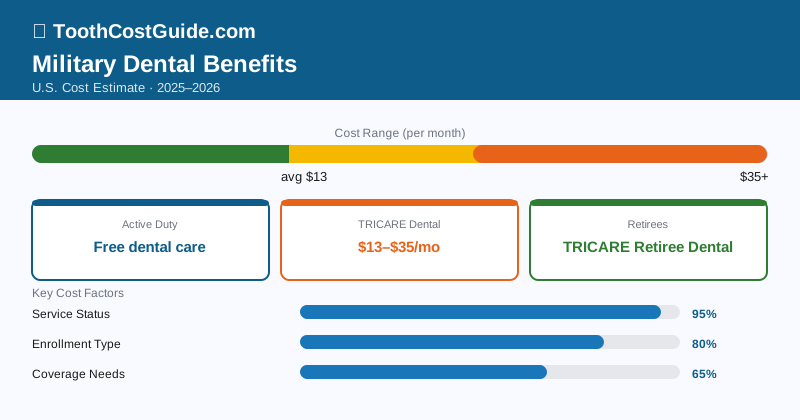
A staff sergeant at Fort Campbell who needs two cleanings, a filling, and a crown this year will pay exactly $0 for all of it. Not a small copay, not a deductible — zero. That crown alone is worth $1,200–$1,800 at a private dentist. The active duty dental benefit is one of the most comprehensive, most underutilized parts of military compensation, and many service members don’t fully take advantage of it before they transition out.
The picture is more complicated for dependents, retirees, and veterans — each group has a different program with different costs. Here’s how it all breaks down.
| Beneficiary | Program | Premiums | Out-of-Pocket | Annual Value |
|---|---|---|---|---|
| Active duty service members | Military MTF / TRICARE | $0 | $0 (covered procedures) | $1,500–$4,000 |
| Dependents of active duty | TRICARE Dental Program | $17.39/mo (1 dependent) | 20% after deductible | $500–$2,000 |
| Dependents (2+) active duty | TRICARE Dental Program | $46.60/mo (family) | 20% after deductible | $1,000–$3,500 |
| Retirees (under 65) | TRICARE Dental Program | $35.67/mo (1 person) | 20–50% | Varies |
| Eligible veterans | VA Dental Care | $0 | $0 or copay | Varies by eligibility |
| Guard/Reserve (activated) | TRICARE Dental Program | Military rates | 20% after deductible | Varies |
Active Duty: The Full Story
Service members on active duty receive dental care through military treatment facilities — the base dental clinics operated by the Army, Navy, and Air Force Dental Corps. Every covered procedure is performed at no cost. No copay, no deductible, no annual maximum. The benefit covers:
- Comprehensive exams and X-rays
- Cleanings and preventive care
- Fillings (composite and amalgam)
- Root canals
- Crowns (porcelain and metal)
- Extractions and oral surgery
- Periodontal treatment
- Prosthodontics: dentures and bridges
- Emergency dental care
When an installation’s dental clinic is operating at full capacity, active duty members can be referred to civilian network dentists — TRICARE pays the bill entirely.
One thing to be aware of: dental readiness is a formal military fitness category. Keeping your dental appointments isn’t just about your health — it affects your deployability classification. Being dental class 3 or 4 (active dental disease or in need of complex treatment) can affect your assignment or deployment status.
TRICARE Dental Program (TDP): Dependents and Retirees
TDP is administered by United Concordia Companies and covers dependents of active duty members, Guard and Reserve members and their families, retirees under 65, and surviving spouses. The government subsidizes a significant portion of the premium for active duty family members — that’s why the monthly cost is dramatically lower than comparable civilian plans.
What TDP covers in 2025:
- Class I (preventive: cleanings, exams, X-rays): 100% covered after a $25 annual deductible
- Class II (basic restorative: fillings, extractions, root canals): 80% covered
- Class III (major restorative: crowns, bridges, dentures): 50% covered
- Class IV (orthodontics): 50% covered, up to a $1,750 lifetime maximum
- Annual benefit maximum: $1,500 per person
Real example — active duty family of four:
| Item | Value |
|---|---|
| Monthly premium (2 dependents) | $46.60/month |
| Annual premiums | $559 |
| Annual care (2 adults: cleanings, 2 fillings, 1 crown) | ~$2,200 value |
| TDP covers (80–100% of services) | ~$1,800 |
| Family out-of-pocket (premiums + copays) | ~$759 |
| Without TDP | ~$2,200 |
| Net savings | ~$1,441/year |
For retirees: The premium is $35.67/month per person, with less government subsidy. Cost-sharing at Class III (major services) rises to 50%. For retirees who need significant dental work, comparing TDP against civilian dental insurance options — AARP, Delta Dental, and Costco/Delta partnerships — is worth doing.
For Guard and Reserve: Premium rates are higher than active duty family rates because the government subsidy is smaller. Full subsidy kicks in when a Guard or Reserve member is on orders of 31 days or more.
VA Dental: For Veterans With Service-Connected Conditions
VA dental care gets its own dedicated guide on this site, but the key eligibility categories are:
- Veterans with a service-connected dental condition (any rating)
- Veterans rated 100% total and permanent disabled (T&P)
- Veterans who are 100% service-connected disabled
- Veterans being treated for a service-connected condition where dental care is part of that treatment
- Former prisoners of war
- Veterans enrolled in certain homeless veterans programs
Veterans who served honorably but don’t meet these specific criteria often aren’t eligible for VA dental — that’s a coverage gap that affects many veterans and is worth understanding before assuming the VA will cover dental care.
What Works Well and Where the Gaps Are
What works:
- Active duty care is genuinely comprehensive — no benefit design in the civilian market comes close at $0 cost
- TDP premiums are substantially below-market rates for comparable coverage
- VA dental is fully comprehensive at no cost for eligible veterans
- No waiting periods for most TDP services — coverage starts the month after enrollment
- TDP covers orthodontics (50%, up to $1,750 lifetime) — most civilian employer plans don’t
Where the gaps show up:
- MTF dental clinics can have significant wait times for non-urgent, elective care — some installations are understaffed
- The TDP annual maximum of $1,500 per person is modest; a single crown and a couple of fillings can approach that limit in one year
- Guard and Reserve members pay more than active duty families for equivalent TDP coverage
- VA dental eligibility excludes many veterans who don’t have service-connected dental conditions or a 100% disability rating
- Retirees’ TDP costs are close to some civilian alternatives — it’s not automatically the best deal anymore
TRICARE Dental Program (TDP) has an annual maximum benefit of $1,500 per person. For families needing major dental work (multiple crowns, implants, full dentures), this cap can be exhausted quickly. Supplement TDP with an HSA or FSA to manage costs above the annual maximum.
How to Access Your Benefits: By Category
Active duty service members:
- Contact your installation’s dental clinic to establish care and schedule a comprehensive exam. This also establishes your dental readiness status.
- If the MTF is at capacity, your dental officer can write a referral for civilian network care at no additional cost to you.
- Don’t wait for a problem to develop. The benefit is comprehensive and free — use it annually at minimum.
Dependents enrolling in TDP:
- Log into milConnect at milconnect.dmdc.osd.mil or contact your installation’s TRICARE service center.
- Enroll through United Concordia at tricaredentalprogram.com.
- Coverage is effective the first day of the month following enrollment.
- Find a TDP network dentist through the United Concordia provider directory.
Retirees:
- Enroll at tricaredentalprogram.com.
- Compare the retiree premium rate against civilian options — AARP dental, Delta Dental individual plans, and Costco/Delta Dental partnerships can be competitive.
- Note that TDP’s $1,500 annual maximum doesn’t change based on your retired pay grade — the cap affects everyone equally.
Veterans pursuing VA dental:
- Call your nearest VA medical center and ask for a dental eligibility determination.
- If you carry a 100% service-connected disability rating, you qualify for comprehensive care at no cost — that’s the most clear-cut pathway.
- If your eligibility is uncertain, request a formal eligibility review from your VA primary care provider, who can initiate the evaluation.
Active duty service members who are approaching transition/separation should maximize their MTF dental care in the months before separation. Get a full comprehensive exam, any needed major restorative work, and up-to-date X-rays — all at $0 cost. After separation, the next full dental insurance enrollment may have waiting periods of 6–12 months for major services.
Bottom Line
Active duty dental coverage is among the most generous employer-provided dental benefits in existence. A service member who uses it fully can avoid $1,500–$4,000 in annual dental costs — and many don’t bother scheduling routine appointments because they’re busy. That’s leaving substantial compensation on the table. TRICARE Dental for dependents isn’t quite as striking a deal, but the government-subsidized premiums still represent significant savings for active duty families. Veterans with qualifying conditions have access to comprehensive VA dental at no cost. The critical step for everyone is understanding which specific program applies to you, enrolling if you haven’t, and actually using the benefit before circumstances change.
Frequently Asked Questions
Active duty service members pay $0 for a dental crown, regardless of the actual cost to the military dental facility. At a private civilian dentist, the same crown would cost $1,200–$1,800, making the military benefit one of the most valuable parts of military compensation.
Yes, TRICARE Dental Plan (TDP) covers military dependents and retirees through a voluntary enrollment program with annual premiums around $84–$110 per person. Coverage includes preventive care at 100%, basic restorative care at 80%, and major services like crowns at 50% after meeting a $50 annual deductible per person.
VA dental benefits are available to eligible veterans, though coverage is limited compared to active duty and TRICARE plans, typically covering only emergencies and certain conditions. Wait times for VA dental appointments vary by facility but commonly range from 2–8 weeks depending on your location and the complexity of needed treatment.