Picture a convention center floor lined with 100 portable dental chairs, hundreds of volunteer dentists, and a line of patients that started forming at 4 a.m. That’s a Mission of Mercy event, and over a single weekend it can deliver more than a million dollars of free dental care. If you can’t afford a dentist, this might be the most valuable two days of your year.
Let’s cover what these events offer, what they’re worth, and how to actually get seen.
What is a Mission of Mercy?
Mission of Mercy (MOM) events are large, free, pop-up dental clinics run by state dental associations and volunteers. They roll into a city for a weekend, set up dozens or hundreds of chairs, and treat anyone who shows up, no insurance, no ID requirement, no proof of income in most cases.
These events grew out of a movement to address the fact that the CDC reports nearly 1 in 4 working-age adults has untreated tooth decay, much of it among people who simply can’t afford care.
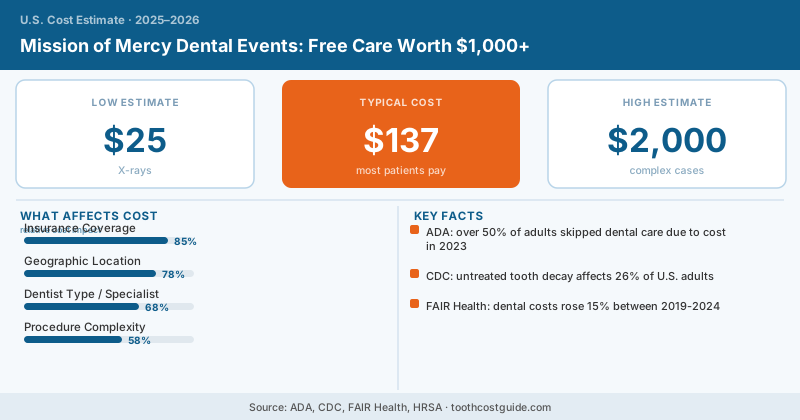
| Service Offered Free at MOM | Typical Private-Pay Value |
|---|---|
| Cleaning | $75–$200 |
| Filling | $150–$450 |
| Tooth extraction | $150–$650 |
| X-rays | $25–$250 |
| Limited dentures/partials (some events) | $500–$2,000 |
| Total typical value per patient | $700–$1,200 |
Some patients walk out having received well over $1,000 in care for free, often the difference between keeping and losing teeth.
What they treat (and what they don’t)
MOM events focus on getting people out of pain and stopping disease. Expect extractions, fillings, cleanings, and X-rays. Some larger events offer limited denture or partial services, and a few even do root canals on front teeth.
What you won’t get: implants, crowns on back teeth, orthodontics, or cosmetic work. These are triage-style events, urgent and basic care, done fast and free.
Search “[your state] Mission of Mercy dental” or check your state dental association’s website, most publish their annual MOM schedule months ahead. Arrive early; care is first-come, first-served and lines form before dawn. Bring water, snacks, a folding chair, and a list of which teeth hurt most, since you may only get treated for your top priorities in one visit.
Other free and low-cost options
MOM events happen only once or twice a year per region, so they’re not a substitute for ongoing care. Pair them with year-round resources. Our free dental care programs guide lists charities and clinics that run continuously, and cheap dental care options compares every low-cost route in one place.
For routine work between events, dental school clinics charge 40–70% below private practice, and community health centers bill on a sliding scale tied to your income.
Don’t rely on MOM as your only plan. These events save people in crisis, but you can’t schedule an emergency around them. If you have an active infection, don’t wait months for the next event, an untreated dental abscess can become a serious medical emergency. Use an FQHC or emergency dental clinic for urgent infections and save MOM for catch-up care.
The bigger picture
Mission of Mercy and similar free clinic events (like RAM, Remote Area Medical) exist because dental coverage gaps in the US are huge, the National Association of Dental Plans estimates tens of millions of adults have no dental insurance at all. These weekend events won’t fix that, but for an individual patient in pain with an empty wallet, they’re a genuine lifeline.
If a MOM event is coming to your area, mark the date, line up early, and go. A weekend of waiting can be worth over a thousand dollars in care and, more importantly, getting out of pain. Then build a longer-term plan using dental savings without insurance so you’re not depending on a once-a-year event to keep your mouth healthy.
Frequently Asked Questions
Mission of Mercy events typically deliver $700–$1,200 worth of free dental care per patient, including services like extractions, fillings, and cleanings. Over a single weekend event, these programs can deliver more than $1 million in total free care across all patients served.
No, dental insurance is not required to receive care at Mission of Mercy events—they specifically serve uninsured and underinsured patients at no cost. You will pay $0 out-of-pocket for all services provided during the event.
Patients typically begin lining up very early in the morning, with some arriving as early as 4 a.m. to secure a spot for treatment. The specific timing depends on the event location and expected patient volume, so contacting the event organizers beforehand is recommended.