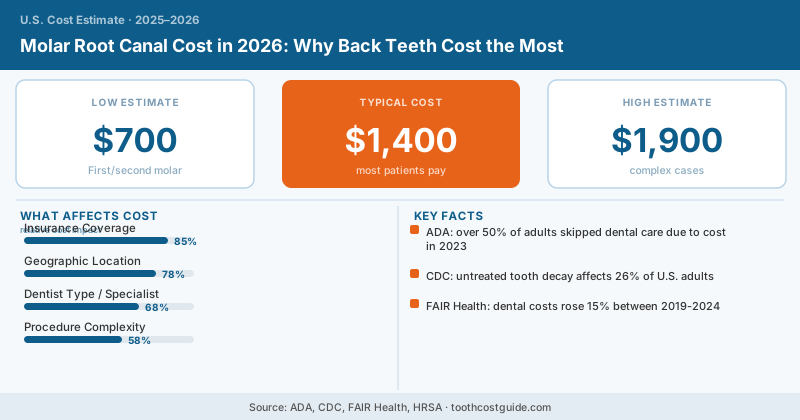
The $1,500 quote for your back tooth is normal — and here’s the uncomfortable reason why. Molars are the most expensive teeth to treat with a root canal, costing $1,000–$1,800 before insurance, simply because they have more canals to clean than any other tooth in your mouth.
A front tooth has one canal. A molar can have four, sometimes five. Every additional canal means more time in the chair, more files, more X-rays, and a higher chance your dentist refers you to a specialist. That’s the whole story behind the price gap.
What Drives the Molar Price
The American Association of Endodontists notes that molars routinely require 60 to 90 minutes of treatment versus 30 to 45 for a single-canal front tooth. Time is the main cost driver in any dental office.
| Tooth | Canals | Root Canal Cost (No Insurance) |
|---|---|---|
| Front incisor/canine | 1–2 | $700–$1,000 |
| Premolar (bicuspid) | 1–2 | $800–$1,100 |
| First/second molar | 3–4 | $1,000–$1,800 |
| Molar redo by endodontist | 4+ | $1,300–$1,900 |
| Crown afterward (almost always) | — | $1,000–$1,800 |
You read that last line right. A molar root canal almost never travels alone. The tooth is hollowed out and brittle after treatment, so a dental crown is standard to keep it from cracking. Budget for the full picture, not just the canal.
Procedure only: $1,000–$1,800. Add a post-and-core buildup ($150–$400) plus a crown ($1,000–$1,800), and the realistic all-in cost for a molar root canal lands between $2,200 and $4,000. That’s the number to plan around.
Endodontist vs. General Dentist
Many general dentists send molars to an endodontist — a root canal specialist. They charge 20% to 40% more, but the AAE points out that specialists complete roughly 25 million root canals a year with high success rates on the complex multi-canal cases general dentists prefer to refer out. For a tricky molar, that premium often buys a better long-term outcome.
Does Insurance Help?
Most PPO plans cover root canals at 50% to 80% after your deductible. The catch is the annual maximum — usually $1,000 to $2,000. A molar root canal plus crown can blow through your entire yearly cap in one visit. If you understand how your plan’s annual maximum works, you’ll know to check your remaining benefit before scheduling.
Skipping a needed molar root canal to save money usually backfires. An untreated infected molar often ends in extraction, and replacing it with a dental implant costs $3,000–$5,000 — far more than saving the tooth would have.
Ways to Trim the Cost
Money’s tight? You’ve got options. Dental schools treat molars at 40% to 60% off because supervised students do the work. A dental savings plan can knock 15% to 25% off specialist fees with no waiting period. And spreading payments with CareCredit keeps the bill from landing all at once.
Is It Worth Saving the Tooth?
Almost always, yes. Molars do the heavy lifting when you chew, and losing one shifts your bite over time. Comparing the math against tooth extraction plus replacement, keeping your natural molar is usually both cheaper and better for your long-term oral health. The root canal hurts your wallet today, but the alternatives cost more tomorrow.
Frequently Asked Questions
A molar root canal typically costs $1,000–$1,800 without insurance, making it the most expensive tooth to treat. This higher cost is due to molars having 3–5 canals compared to just one canal in front teeth, requiring significantly more time, files, and X-rays during treatment.
Most dental insurance plans cover 50–80% of endodontic (root canal) treatment after you meet your deductible, leaving you with $200–$900 out-of-pocket for a molar. However, coverage varies by plan, so check your policy details or contact your insurance provider to confirm your specific benefits and any waiting periods.
A molar root canal typically takes 60–90 minutes to complete, depending on canal complexity, and you can usually return to normal activities the same day. After the root canal, you will almost always need a crown within 2–4 weeks to protect the tooth, which costs an additional $800–$1,500 and is critical for preventing future damage or extraction.