If your dentist has shown you photographs of your tooth surfaces — flattened occlusal tables, worn-down cusps, enamel ground away in characteristic horizontal striations — you already understand the stakes. Bruxism isn’t just discomfort. It’s irreversible structural damage happening every night. Enamel doesn’t grow back. And the cost of that damage compounds: worn teeth crack, cracked teeth need crowns, crowns on ground teeth may need replacing sooner, and the cycle accelerates.
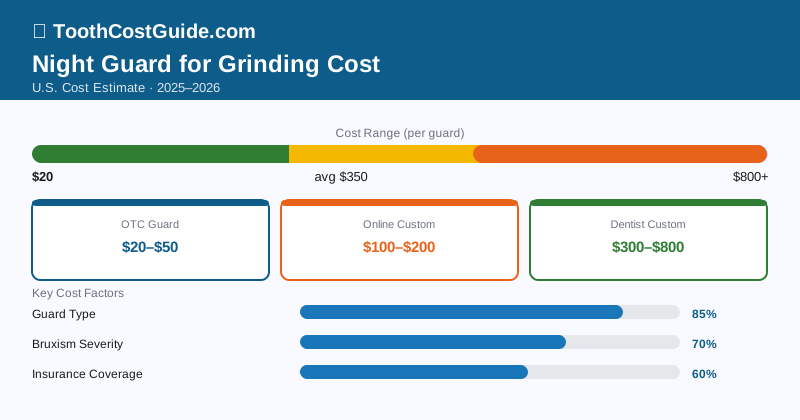
A custom hard acrylic night guard from your dentist costs $300–$800. The crown it prevents: $1,200–$1,800. The math makes the guard look like an obvious call. But the market also offers a spectrum of cheaper options, and for lighter grinders, those options may genuinely be sufficient.
| Night Guard Type | Cost |
|---|---|
| OTC boil-and-bite guard (pharmacy) | $20–$50 |
| OTC prefabricated soft guard | $15–$40 |
| Online custom guard (home impression) | $100–$200 |
| Custom soft guard (from dentist) | $200–$400 |
| Custom dual-laminate guard (hard outside, soft inside) | $300–$600 |
| Custom hard acrylic guard (from dentist) | $300–$800 |
| Custom guard through orthodontist (TMJ-specific) | $400–$800 |
| Replacement guard (if original molds kept on file) | $200–$400 |
What Drives the Price Difference
Custom versus generic fit. A custom guard is fabricated from dental impressions or a digital scan of your actual teeth. It seats precisely, distributes occlusal forces evenly across every contact point, and you can actually breathe with it in. An OTC boil-and-bite guard approximates fit through softened thermoplastic molded by biting — closer to one-size-fits-all than truly custom, and often bulky enough that patients stop wearing it.
Material type. Hard acrylic resists grinding forces without giving way. Soft guards feel more comfortable to put in but have a fundamental problem with heavy grinders: some patients actually clench harder against a soft surface, the same way you might grip a stress ball. Dual-laminate guards solve this with hard acrylic on the outside and a soft lining against the teeth — you get durability where it counts and comfort where you feel it.
Lab costs. Dental lab fabrication for a custom guard typically runs $75–$200 wholesale. That’s folded into the dentist’s total fee, along with the impression appointment and adjustment visits. Higher-quality labs use thicker acrylic with better quality verification and charge more.
Practice location. Urban dental offices with higher overhead charge more. A custom guard in midtown Manhattan runs toward the high end of the range; the same guard from a suburban practice in Tennessee may hit the lower end. Call around — you can often get a quote over the phone.
The Full Lineup: Which Guard for Which Patient
OTC Boil-and-Bite ($20–$50)
Drugstore guards softened in hot water and shaped by biting. They work for mild, occasional grinders who want basic protection. They don’t work for heavy grinders — the imprecise fit, excessive bulk, and inability to distribute forces the way a custom guard does means they’re providing incomplete protection at best. If you’ve been told you have significant enamel wear or jaw muscle hypertrophy (the jaw-muscle bulk that heavy grinders often develop), a $25 drugstore guard is not an adequate response.
Best for: mild grinding, testing whether you can tolerate wearing something at night before spending more, travel backup.
Online Custom Guards ($100–$200)
This category has improved significantly in the past few years. Services like Chomper Labs ($149–$179) and Smile Brilliant ($149–$190) mail you impression materials, you take your own upper and lower impressions, mail them back, and receive a custom-fabricated guard within 2–3 weeks. The fit is meaningfully better than OTC options because it’s made from your actual dental impressions.
Best for: mild-to-moderate grinders without TMJ symptoms who are comfortable following the impression instructions accurately. Not appropriate for severe bruxism or patients with complex bite issues.
Custom Soft Guard from Dentist ($200–$400)
Professionally fabricated from flexible EVA material using precise chairside impressions. More comfortable than hard guards at first contact. The downside: soft material under heavy clenching forces compresses and ultimately doesn’t protect as well. Reserve these for light grinders or patients with high sensitivity who find hard guards uncomfortable.
Custom Dual-Laminate Guard ($300–$600)
Hard outer shell, soft inner lining. Clinically the best of both worlds — the hard exterior resists grinding forces the way acrylic should, and the soft interior doesn’t create that initial hard-plastic-against-teeth sensation that some patients find difficult to sleep through. A strong choice for moderate grinders who’ve tried hard guards and couldn’t tolerate them.
Custom Hard Acrylic Guard from Dentist ($300–$800)
The clinical standard. Two to four millimeters of precision-milled acrylic, fabricated by a dental lab from professional impressions. Lasts 3–10 years with proper care. Recommended by dentists for heavy grinders, patients with measurable enamel loss, and anyone with TMJ symptoms. If your dentist is recommending a night guard because they’re genuinely concerned about your grinding severity, this is what they mean.
If you’re a heavy grinder (you wake with jaw soreness, your spouse hears you grinding, or your dentist shows you significant tooth wear), invest in a custom hard acrylic guard from your dentist. OTC guards are insufficient for heavy grinding and may actually worsen clenching. The $400–$800 upfront cost prevents thousands in enamel damage, crown replacement, and TMJ treatment.
Do You Actually Need One? Signs to Watch For
Your dentist will notice the clinical signs — flattened tooth surfaces, dentinal exposure, cracked enamel — before you do. But these symptoms between appointments are worth noting:
- Jaw soreness or facial muscle tightness when you wake up
- Headache first thing in the morning, particularly around the temples
- A bed partner reporting audible grinding during the night
- Teeth that look flat or worn at the tips when you look in a mirror
- Unexpected sensitivity to cold in teeth that don’t have obvious cavities
- Chipped enamel without any obvious impact or trauma
- Scalloped indentations along the sides of your tongue
- Clicking, popping, or limited range of motion in your jaw (TMJ symptoms)
Multiple yes answers here warrant a conversation with your dentist, not just buying a drugstore guard and hoping for the best.
Insurance: What Gets Covered
Dental insurance covers custom night guards under basic or major services benefits when prescribed for bruxism. Coverage is typically 50–80% of the allowable fee after your deductible, subject to your annual maximum. Ask your dentist’s office to submit a predetermination request before the guard is fabricated — you’ll get a formal estimate of what your plan will pay and what you’ll owe, before you commit.
Medical insurance may cover a night guard when it’s prescribed specifically as a TMJ treatment device (not just bruxism protection). This requires a documented medical diagnosis and functional necessity notes. It’s worth asking about if you have a confirmed TMJ disorder — billing under the medical plan can sometimes achieve better coverage than dental.
Frequency limits: Some plans cover custom night guards only once every 5–7 years. If you need a replacement guard before that window closes, you may face the full cost out of pocket regardless of remaining annual benefits.
Some insurance plans cover custom night guards only once every 5–7 years. If you’ve used the benefit recently and need a replacement, you may face the full cost out of pocket. Check your plan’s frequency limitation before assuming coverage.
Financing and Savings Options
FSA and HSA accounts: A custom night guard prescribed for bruxism or TMJ is a fully eligible FSA/HSA expense. On a $500 guard, tax-advantaged payment at a 22–37% marginal rate saves $110–$185 — not nothing.
Dental school clinics: Prosthodontic and restorative dentistry programs at dental schools routinely fabricate night guards as clinical exercises. Expect 40–60% lower cost than private practice, with adequate supervision of student clinicians.
Insurance predetermination: Always request this before paying. It confirms your coverage percentage and estimated patient responsibility — no surprises at pickup.
Online guards for appropriate cases: If your dentist confirms mild bruxism with no TMJ involvement, an online service at $149–$190 provides custom-fit protection at 40–70% less than the office fee. Not appropriate for everyone, but genuinely sufficient for the right patient.
Making Your Guard Last
Custom acrylic guards are durable but not indestructible. These habits extend their lifespan significantly:
- Rinse with cool water immediately after removing each morning
- Weekly cleaning with a soft toothbrush and dish soap or a retainer tablet — never toothpaste, which is abrasive
- Never use hot water — it warps acrylic
- Store in the ventilated case that came with it; leaving it on the nightstand exposed to heat and air accelerates wear
- Bring it to every dental checkup — your dentist can assess wear patterns and occlusal fit
- Wear it every single night, not just the nights when you remember — inconsistent use doesn’t protect adequately
Bottom Line
OTC guards: $20–$50, adequate for mild grinding, insufficient for heavy grinding. Online custom guards: $100–$200, noticeably better fit, good for mild-to-moderate cases without TMJ involvement. Custom dentist guards: $300–$800, the clinical standard for anyone with significant bruxism. Dental insurance covers 50–80% of custom guard costs for many patients — check your plan before paying out of pocket. Use FSA/HSA funds for any patient balance. And if you’re a severe grinder, understand the arithmetic: untreated bruxism leads to crown and implant costs that dwarf what a quality guard would have cost in year one.
Severe bruxism causes irreversible enamel damage, cracked teeth, and TMJ problems. A custom hard acrylic guard at $300–$800 is among the best dental investments available. Check insurance coverage first, use FSA funds for the patient portion, and consider online custom guards as a cost-effective option only if your grinding is mild and TMJ symptoms are absent.
Frequently Asked Questions
Custom night guards prescribed by a dentist typically cost $300–$800, depending on the material quality, lab used, and your geographic location. This price usually includes the dental exam, impressions, lab fabrication, and fitting adjustments. Some high-end custom guards can exceed $800 if made from premium materials like flexible thermoplastic or dual-layer designs.
Many dental insurance plans cover 50–80% of custom night guard costs after you meet your deductible, though some plans classify them as preventive (100% covered) while others treat them as restorative (50% covered). OTC guards are rarely covered by insurance, and you'll pay the full $20–$50 out-of-pocket; check your specific plan's coverage details, as exclusions for bruxism treatment are common.
The entire process typically takes 2–3 weeks from your initial dental appointment to wearing the finished guard. Your dentist will take impressions at visit one, send them to the lab (7–10 days), and schedule a fitting appointment within a few days of the guard's arrival for final adjustments and bite alignment.