Your dentist says you need an “occlusal adjustment.” You nod. Then you leave the office and Google it — and suddenly you’re wondering if this is a real procedure or a $500 upsell.
It’s real. And it can make a significant difference if your bite is genuinely off. Here’s everything you need to know about what it costs and whether you actually need it.
What Is an Occlusal Adjustment?
An occlusal adjustment — also called bite equilibration or bite adjustment — is a procedure where your dentist selectively reshapes the biting surfaces of your teeth so they meet evenly. Using articulating paper (a thin, carbon-transfer film you bite down on), they identify high spots and carefully remove tiny amounts of enamel with a dental drill.
The goal is to distribute chewing forces evenly across all your teeth. When your bite is uneven, a few teeth absorb disproportionate stress. That stress can cause:
- Cracked teeth
- Jaw pain and TMJ disorders
- Tooth sensitivity
- Worn enamel
- Loose teeth over time
- Headaches — especially upon waking
According to the American Dental Association, occlusal problems are among the most underdiagnosed contributors to tooth fracture and TMJ dysfunction.
How Much Does an Occlusal Adjustment Cost?
| Type of Adjustment | Low | Typical | High |
|---|---|---|---|
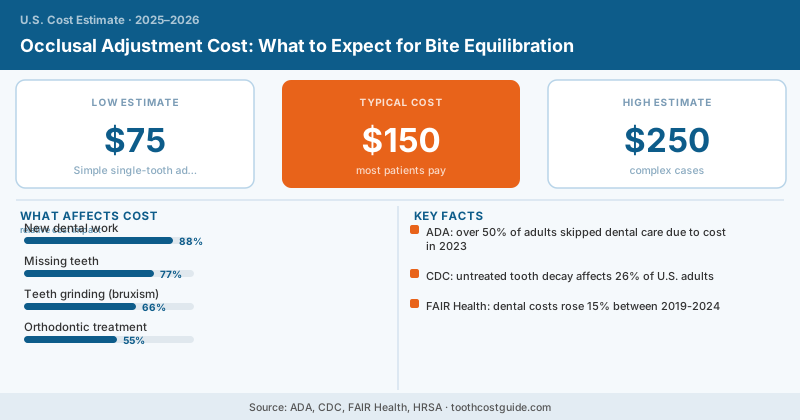
| Simple single-tooth adjustment | $75 | $150 | $250 |
| Multi-tooth equilibration (1 arch) | $150 | $350 | $600 |
| Full mouth equilibration | $400 | $800 | $1,200 |
| Computer-guided (T-Scan) adjustment | $500 | $900 | $1,500 |
Costs vary based on your location, the dentist’s specialty (general dentist vs. prosthodontist), and how many teeth are involved. A simple adjustment after a new crown is on the low end. A full-mouth equilibration performed by a prosthodontist for a patient with extensive TMJ issues lands at the high end.
Why Bite Problems Happen
Your bite can shift for a number of reasons:
New dental work. A crown, filling, or bridge that’s even slightly too tall can throw off your bite. This is the most common trigger for a quick adjustment — and it’s usually covered as part of the restoration procedure.
Missing teeth. When you’re missing a tooth and don’t replace it, neighboring and opposing teeth drift and tilt. That repositioning changes how surfaces meet.
Teeth grinding (bruxism). Chronic grinding wears teeth unevenly, creating a bite that’s no longer balanced. A custom night guard can slow the damage, but an adjustment may be needed to correct it.
Orthodontic treatment. Braces and clear aligners move teeth — and sometimes the final bite needs fine-tuning even after treatment ends.
Aging. Enamel wears over decades. Combined with jaw changes, older adults often develop bite discrepancies that didn’t exist at 30.
Does Insurance Cover Occlusal Adjustment?
Sometimes — but it depends on how your dentist codes it and your plan’s specifics.
Most dental insurance plans classify occlusal adjustment as a “basic” or “restorative” procedure. If that’s the case, you might pay 20–50% after your deductible. Some plans cover simple adjustments (like post-crown equilibration) as part of the restorative procedure with no separate charge.
Full-mouth equilibration is trickier. Insurers often require documentation showing it’s medically necessary — usually evidence of TMJ disorder, fractures, or bite-related pathology. Without that, it may be denied or classified as cosmetic.
Ask your dentist to submit a predetermination to your insurer before the procedure. This tells you exactly what they’ll cover and what you’ll owe — before you’re in the chair. Most insurers respond within 2–4 weeks.
T-Scan Technology: Is It Worth the Extra Cost?
Some dental offices use a digital bite analysis system called T-Scan. Instead of traditional articulating paper (which can be inaccurate), T-Scan uses a sensor that maps bite force across every tooth in real time and shows which teeth are taking the most pressure.
It’s genuinely more precise. For complex cases — multiple crowns, full-mouth rehabilitation, implant-supported restorations — the extra $200–$400 for T-Scan guidance is often worth it. For a simple single-tooth adjustment, you don’t need it.
The Adjustment Process: What to Expect
A simple adjustment takes 15–30 minutes. Your dentist will:
- Have you bite down on articulating paper (it leaves marks on high spots)
- Identify the marks and use a fine-grit bur to reduce them
- Repeat until the bite feels even
- Check your bite in multiple positions — straight down, side to side, forward
You won’t need anesthesia. The amount of enamel removed is microscopic — typically just a fraction of a millimeter. You shouldn’t feel sensitivity afterward, though some patients notice their bite feels “strange” for a day or two while the muscles adjust.
A full-mouth equilibration may require multiple appointments and more extensive reshaping.
Red Flags to Watch For
Not every bite complaint warrants an adjustment. Be cautious if:
- A dentist recommends full-mouth equilibration without documenting your bite issues or taking records
- The recommendation comes before you’ve tried a night guard or other conservative treatments
- There’s no discussion of what’s causing the bite problem in the first place
The American Academy of Orofacial Pain notes that conservative, reversible treatments should almost always come before irreversible ones like grinding down teeth.
Occlusal adjustment removes enamel permanently. Once it’s gone, it doesn’t grow back. Always get a clear explanation of exactly what will be done — and why — before agreeing to full-mouth equilibration.
Connection to TMJ Treatment
Many patients who need an occlusal adjustment are dealing with TMJ disorders at the same time. The two conditions are closely related. If you’re experiencing jaw pain, clicking, or difficulty opening your mouth, your dentist may recommend both a night guard and an occlusal adjustment as part of a broader TMJ treatment plan.
A 2022 review published in the Journal of Oral Rehabilitation found that occlusal therapy combined with physical therapy produced better outcomes for TMJ pain than either approach alone.
Ways to Reduce Your Cost
- Use a dental school. Prosthodontic programs offer equilibration at significant discounts — often 40–60% off private-practice rates. The procedures take longer, but the clinical oversight is rigorous.
- Ask about package pricing. If you’re already getting a crown or full-mouth rehabilitation, ask for the adjustment to be included in the overall fee.
- Check your FSA/HSA. Occlusal adjustment is a qualified medical expense and you can pay with pre-tax dollars from a flexible spending or health savings account.
- Get a second opinion. If you’ve had no symptoms and a dentist recommends full-mouth equilibration out of nowhere, it’s worth having another dentist look at your bite records first.
Bottom Line
A simple occlusal adjustment after a crown or filling is routine, inexpensive, and often covered by insurance. Full-mouth equilibration is a bigger investment — $400 to $1,200 — and should be supported by clear clinical evidence of need. Don’t skip it if you genuinely have bite problems: leaving an uneven bite untreated costs far more in cracked teeth, root canals, and implants down the road.
Frequently Asked Questions
Occlusal adjustment costs typically range from $75 to $1,200, depending on the complexity of your bite problem and how much tooth surface needs to be reshaped. Simple adjustments at a routine checkup may cost $75–$200, while comprehensive bite equilibration requiring multiple visits can reach $800–$1,200.
Many dental insurance plans cover occlusal adjustment as a diagnostic or preventive service, though coverage varies by plan and insurer. You should expect to pay 20–50% out-of-pocket after insurance, or ask your dentist to verify your specific coverage before treatment, as some plans exclude it if deemed cosmetic rather than therapeutic.
A simple occlusal adjustment typically takes 30–60 minutes in a single visit, though complex cases may require 2–4 appointments over several weeks to ensure your bite settles properly. Your dentist will evaluate your specific situation and discuss the timeline before starting treatment.