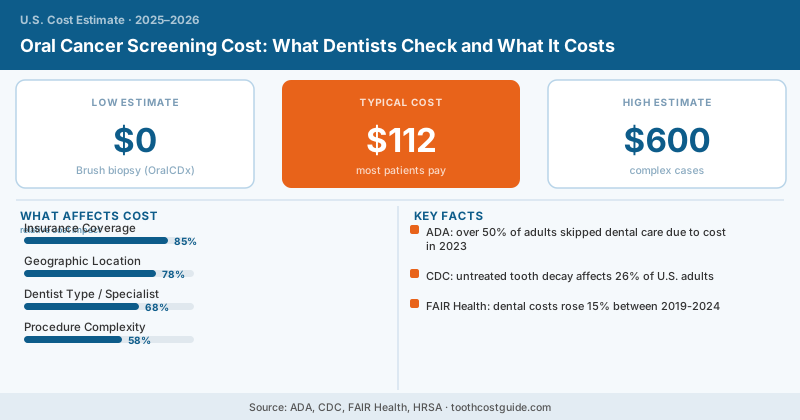
54,540. That’s the number of Americans the American Cancer Society estimated would be diagnosed with oral cavity or oropharyngeal cancer in 2023. Most of them had no idea there was anything wrong until they mentioned an odd sore to their dentist — or didn’t mention it for months.
The screening itself costs you nothing extra. Your dentist performs a visual oral cancer exam as part of your standard checkup. The question is what happens after they find something suspicious — and that’s where the costs start.
| Service | Typical Cost |
|---|---|
| Routine visual screening (included in exam) | $0 extra |
| VELscope enhanced fluorescence exam | $25–$50 |
| ViziLite adjunctive screening | $40–$75 |
| Brush biopsy (OralCDx) | $75–$150 |
| Incisional biopsy (tissue sample) | $200–$400 |
| Excisional biopsy (full lesion removal) | $300–$600 |
| Referral to oral surgeon for biopsy | $100–$300 consult fee |
What Your Dentist Is Actually Looking For
During a standard exam, your dentist doesn’t just look at your teeth. They’re examining your lips, tongue, floor of the mouth, soft and hard palate, gum tissue, and the back of your throat. They’re looking for red patches (erythroplakia), white patches (leukoplakia), sores that haven’t healed in two weeks, lumps, or any tissue that looks or feels abnormal.
This takes about 2–3 minutes and costs nothing above your regular exam fee. The ADA’s clinical guidelines support this exam at every routine visit. Most patients have no idea it’s happening.
Enhanced Adjunctive Screening Tools
If your dentist wants a closer look, they may use one of two adjunctive screening technologies:
VELscope uses blue-spectrum fluorescent light to illuminate tissue. Healthy tissue glows green; abnormal cells may appear dark. It doesn’t diagnose cancer — it helps identify areas worth watching more closely. The exam adds $25–$50 to your visit and takes about 2 minutes. Insurance rarely covers it.
ViziLite uses acetic acid rinse followed by a chemiluminescent light source that makes abnormal tissue appear white against a blue-white background. Similar concept, similar price range ($40–$75).
Neither tool is diagnostic. A positive finding with VELscope or ViziLite means your dentist wants to monitor the area or refer for biopsy — not that you have cancer. Studies show these tools improve detection of suspicious lesions, particularly in high-risk patients, though the evidence base is still evolving.
Adjunctive screening tools are particularly worthwhile if you: use tobacco (any form), drink heavily, are HPV-positive, have a history of oral lesions, or are over 40 with multiple risk factors. The American Cancer Society notes that tobacco and alcohol together account for the majority of oral cancer cases — and HPV is increasingly linked to oropharyngeal cancers. If any of those apply to you, the $25–$75 for enhanced screening is money well spent.
When Something Gets Found: Biopsy Costs
Finding an unusual lesion doesn’t mean cancer. Most lesions are benign — canker sores, traumatic ulcers, fibrous tissue from cheek biting. But anything that doesn’t resolve in 2 weeks gets evaluated further.
Brush biopsy (OralCDx): A small brush is rotated against the lesion to collect surface cells, which are sent to a pathology lab. No cutting, no stitches. Cost: $75–$150. Results in about a week. If the result is “positive” or “atypical,” a traditional biopsy follows.
Incisional biopsy: The dentist or oral surgeon cuts out a small sample of tissue from the suspicious area under local anesthesia. Sent to a pathologist. Cost: $200–$400. Covered by most dental plans at 50–80% under major restorative benefits, subject to deductible.
Excisional biopsy: The entire lesion is removed and sent for analysis. More appropriate when the lesion is small and complete removal is both diagnostic and potentially curative. Cost: $300–$600. Coverage similar to incisional biopsy.
If the biopsy comes back positive, you’ll be referred to a head and neck cancer specialist. Treatment costs at that stage are medical, not dental, and typically involve surgery, radiation, or chemotherapy — which is why early detection matters so much.
Why the 5-Year Survival Rate Gap Is So Wide
The ACS reports that when oral cancer is caught at a localized stage, the 5-year survival rate is approximately 84%. When it’s caught after spreading to distant sites, that figure drops to around 38%. Those aren’t abstract statistics — they’re the difference a 2-minute exam and a $300 biopsy can make.
Part of why oral cancer gets diagnosed late is that early-stage lesions are often painless. Patients don’t seek care because nothing hurts. Regular dental exams — and flagging any sore that doesn’t heal in two weeks — remain the most reliable early detection strategy available.
Insurance Coverage: What to Expect
The routine visual screening is included in your exam and covered as part of your preventive benefit. No separate claim, no separate co-pay.
Enhanced tools like VELscope and ViziLite are generally not covered — expect to pay out of pocket.
Biopsies are where insurance typically helps. Most plans treat biopsies as oral surgery or major restorative procedures, covering 50–80% after deductible. If an oral surgeon performs the biopsy, check whether they’re in-network under your dental plan — out-of-network costs can be significantly higher.
Any oral sore or lesion that hasn’t healed in two weeks should be evaluated by a dentist or oral surgeon — don’t wait for your next scheduled cleaning. This is especially true if you use tobacco, drink alcohol regularly, or are over 40. Cost estimates reflect U.S. national averages for 2025 and vary by provider, region, and insurance plan.
Frequently Asked Questions
The routine visual exam is included in your standard checkup — no separate charge. Enhanced adjunctive screening tools like VELscope or ViziLite typically cost $25–$75 and are not covered by most dental plans. Biopsies of suspicious lesions are often partially covered under major restorative benefits at 50–80%, subject to deductible.
An incisional biopsy (removing a sample from a suspicious lesion) costs $200–$400. An excisional biopsy (removing the entire lesion) runs $300–$600. A brush biopsy using the OralCDx system, which collects surface cells without cutting, costs $75–$150.
The ADA recommends that dentists perform an oral cancer screening at every routine exam — typically every 6 months for most adults. If you use tobacco, drink alcohol heavily, or have a history of oral cancer, your dentist may recommend more frequent monitoring or referral to an oral surgeon.