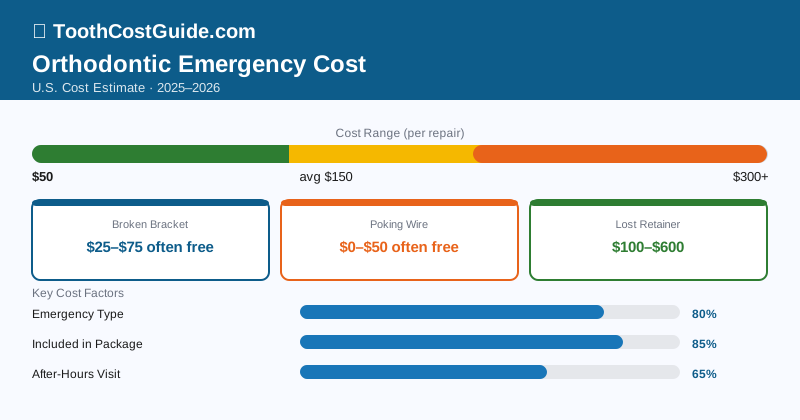
It’s 9 PM on a Friday when it happens — you bite into a piece of crusty bread and feel that familiar pop. A bracket has come loose. Now what? Before you panic, here’s the reality: most orthodontic “emergencies” aren’t emergencies at all. You’ve got options, and this guide breaks down exactly what things cost, what actually warrants a phone call, and what you can handle yourself until Monday.
| Orthodontic Emergency | Typical Cost |
|---|---|
| Broken bracket reattachment | $25–$75 per bracket |
| Protruding/poking wire trimming (office) | $50–$150 |
| Loose band (molar) rebanding | $25–$100 |
| Poking wire temporary fix (at home) | $0 (wax) |
| Lost Invisalign aligner replacement | $50–$150 per aligner |
| Broken retainer repair | $50–$200 |
| Lost retainer replacement | $100–$600 |
| After-hours emergency appointment | $100–$250 (premium) |
| Broken bracket included in treatment fee | $0 additional |
The Most Important Question Nobody Asks at the Start
When you signed your treatment contract, did you ask whether emergency repairs are included? Most people don’t. It’s a critical question.
Many orthodontic practices bundle all in-treatment repairs — broken brackets, poking wires, loose bands — into their comprehensive treatment fee. Others charge separately for every repair visit. If yours is the latter, a bracket that breaks because you forgot about that caramel apple could cost you $25–$75. Do that three times in a year and you’re out $75–$225 you weren’t expecting.
Get this in writing before treatment begins. “All adjustments included” sometimes means scheduled adjustments only — not unscheduled emergency visits. The distinction matters more than most patients realize.
What Drives the Price When You’re Charged
Ceramic vs. metal brackets. Ceramic brackets are more prone to debonding than metal ones. They look better, but if emergency repairs aren’t bundled, their higher breakage rate can mean higher out-of-pocket costs over the course of treatment.
After-hours timing. Standard business hours? You’ll pay the normal repair rate. Call at 7 PM on a Saturday? Some practices tack on a premium of $50–$150 for the scheduling disruption. This is entirely avoidable for anything that isn’t a genuine emergency — which, again, most things aren’t.
The actual repair needed. Wire clipping is a five-minute job. Bracket rebonding — removing the old bracket, cleaning the tooth surface, applying adhesive, repositioning, light-curing — takes 15–30 minutes. More time, more cost when billed by procedure.
Is It Actually an Emergency? A Practical Triage
Call your orthodontist right now:
- A wire has punctured your cheek or is causing a deep laceration that won’t stop bleeding
- Your face or jaw is swelling noticeably
- You’ve swallowed hardware (rare, but it happens — monitor your breathing and call immediately)
- Pain is severe enough that ibuprofen and wax aren’t cutting it
Call within the next day or two:
- A persistent poking wire that wax isn’t holding
- Multiple brackets broken in the same arch at once
- A molar band that has fully come off
- An Invisalign attachment that’s popped off during a critical stage of treatment
Wait for your next regular appointment:
- One bracket that’s loose but still threaded on the wire
- Minor wire irritation that orthodontic wax resolves
- A lost ligature (the tiny elastic or wire tie around the bracket)
- Missing an Invisalign tray fewer than 7 days before the next tray in your sequence
Not every orthodontic issue is an emergency. Most broken brackets and poking wires can be managed temporarily with orthodontic wax from a drugstore ($4–$8) and addressed at a scheduled appointment. Orthodontic wax applied over a poking wire or broken bracket prevents soft tissue irritation until the office can see you during normal hours.
What to Do Right Now: Home First-Aid That Actually Works
For a poking wire: Pinch off a pea-sized piece of orthodontic wax (found at any drugstore for $4–$8), roll it into a small cylinder, and press it firmly over the wire end. Done. That wire isn’t going anywhere, and your cheek is protected. No emergency room needed.
For a bracket still on the wire: It’ll wobble and maybe spin. Apply wax to stabilize it. Unless treatment is at a time-sensitive stage, this usually waits for a regular appointment.
For a completely detached bracket: Drop it in a small zip-lock bag or prescription bottle. Bring it to the repair appointment — your orthodontist might be able to rebond the same bracket, saving some cost.
No wax handy? A small piece of clean gauze folded over the wire end works in a pinch. Some people use a pencil eraser. Less ideal, but functional for a few hours.
For soft tissue irritation: Warm saltwater rinses (1 tsp salt in 8 oz water) two to three times a day. Over-the-counter oral analgesic gel like Orabase or Orajel can take the edge off an irritated cheek while you wait for the appointment.
A Numbered Walkthrough: What Happens at the Repair Visit
Broken bracket repair (15–30 minutes total):
- The orthodontist uses a bracket-removal plier to remove the debonded bracket from the wire
- A polishing bur cleans residual adhesive from the tooth surface
- Fresh bonding agent is applied to the tooth and the bracket
- The bracket is repositioned on the tooth and cured with UV light
- The wire is reinserted and re-tied
Wire clipping (5–10 minutes): Distal-end cutters trim the protruding wire end flush. That’s it. Many practices don’t charge for this when done during a scheduled adjustment. If you’re coming in specifically for the wire, expect $50–$150.
Molar band rebanding (15–30 minutes): The band is removed, cleaned of old cement, and recemented. If the band itself is damaged, a new one has to be ordered — which means a second appointment to fit it once it arrives from the lab.
What Insurance Covers (And What It Doesn’t)
During active orthodontic treatment, emergency repairs generally fall under your comprehensive orthodontic benefit. You’ve already paid for the treatment (or it’s being paid over time) — the insurance benefit covers that treatment, repairs included, when the orthodontist bills appropriately.
After treatment ends, it’s a different story. Retainer repairs, replacement retainers, and post-treatment issues aren’t covered by the orthodontic benefit because that benefit was used for the original treatment. Some of these expenses might qualify under the basic services benefit — worth checking with your insurer.
Emergency office visit fees ($50–$150, when charged separately) are occasionally covered as a basic dental service. Submit the claim and see.
Confirm before starting treatment whether emergency visits and repair appointments are included in your comprehensive fee. Get this in writing. “All adjustments included” sometimes means scheduled adjustments, not emergency repair appointments. The distinction matters — heavy chewers with ceramic braces may have multiple bracket repairs per year.
Paying for Repairs When They’re Not Covered
Out-of-pocket repair costs — $50–$300 in most cases — are typically paid at time of service. Most people put these on a credit card or FSA/HSA card.
FSA and HSA funds work great for orthodontic repairs. Every repair, wire clipping, and emergency visit is an eligible expense. Keep your receipts; FSA administrators sometimes request documentation.
Financing for individual repair visits doesn’t really make sense at these dollar amounts. But if you’re a ceramic-bracket wearer who’s had a rough run of broken brackets, those repair costs can add up — worth budgeting for at the start of treatment.
Five Ways to Break Fewer Brackets
Skip the hard stuff. Hard apples, raw carrots, crusty baguettes, ice cubes — these are the primary culprits. You know this, but it bears repeating every time you’re about to bite into something.
Sports mouthguard, always. An elbow to the mouth during a basketball game can take out three brackets at once. An orthodontic-compatible mouthguard costs $20–$50 and prevents a very expensive weekend.
Cut everything into pieces. Even foods that are technically okay benefit from being cut small enough that you don’t need to apply serious biting force.
Front teeth are fragile. Biting directly into a whole piece of fruit or a sandwich with a firm crust puts maximum stress on exactly the brackets that are most visible and most expensive to replace.
Keep wax everywhere. Backpack, nightstand, desk, purse. When something goes sideways, having wax on hand means you solve the problem in 30 seconds instead of panicking.
Keep orthodontic wax in your pocket at all times — it resolves 80% of minor orthodontic issues (poking wires, broken brackets) until your orthodontist can see you during normal hours. Ask at the start of treatment whether emergency repairs are included in your fee. True emergencies are rare; most issues are urgent but manageable without same-day after-hours appointments.
Frequently Asked Questions
Emergency repair costs typically range from $50 to $300, depending on whether you need a simple bracket reattachment ($50–$100), a wire replacement ($75–$150), or more extensive damage repair ($200–$300). Most orthodontists charge a flat emergency fee rather than hourly labor, so calling ahead will give you an exact quote.
Most dental insurance plans cover emergency orthodontic repairs at 50% after your deductible, since they're considered part of your ongoing treatment plan rather than a separate procedure. However, some plans exclude emergency fees or charge higher copays ($25–$75), so you should contact your insurance before your appointment to confirm your out-of-pocket cost.
True emergencies requiring same-day care include sharp wires poking your cheek or severe pain; most broken brackets can safely wait 48–72 hours and be repaired at your next scheduled appointment. Temporary fixes like dental wax or orthodontic relief wax can protect your mouth over the weekend and cost $3–$8 at any pharmacy, saving you an emergency visit fee.