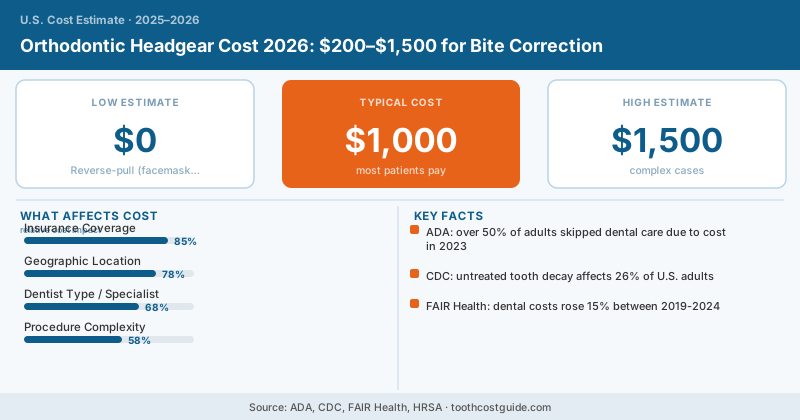
42% of orthodontic patients are now treated without ever touching the old-school appliances that defined braces in the ’90s — and headgear is the poster child for what’s fading. Still, it hasn’t vanished. For certain bite problems, headgear remains a legitimate (and cheap) tool, costing roughly $200 to $1,500 depending on the type and whether it’s bundled into your braces.
Headgear is an external appliance — straps that go around the head or neck, connected to the teeth — used to control jaw growth and tooth position by applying force from outside the mouth. It looks intimidating, but for the right case it does something internal appliances can’t.
| Headgear Type | Typical Cost | What It Corrects |
|---|---|---|
| Cervical-pull headgear | $200–$800 | Overbite, holds back upper jaw |
| High-pull headgear | $400–$1,200 | Overbite + vertical control |
| Reverse-pull (facemask) | $500–$1,500 | Underbite, pulls upper jaw forward |
| Bundled with full braces | Often $0 added | Part of comprehensive fee |
What Headgear Does
Headgear works by anchoring force to the back of the head or neck, then transferring it to the teeth or jaw. Cervical and high-pull versions hold the upper jaw back, correcting overbites in growing kids. The reverse-pull facemask does the opposite — it gently pulls a recessed upper jaw forward to fix underbites, which is its specialty and something few other appliances handle well.
The key word is growing. Headgear influences jaw development, so it’s almost exclusively a pediatric and teen tool used during active growth. Once growth stops, the window closes, and skeletal problems may then require surgical orthodontics instead — a five-figure proposition.
The hardware itself is inexpensive and usually bundled into a braces treatment fee. But headgear only works if it’s actually worn — typically 12–14 hours a day. A kid who skips it wastes the investment, which is exactly why fixed appliances have largely replaced it.
Why It’s Used Less Today
Walk into an orthodontist’s office now and you’ll see far less headgear than a generation ago. The reason is simple: compliance. The American Association of Orthodontists has documented the field’s shift toward fixed appliances precisely because removable, patient-dependent devices like headgear so often failed when patients didn’t wear them.
Fixed alternatives like the Herbst appliance and Forsus correct overbites without relying on a teenager’s discipline — they’re cemented in and work 24/7. For underbites, though, the reverse-pull facemask still has a real role, since few internal appliances pull the upper jaw forward as effectively. The CDC reports that malocclusion is among the most common dental conditions in American children, and for the subset with skeletal underbites caught early, the facemask remains valuable.
What Affects the Price
Type drives the cost — a basic cervical-pull rig sits at the low end, while a custom reverse-pull facemask runs higher. Whether it’s bundled matters most: inside a comprehensive treatment, headgear often adds nothing visible to the bill, landing your total in standard teen braces territory of roughly $4,500–$7,000.
Replacements add up if the appliance is lost or broken, which happens with kids. And as always, retention closes out treatment — plan on $150–$500 for a retainer to hold the corrected bite.
Insurance and Payment
Headgear falls under orthodontic treatment, so it’s covered by your ortho benefit if you have one — the usual $1,000–$2,500 lifetime cap. It isn’t billed as a separate medical device the way jaw surgery sometimes is.
For your share, an FSA for dental expenses covers it as eligible orthodontic care, and a CareCredit dental plan can finance a bundled treatment across monthly payments.
Headgear’s effectiveness lives or dies on wear time. If your child won’t reliably wear it the prescribed hours, talk to the orthodontist about a fixed alternative before committing — paying for headgear that sits in a drawer wastes both money and the limited growth window. An honest conversation upfront saves a failed phase later.
Bottom Line
Orthodontic headgear is an inexpensive, time-tested tool that still earns its place for specific growing-patient cases — especially underbites needing a facemask. The catch is compliance: it only works when worn. If your child can commit, it’s a bargain that can prevent costly surgery later. If not, ask about a fixed appliance instead.
Frequently Asked Questions
Orthodontic headgear typically costs between $200 and $1,500, depending on the type of appliance and whether it's bundled as part of a full braces treatment plan. When included in comprehensive orthodontic care, the headgear cost is often absorbed into the total treatment fee rather than charged separately.
Most dental insurance plans that cover orthodontics will include headgear as part of the overall treatment, though coverage varies by plan and typically caps orthodontic benefits at $1,000–$2,000 per lifetime. Your out-of-pocket cost depends on your deductible and coinsurance percentage, with many patients paying 20–50% of the total orthodontic expense after insurance.
Headgear is prescribed for specific bite problems, particularly Class II malocclusions where the upper jaw protrudes ahead of the lower jaw, and works best in growing patients (typically ages 8–14). Treatment duration ranges from 12 to 24 months, with patients typically wearing headgear 12–14 hours per day, often overnight and after school.