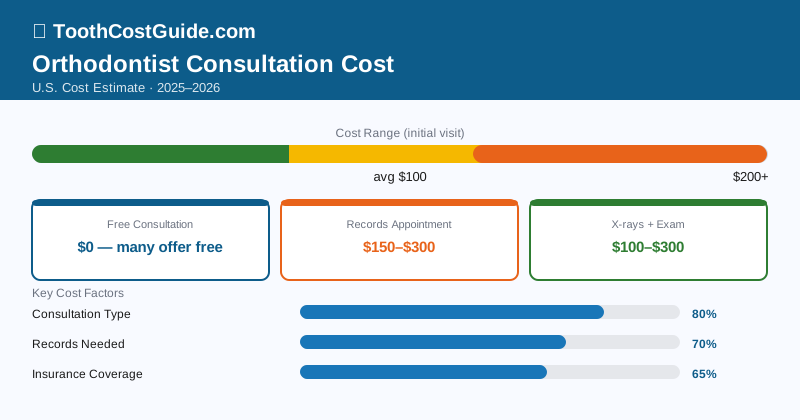
Here’s a fact that surprises a lot of people: you can walk into two or three orthodontic offices, have a full exam at each one, get treatment recommendations and cost quotes — and walk out having paid absolutely nothing. Most orthodontic consultations in the US are completely free. That’s the baseline expectation.
What you might pay for is diagnostic records — X-rays, scans, photos — if the practice takes them at the first visit. Sometimes you pay for those. Sometimes they’re included if you proceed with treatment. Sometimes they’re covered by your dental insurance under the diagnostic benefit. The variables matter, and this guide sorts them out.
| Consultation Component | Cost |
|---|---|
| Initial consultation (orthodontist exam + discussion) | $0 at most practices |
| Diagnostic X-rays (panoramic + cephalometric) | $100–$250 |
| Digital intraoral photographs | Typically included |
| Digital dental scan (iTero, 3Shape) | Typically included |
| Records fee (X-rays + photos + scan together) | $150–$350 |
| Second opinion consultation | $0–$150 |
| Re-examination after growth pause | $50–$150 |
Why Most Consultations Are Free
Orthodontic practices operate on a model where the comprehensive treatment fee is where revenue comes from — not the initial assessment. Offering a free consultation removes the financial barrier to shopping around, which most patients do. It’s a marketing standard that’s been the norm for decades.
The orthodontist’s time during that first exam is an investment in patient acquisition, not a billed service. So no, you’re not being tricked with a bait-and-switch. The free consultation is genuinely free.
What costs money — if anything — are diagnostic records: a panoramic X-ray ($100–$150), a cephalometric X-ray ($75–$150), and sometimes a digital scan. These are actual procedures with actual costs. Not every practice takes them at the first visit, and not every practice bills them to you even when they do.
Four Factors That Determine What You Pay
1. Records timing. Some orthodontists take a complete set of records at the first visit to give you a precise diagnosis and fee quote. Others do a visual exam first and take records only after you’ve decided to move forward. If records are taken at visit one, you might pay $150–$350 unless insurance covers them.
2. Insurance for records. Here’s a detail worth knowing: panoramic and cephalometric X-rays are billed under CDT codes D0330 and D0340. They may be covered under your dental plan’s diagnostic benefit — completely separate from the orthodontic benefit. This means your general dental coverage (not the ortho coverage) might pay for them. Worth checking before assuming you’ll pay out of pocket.
3. Whether records credit applies. Some practices credit the records fee toward your treatment if you proceed. Ask explicitly: “If I start treatment here, does this records fee apply toward the total?”
4. Second opinions. Most orthodontists extend the same free consultation policy to patients seeking second opinions. Occasionally a practice charges $50–$150 for a second-opinion visit. That’s reasonable given the clinical time involved — and still worth it for a $4,000 treatment decision.
The Five Stages of a First Orthodontic Exam
Stage 1 — Health history intake (5–10 min): You’ll fill out a form covering medications, previous dental work, any history of jaw pain or clicking, breathing habits (mouth breathing matters for orthodontic diagnosis), and family orthodontic history.
Stage 2 — Clinical examination (10–20 min): The orthodontist examines your teeth, gums, bite, jaw joints, and facial proportions. They’re checking for crowding, spacing, overbite, underbite, crossbite, open bite, and whether any discrepancy is dental (just the teeth) or skeletal (the jaw structure itself).
Stage 3 — Diagnostic records (if taken that day): Panoramic X-ray, cephalometric X-ray, photos, and a digital scan of your teeth. This takes about 15–20 minutes and gives the orthodontist everything needed to create an accurate treatment plan.
Stage 4 — Treatment discussion (10–20 min): The orthodontist explains what they found, what they recommend, how long it’ll take, and what it will cost. You’ll hear about appliance options — traditional braces, clear braces, Invisalign — and what might be the best fit for your case.
Stage 5 — Financial consultation: Most orthodontic offices have a dedicated financial coordinator (separate from the clinical team) who goes through insurance benefits, the total fee, payment plan options, and any outside financing like CareCredit.
Most orthodontic consultations are free, so there is essentially no financial barrier to getting multiple opinions. Getting consultations at 2–3 practices before committing to a treatment plan is strongly recommended — fees for equivalent cases vary by 15–40% within the same market, and clinical opinions on treatment approach can differ meaningfully.
What to Actually Bring
- Insurance cards for both dental and any orthodontic-specific benefit
- A list of current medications (some affect orthodontic planning)
- Recent dental X-rays if you’ve had them within 6–12 months — they might save you duplicate radiation and fees
- A written list of questions (you’ll forget half of them in the moment)
- For kids: any concerns about jaw clicking, mouth breathing, snoring, or difficulty chewing
The Questions Worth Asking — Broken Into Three Categories
Clinical questions:
- What’s the primary problem you’re treating — cosmetic, functional, or both?
- Am I a candidate for multiple treatment options, or is one approach clearly best for this case?
- Would you recommend early (Phase 1) treatment now, or is waiting for comprehensive treatment equally effective?
- What happens if treatment takes longer than estimated — is there any fee adjustment?
Cost and contract questions:
- What’s included in the total fee — adjustments, retainers, emergency appointments?
- What’s specifically not included, and what would those extras cost?
- What’s the payment plan structure and is there interest?
- Is the records fee credited toward treatment if I start here?
Credentials:
- Are you board-certified by the American Board of Orthodontics?
- How many cases similar to mine have you completed?
When You’ll Walk Out Having Paid Nothing
If the practice offers a standard free consultation and you choose not to have diagnostic records taken that day, you pay $0. Many orthodontists will give you a preliminary assessment and rough fee estimate without records — they understand you may be visiting multiple offices.
If you do have records taken, expect $150–$350 out of pocket unless your dental insurance covers the X-rays under the diagnostic benefit (check your plan’s D0330 and D0340 coverage before the appointment).
If a practice charges more than $200 for an initial consultation and does not credit it toward treatment, this is above market and worth noting when comparing providers. The norm is either free or free-consultation-with-records-charged-separately.
How NADP Research Frames the Shopping Opportunity
NADP (National Association of Dental Plans) data consistently shows that dental consumers who compare multiple providers before selecting one save an average of 18–27% on elective treatment costs. Orthodontics is one of the procedures with the widest fee variation between providers in the same geographic market. The American Association of Orthodontists reports that comprehensive treatment fees for equivalent cases vary by 15–40% within a single metro area.
Free consultations make this comparison completely accessible. There’s no financial reason not to visit two or three practices. A single afternoon of consultations can easily yield $500–$1,500 in savings on a $4,000–$7,000 treatment.
One Critical Note for Kids
The American Association of Orthodontists recommends every child have an initial orthodontic evaluation by age 7. Not because treatment necessarily starts at 7 — it usually doesn’t — but because certain jaw development problems are much easier (and cheaper) to correct during the growth window. This evaluation is free at virtually every orthodontic practice. If your child is 7–8 and hasn’t had one, there’s no reason to wait.
Financing the Records Fee
If records are charged, they’re almost always paid at time of service. There’s no meaningful financing need at $150–$350. FSA/HSA funds work perfectly for this — diagnostic X-rays and dental records are eligible expenses.
There is almost no reason not to get multiple free consultations before choosing an orthodontist. Fees for the same treatment vary widely between practices. Use free consultations to compare both the clinical approach and the total cost — then choose based on a combination of clinical experience, price, and comfort with the provider.
Frequently Asked Questions
Most orthodontist consultations in the US are completely free, with the baseline expectation being no charge for the initial exam and treatment recommendations. If the practice takes diagnostic records like X-rays, scans, or photos at your first visit, you may pay $0–$200 depending on the office, though many practices include these at no additional cost.
Most dental insurance plans cover orthodontist consultations at no out-of-pocket cost since they are diagnostic visits. However, if the practice charges for diagnostic records or advanced imaging, check with your insurance first, as coverage varies by plan and some insurers may not cover initial imaging fees.
Bring your photo ID, insurance card, and any relevant dental records from your general dentist. Most consultations take 30–60 minutes and include a full exam, discussion of treatment options, and a cost estimate for braces or aligners, so plan accordingly and bring a list of any questions about your specific orthodontic concerns.