Most patients assume gum disease means a deep cleaning. Sometimes it does. But when pockets are deeper than 5–6mm and don’t respond to scaling and root planing, the next step is osseous surgery — and the cost jumps significantly.
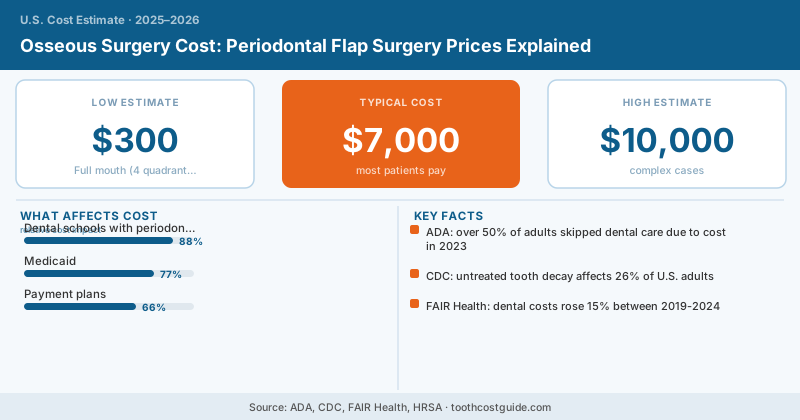
Osseous surgery (also called periodontal flap surgery or pocket reduction surgery) runs $1,000–$3,000 per quadrant without insurance. A full mouth treatment could cost $4,000–$10,000+. That’s a number worth understanding before you sit in the chair.
What Is Osseous Surgery?
The periodontist pulls back the gum tissue to directly access the roots and bone underneath. They clean deposits off the roots, reshape any irregular bone (the “osseous” part), then suture the tissue back down tighter around the teeth. The goal is eliminating the deep pockets where bacteria hide and cause ongoing bone loss.
It’s more invasive than a regular deep cleaning, and it’s done under local anesthesia — sometimes with IV sedation if multiple quadrants are treated in one visit. Recovery takes a week or two.
Osseous Surgery Cost by Quadrant
| Treatment Scope | Estimated Cost (No Insurance) |
|---|---|
| 1 quadrant (6–8 teeth) | $1,000–$3,000 |
| 2 quadrants (half mouth) | $2,000–$5,500 |
| Full mouth (4 quadrants) | $4,000–$10,000 |
| With bone grafting (per site) | Add $300–$800 per graft |
| With IV sedation (if added) | Add $500–$1,500 |
Prices vary by city and practice. New York, Los Angeles, and San Francisco typically run at the upper end. Rural Midwest or Southeast markets tend to be 20–35% lower. The periodontist’s fee includes pre-surgical X-rays, the procedure itself, and at least one post-op follow-up.
What Does Insurance Cover?
Dental insurance typically classifies osseous surgery as a major service, reimbursed at 50% after the deductible — once annual maximums are met. A plan with a $1,500 annual maximum paying 50% after a $100 deductible would cover roughly $700 of a $1,500 procedure. You’d pay the rest.
The CDC reports that approximately 47.2% of American adults aged 30 and older have some form of periodontal disease, with 8.9% having severe disease that may require surgical intervention. The American Academy of Periodontology notes that untreated periodontitis is the leading cause of tooth loss in adults over 35 — which makes the insurance math worth navigating, even when it’s frustrating.
Check your plan’s annual maximum before authorizing surgery. If you’ve already used most of your $1,500–$2,000 benefit on other work this year, you may be better off scheduling osseous surgery in January when your benefit resets. Ask your periodontist’s billing coordinator — they do this math every day.
Osseous Surgery vs. Alternatives
Osseous surgery isn’t always the first or only option. Your treatment path depends on pocket depth and bone loss severity.
| Treatment Option | Pocket Depth | Typical Cost |
|---|---|---|
| Regular cleaning (prophylaxis) | 1–3mm (healthy) | $75–$200 |
| Scaling and root planing (SRP) | 4–6mm | $200–$400/quadrant |
| Periodontal maintenance | After SRP or surgery | $150–$300/visit |
| LANAP laser surgery | 5mm+ (alternative to osseous) | $2,000–$8,000 total |
| Osseous surgery | 5mm+ (not responding to SRP) | $1,000–$3,000/quadrant |
Many patients can avoid osseous surgery if they catch gum disease early and complete scaling and root planing faithfully, followed by consistent 3–4 month periodontal maintenance appointments. The surgery becomes necessary when SRP hasn’t resolved the disease or when bone defects are severe enough that they won’t heal without reshaping.
Is a Second Opinion Worth It?
For a procedure costing $3,000–$10,000, a second opinion is almost always worth the $100–$200 consultation fee. Some patients referred for osseous surgery by a general dentist find that a periodontist recommends a more conservative approach first. Others find the referral was appropriate and the surgery genuinely necessary.
Get the second opinion from a board-certified periodontist (DDS or DMD + 3-year periodontal residency), not just another general dentist.
Reducing the Cost
Dental schools with periodontal programs perform osseous surgery at dramatically reduced fees — often 50–65% below private practice rates. Treatment takes longer because faculty must supervise, but clinical outcomes are comparable.
Medicaid covers periodontal surgery in some states for qualifying adults, but coverage is inconsistent. Check your state’s adult dental benefit summary.
Flexible Spending Accounts (FSA) and Health Savings Accounts (HSA) can cover osseous surgery — it’s a medically necessary dental procedure. Paying with pre-tax dollars effectively saves 22–32% depending on your tax bracket.
Payment plans are almost universally available. CareCredit and Scratchpay both offer 0% promotional financing for 6–18 months for procedures over a threshold amount.
The Cost of Doing Nothing
Skipping recommended osseous surgery has predictable consequences: continued bone loss, deeper pockets, loose teeth, and eventual extraction. A single tooth extraction with implant replacement costs $3,000–$5,000. Multiply that by two or three teeth and you’ve far exceeded the cost of the surgery that could have prevented it.
If your periodontist has recommended osseous surgery with clinical documentation — probe depths, bone loss on X-rays, failed response to conservative treatment — it’s a recommendation worth taking seriously, even if the upfront cost is painful.
Frequently Asked Questions
Osseous surgery typically costs $1,000–$3,000 per quadrant without insurance. Most patients require treatment on multiple quadrants, which means total costs can range from $2,000–$12,000 depending on how many areas of your mouth need the procedure.
Many dental insurance plans cover 50% of osseous surgery after you meet your deductible, though some plans may cover only 40%. However, many plans classify it as a surgical procedure with annual maximums of $1,000–$2,000, meaning you could still owe $500–$2,500 out-of-pocket even with coverage.
Scaling and root planing (deep cleaning) costs $150–$350 per quadrant and should be your first treatment if gum pockets are 5–6mm or less. If your pockets don't improve within 4–6 weeks or are already deeper than 6mm, osseous surgery becomes necessary to prevent tooth loss, so delaying it only increases your risk of more expensive extractions later.