Q: I love my dentist, but she’s out of network. Does my dental insurance pay anything?
A: Usually, yes — more than people assume. Most PPO dental plans reimburse out-of-network care, just at a lower rate and with more paperwork on you. Understanding how that reimbursement is calculated is the difference between getting a decent check back and feeling cheated.
Why out-of-network costs more (but isn’t zero)
When a dentist is in your plan’s network, they’ve agreed to discounted “contracted” fees. Out of network, there’s no such agreement, so the dentist charges their full fee — and your plan reimburses based on its own number, not the dentist’s.
That number is called UCR: Usual, Customary, and Reasonable. It’s the maximum the insurer considers a fair price for a procedure in your area. Your plan pays its coverage percentage of the UCR, and you cover the rest — including any amount the dentist charges above UCR.
| Step | In-network crown | Out-of-network crown |
|---|---|---|
| Dentist’s charge | $1,000 (contracted) | $1,400 (full fee) |
| Plan’s allowed amount (UCR) | $1,000 | $1,100 |
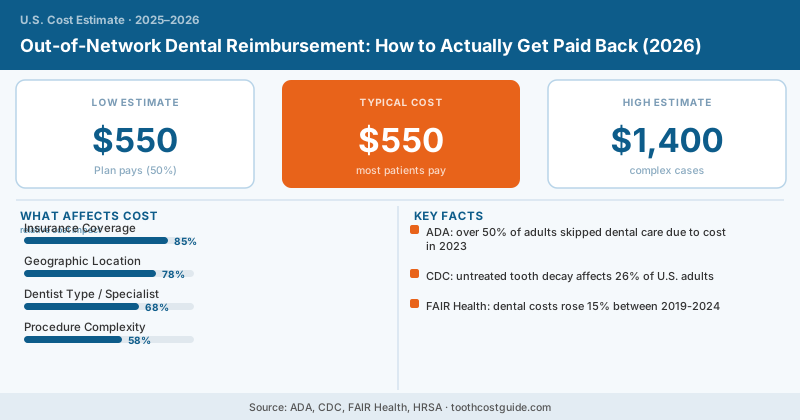
| Plan pays (50%) | $500 | $550 |
| You owe | $500 | $850 |
See the gap? Out of network, you pay your coinsurance plus the $300 the dentist charged above UCR. That “balance billing” is the real cost of going out of network.
The reimbursement process, step by step
With an in-network dentist, the office bills your insurer and you just pay your share. Out of network, you may have to pay the dentist in full up front and get reimbursed yourself. Here’s how:
- Pay the dentist and get an itemized receipt with procedure (CDT) codes.
- Get a claim form from your insurer’s website or member portal.
- Attach the receipt and any X-rays or notes the dentist provides.
- Submit before the deadline — most plans require claims within 12 months of service.
- Wait for the EOB, which shows the UCR, what they paid, and where any check is going.
Always ask your out-of-network dentist’s office whether they’ll “bill insurance as a courtesy.” Many will submit the claim for you even though they’re not in network, so you’re not stuck doing paperwork or fronting the entire cost. If they won’t, request the itemized receipt with CDT codes the same day — you’ll need those codes to file the claim yourself, and chasing them down weeks later is a headache.
How to maximize what you get back
A few moves genuinely increase your reimbursement:
- Get a predetermination first. For anything major — a root canal, bridge, or implant — have the dentist submit the planned treatment to your insurer in advance. You’ll see the UCR and your expected reimbursement before you commit, with no surprises.
- Check your plan’s UCR percentile. Some plans set UCR at the 80th percentile of area fees, others at the 90th. Higher means more reimbursement. It’s in your plan documents.
- Negotiate the dentist’s fee. Out-of-network offices sometimes match or come close to UCR if you ask, especially for cash-paying patients.
- Use pre-tax dollars for the gap. The balance you owe is a qualified expense — pay it through an FSA or HSA.
The National Association of Dental Plans has reported that PPO-style plans — the kind that allow out-of-network care with reimbursement — are by far the most common dental plan type in the U.S. So if you’ve got dental insurance, there’s a strong chance out-of-network reimbursement is available to you. (DHMO plans are the exception — they usually pay nothing out of network.)
Check your plan type before you assume you’ll get reimbursed. A DHMO (dental HMO) typically covers care only at assigned in-network providers and pays zero for out-of-network visits. A PPO reimburses out-of-network at a reduced rate. If you’ve got a DHMO and want to keep an out-of-network dentist, you’ll be paying full cash price — consider whether a dental discount plan would actually serve you better.
Is it worth staying out of network?
Sometimes, absolutely — a dentist you trust for complex work can be worth the extra cost. But for routine cleanings and basic care, the savings from going in-network are real. Weigh the reimbursement gap against your reasons for staying, and when in doubt, get that predetermination. The CDC has reported that cost is a leading barrier to dental care for adults, so knowing your real out-of-pocket number before the appointment is the smartest thing you can do.
Frequently Asked Questions
If your dentist charges $200 but your plan's allowed amount is $120, you'll typically pay the full $200 upfront, then file a claim for reimbursement of 50–80% of that $120 allowed amount (usually $60–$96). The remaining out-of-pocket difference of $104–$140 is your responsibility, though some plans credit a portion toward your deductible.
Yes, most PPO and indemnity plans do cover out-of-network dental work, typically at 50–80% of the plan's allowed (UCR) fee rather than the negotiated in-network rate. However, HMO plans usually cover out-of-network care only in emergencies, so check your plan documents or call your insurer before scheduling.
Most dental insurers process out-of-network claims within 2–4 weeks of receiving complete documentation, though some may take up to 6–8 weeks if additional information is needed. You can speed this up by submitting the claim yourself with an itemized receipt (Form 1500 or your dentist's invoice) rather than waiting for the dental office to file on your behalf.