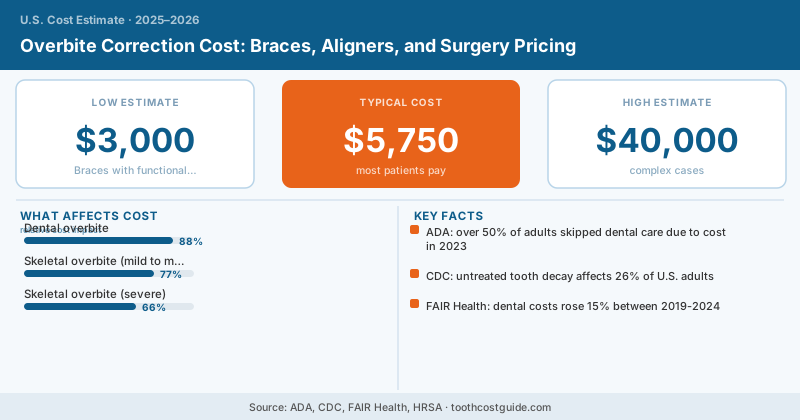
A normal overbite is 2–4mm — the upper front teeth should overlap the lower ones by about that much. Anything beyond 4–5mm is considered a deep overbite, and 10–30% of orthodontic patients present with one significant enough to require targeted correction, according to data from the American Association of Orthodontists. What does fixing it actually cost? The answer depends heavily on severity.
The Three Levels of Overbite Correction
Dental overbite: The teeth are positioned too far forward or back, but the jaws themselves are properly aligned. Braces or aligners can correct this without surgical intervention.
Skeletal overbite (mild to moderate): The jaw positions contribute to the problem. Orthodontics can often compensate by moving teeth to achieve a functional result, though facial profile changes may be limited.
Skeletal overbite (severe): The jaw discrepancy is large enough that tooth movement alone can’t create a stable, functional result. Surgery (orthognathic surgery) is required alongside orthodontic treatment.
Most adults and teens with overbites fall into the first two categories. Surgical cases are the minority but come with the highest costs.
Overbite Correction Cost by Treatment
| Treatment | Typical Cost Range |
|---|---|
| Traditional metal braces (dental overbite) | $3,000–$6,000 |
| Ceramic braces (dental overbite) | $4,000–$7,500 |
| Invisalign with bite correction | $4,500–$8,000 |
| Braces with functional appliance (Herbst, etc.) | $4,500–$7,000 |
| Braces + orthognathic jaw surgery (full package) | $15,000–$40,000 |
| Jaw surgery alone (hospital + surgeon fees) | $20,000–$40,000 |
How Orthodontists Correct Dental Overbites
For dental overbites without a jaw discrepancy, traditional braces or clear aligners move teeth into positions that create a normal bite relationship. This typically involves:
- Bite ramps or bite turbos: Small acrylic stops bonded to the upper front teeth to keep molars slightly apart, encouraging vertical growth and bite opening.
- Interarch elastics: Rubber bands worn between upper and lower brackets to pull the jaw into proper relationship.
- Functional appliances: For growing patients, a Herbst appliance or Twin Block can guide jaw growth forward while braces align teeth simultaneously.
Treatment time for a dental overbite: 18–30 months for most cases.
Does Invisalign Work for Overbites?
Invisalign has improved significantly for bite correction. For mild-to-moderate dental overbites, Invisalign with Mandibular Advancement (a feature that moves the lower jaw forward in teenagers using special fins on the aligners) or with prescribed interarch elastics can achieve good results.
Severe deep overbites and skeletal cases remain better handled by fixed braces. Your orthodontist should show you before-and-after cases they’ve treated with aligners before you commit to that approach for a bite correction case.
Adults don’t have the facial growth that makes overbite correction easier in teenagers. An adult with a moderate overbite may need extraction of teeth to create space, or accept a less dramatic correction than a teen would achieve. Some adults in their 30s and 40s who want significant profile changes elect surgery even for moderate skeletal discrepancies — the orthodontic-only result isn’t always as satisfying.
Surgical Cases: What Drives the Cost
Orthognathic surgery for severe overbite correction is a major financial undertaking. The components include:
- Pre-surgical orthodontics (12–18 months): $3,000–$6,000
- Oral and maxillofacial surgeon fees: $6,000–$12,000
- Anesthesiologist: $1,500–$3,000
- Hospital/surgical facility fees: $6,000–$15,000
- Post-surgical orthodontics (6–12 months): $2,000–$4,000
Total: $20,000–$40,000. When jaw surgery is medically necessary — functional issues with chewing, TMJ dysfunction, breathing obstruction — medical insurance sometimes covers the surgical component. The orthodontic portions remain dental and go through dental insurance.
Insurance Coverage
For children and teens, many dental insurance plans cover orthodontics with a lifetime benefit of $1,000–$2,500, which takes a meaningful bite out of braces costs. For adults, orthodontic benefits are less common and often lower.
The ADA notes that only about 3% of dental insurance plans provide meaningful adult orthodontic benefits — so most adults self-pay for braces or use dental financing.
Watch out for orthodontists who diagnose every patient’s overbite as requiring the most comprehensive (and expensive) treatment. A genuine second opinion from another orthodontist costs $0–$150 and is always worth it for treatment plans over $5,000. Overbite correction approaches legitimately vary — a more conservative plan may achieve 90% of the result for 60% of the cost.
Bottom Line
Correcting a dental overbite with braces or Invisalign costs $3,000–$8,000 and resolves most cases in 18–30 months. Functional appliances for growing patients add $500–$1,500. Surgical cases are the expensive exception — $20,000–$40,000 total — but may have medical insurance coverage for the surgical component. Get two opinions before committing to any treatment plan over $5,000.
Frequently Asked Questions
Traditional metal or ceramic braces for overbite correction typically cost $3,000–$7,000 in the US, with treatment lasting 18–36 months depending on severity. Lingual braces (hidden behind teeth) run higher at $8,000–$10,000 due to the specialized placement required.
Many dental insurance plans cover 50% of orthodontic treatment up to a lifetime maximum of $1,500–$2,000, but overbite correction must be deemed medically necessary rather than purely cosmetic. You'll typically pay the remaining balance out-of-pocket, which can range from $1,500–$5,000+ depending on your plan and the treatment method chosen.
Invisalign for overbite correction costs $4,000–$8,000 and takes 12–24 months, compared to braces at $3,000–$7,000 over 18–36 months. Invisalign is often more expensive but faster, though it works best for mild to moderate overbites; severe cases may require traditional braces or surgery.