Most patients assume cavity treatment means drilling. Ozone therapy is proving that wrong — and it costs less than you think.
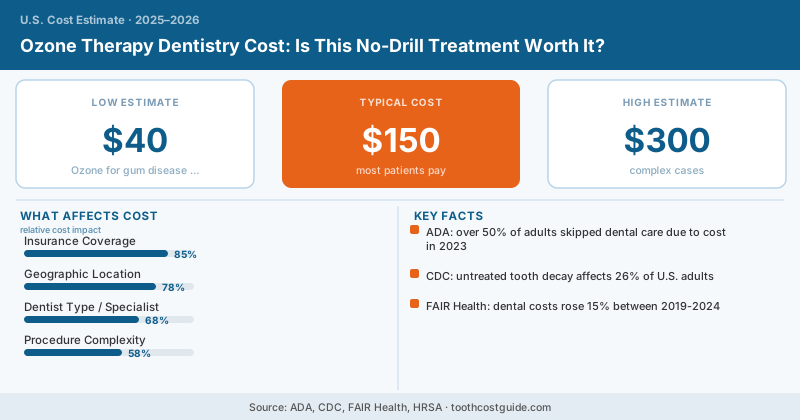
That doesn’t mean ozone works for every cavity. But for early decay, the research is solid: ozone gas and ozonated water kill the bacteria driving the decay process, create conditions for natural remineralization, and in many early-stage cases, do it without a single turn of a drill bit. The cost ranges from $50 to $300 per session, depending on the application method and how many teeth are treated.
What Ozone Therapy Actually Does
Ozone (O₃) is a highly reactive form of oxygen. In dental applications, dentists deliver it as a gas directly onto a tooth surface, or as ozonated water irrigating a gum pocket or root canal. The ozone disrupts bacterial cell walls, killing decay-causing organisms like Streptococcus mutans within seconds.
A 2004 study published in the Journal of the American Dental Association found that ozone treatment significantly reduced S. mutans bacteria counts compared to controls, with measurable cavity reversal in early enamel lesions at a six-month follow-up. The Heal Ozone and OzoneMax systems — the two most widely used clinical delivery devices — both deliver ozone concentrations sufficient to eliminate over 99% of target bacteria in a single application.
It’s not magic. Remineralization still requires saliva, fluoride, and adequate home care to follow through. But for the right patient with early decay, it’s a legitimate alternative to “wait and drill.”
Cost Breakdown by Treatment Type
| Ozone Application | Typical Cost |
|---|---|
| Single tooth spot treatment | $75–$150 per tooth |
| Full-mouth ozone rinse/irrigation | $100–$250 per session |
| Ozone in root canal therapy | $150–$300 (add-on to root canal) |
| Ozone for gum disease (adjunct) | $100–$200 per quadrant |
| Ozone sensitivity treatment | $50–$125 per visit |
| Ozone water rinse (preventive) | $40–$75 as add-on to cleaning |
Prices vary significantly by geography. In major metro areas (New York, LA, San Francisco), expect to pay at the upper end. In mid-size cities and rural areas, the lower end is more typical.
Insurance: Almost Never Covered
Don’t expect your dental insurance to pick this up. Major carriers — Delta Dental, Cigna, MetLife, Aetna — generally classify ozone therapy under “non-covered investigational procedures.” That classification hasn’t caught up to the evidence base, frankly, but it’s the reality right now.
Your FSA or HSA is a different story. Because a licensed dentist is performing the treatment in a clinical setting, it qualifies as a deductible dental expense under IRS guidelines. If you’ve got funds sitting in an FSA about to expire, ozone treatment is a legitimate use.
Ozone therapy is most effective for:
- Early enamel cavities that haven’t broken through to dentin
- Sensitivity treatment where bacterial infection is irritating exposed dentin
- Preventive treatment in high-risk patients between fillings
- Root canal adjunct to improve sterilization before sealing
- Gum disease — ozone irrigation alongside scaling and root planing
It’s not a substitute for fillings in moderate-to-large cavities, nor does it replace extractions for badly infected teeth.
Ozone vs. Traditional Drilling: A Real Comparison
For a small occlusal cavity (the kind on the chewing surface of a molar), a traditional filling runs $150–$350. An ozone treatment session for that same early cavity runs $75–$150. If ozone reverses it — no filling needed — you’ve saved money. If ozone holds it stable for two to three years before you eventually need a filling, you’ve bought time while keeping the tooth more structurally intact.
The math works in ozone’s favor for early decay. The problem is most cavities aren’t caught that early. If your dentist sees a cavity, it’s often already at the stage where drilling is the only real option.
Finding an Ozone Dentist
Not every dental practice offers ozone therapy. You’re most likely to find it at:
- Holistic or biological dentists who emphasize minimally invasive care
- Pediatric dentists who want to avoid drilling in anxious young patients
- Cosmetic dentistry practices with advanced technology suites
The American College of Integrative Medicine and Dentistry (ACIMD) maintains a practitioner directory. Searching “ozone dentist near me” on Google Maps also surfaces practices that list it as a service — check that they specifically mention HealOzone, OzoneMax, or ozonated water to confirm they have actual equipment, not just a talking point.
Ozone therapy from an unqualified provider carries risk. At improper concentrations, ozone gas is irritating to lung tissue and mucous membranes. Only seek ozone dental treatment from a licensed dentist using FDA-cleared clinical equipment — not DIY ozone generators sold online.
Is It Worth the Out-of-Pocket Cost?
For patients with early-stage cavities or high decay risk, probably yes. A $100–$150 ozone session that reverses a pit-and-fissure lesion and delays or prevents a $250 filling is a reasonable trade — especially if you’re uninsured or have a high deductible.
For patients with established cavities already into dentin, skip it for those teeth. The ozone won’t reach the infection depth required, and you’ll have paid $100–$150 before still needing a filling.
Talk to your dentist honestly about where the decay actually is. If it’s caught early, ozone therapy is one of the most cost-effective preventive investments in modern dentistry.
Frequently Asked Questions
Ozone therapy typically runs $50–$300 per treatment session, with per-tooth applications costing $75–$150 and full-mouth ozone rinse protocols costing $100–$250. Some practices bundle ozone treatment with a cleaning or exam visit, which can bring the per-session cost down if you're already paying for other services.
Dental insurance almost never covers ozone therapy because most major carriers classify it as an unproven or experimental treatment. You'll generally pay out of pocket, though FSA and HSA funds can be used since ozone treatment is a qualified medical/dental expense administered by a licensed provider.
Ozone therapy can effectively treat early-stage cavities (enamel lesions and very early dentin lesions) without drilling by killing the bacteria causing decay and promoting remineralization. However, it can't reverse moderate or large cavities where significant tooth structure is already lost — those still require conventional drilling and filling.