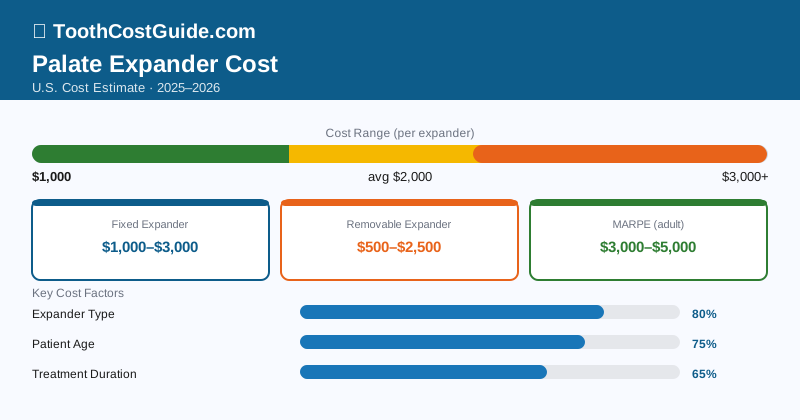
Age matters enormously when it comes to palate expanders — and so does your wallet. A child who gets one at 9 pays $1,000–$2,500 and experiences a relatively straightforward six months of expansion. An adult who missed that window might face a $5,000–$10,000 surgical procedure to accomplish the same goal. The gap between those two scenarios is why timing is such a recurring theme in orthodontic conversations about expansion.
Here’s the complete breakdown of what palate expanders cost, what type is right for which situation, and how insurance fits into the picture.
| Expander Type | Cost Without Insurance |
|---|---|
| Fixed (bonded) palate expander | $1,000–$2,500 |
| Removable palate expander | $1,000–$2,000 |
| Rapid palatal expander (RPE) | $1,500–$3,000 |
| Implant-supported expander (MARPE) | $2,000–$5,000 |
| Surgically assisted palate expansion (adults) | $5,000–$10,000 |
| Expander included in Phase 1 treatment | Often bundled $1,500–$3,500 |
Five Things That Determine What You’ll Pay
Type of device. Fixed expanders are custom-fabricated by a dental lab, cemented to the molars, and can’t be removed by the patient. Removable expanders work like a retainer that you take out to eat and brush. Fixed devices are generally more expensive — lab costs run $200–$500 for the fabrication alone — and that gets factored into the orthodontist’s fee. Removable expanders are lower cost but work only when they’re in your child’s mouth, which isn’t always guaranteed.
Standalone vs. bundled into Phase 1. Most children who need an expander also need some follow-up orthodontic work. Many orthodontists will quote the expander as part of a Phase 1 package (including space maintainers, limited braces, or other early treatment). When bundled, the expander cost isn’t separately itemized — the package price of $1,500–$3,500 covers everything. This can actually be better value than a standalone expander at $2,000 if additional early treatment is warranted.
How long treatment runs. Active expansion typically takes 3–6 months. But the device stays in for another 6–12 months while the bone fills in behind the expanded suture. Some orthodontists price the whole period as one fee; others bill retention separately. Know which model you’re signing up for.
Geography. Orthodontic fees in large metropolitan areas run 20–40% higher than in rural or small suburban markets. The same expander that costs $1,200 in Omaha might cost $2,200 in Boston.
Adult vs. child. Once the mid-palatal suture fuses — typically in the late teens to early twenties — traditional expansion no longer works without surgical assistance. Adults need either a MARPE device (implant-anchored expansion for those in their late teens to mid-twenties) or surgical expansion (SARPE), which adds oral surgery fees, anesthesia, and sometimes hospital facility costs on top of the expander itself.
Palate expanders are most effective — and least invasive — in children ages 7–14 while the mid-palatal suture is still open. In adults, the suture is fused and expansion requires either a surgically assisted approach or specialized implant-anchored devices, both of which cost significantly more.
The Device Guide: Which Expander and What It Costs
Rapid Palatal Expander (RPE) — $1,500–$3,000
The workhorse of early orthodontic intervention. Cemented to the upper first molars, with a central screw mechanism that a parent turns with a small key — typically once per night at the prescribed increment. It’s one of those devices that sounds medieval but works very effectively. Most children with narrow upper arches causing crossbite or crowding end up with an RPE or something very close to it.
Bonded (Tooth-Borne) Expander — $1,000–$2,500
Similar to the RPE but with an acrylic pad covering the palate and bonding to premolars and first molars. Used when the standard molar anchoring isn’t ideal — for instance, when the child is in between shedding primary molars and erupting permanent ones. Also helpful when specific back teeth need to be held in position during expansion.
Removable Expander — $1,000–$2,000
Looks like a retainer. Contains an expansion screw. Less expensive than fixed options and easier for the child to keep clean. The significant downside is compliance — it only works when it’s being worn, and kids are often creative about reasons why they “forgot” to put it in. Best for minor expansion needs in children who are genuinely cooperative.
MARPE (Miniscrew-Assisted Rapid Palatal Expander) — $2,000–$5,000
A newer appliance that bypasses the teeth entirely, using small titanium mini-screws anchored directly into the palate bone. Because it’s bone-anchored rather than tooth-anchored, it can achieve skeletal expansion in older teens and young adults (roughly 16–25) who are past the ideal window for conventional RPE. Increasingly prescribed as an alternative to jaw surgery for patients in their late teens.
SARPE (Surgically Assisted Rapid Palatal Expansion) — $5,000–$10,000+
Adults with a fully fused suture who need significant expansion have one realistic option: surgery. An oral surgeon makes controlled cuts in the bone to allow the expander to widen the arch. The total cost combines the expander itself ($1,500–$2,500) with the surgery ($3,000–$6,000) and anesthesia fees. Hospital facility charges may add another $1,000–$3,000 depending on where the procedure is performed.
Insurance: What Typically Gets Covered
Dental plans with orthodontic benefits generally treat palate expanders as medically necessary orthodontic appliances. Here’s how coverage typically plays out:
- Who’s covered: Plans usually cover expansion devices for patients under 18 or 19. Adult coverage is limited and sometimes requires prior authorization with medical necessity documentation.
- Lifetime orthodontic maximum: Most plans offer $1,000–$3,000 per patient. The expander cost draws against this same lifetime maximum.
- Coverage percentage: Generally 50% of the allowable cost, up to the lifetime cap.
- Medical insurance crossover: When expansion is documented as medically necessary — for obstructive sleep apnea, cleft palate correction, or other medical diagnoses — medical insurance may cover some costs. This requires prior authorization and detailed clinical documentation from your orthodontist and any relevant physicians.
Some insurance companies will deny coverage if the expander is not pre-authorized. Before starting treatment, have your orthodontist submit a pre-treatment estimate (predetermination of benefits) to confirm coverage. This is not a guarantee of payment but gives you a realistic picture of out-of-pocket costs before committing.
Q&A on Palate Expander Costs
Q: My child’s orthodontist quoted Phase 1 at $2,500. That includes an expander and some other early treatment. Is that reasonable?
Yes, that’s within normal range for a bundled Phase 1 package in most US markets. You’d pay $1,500–$3,500 depending on your city and what’s included. The value of bundled pricing is that you’re not getting nickel-and-dimed for individual components.
Q: Is a second opinion on early treatment worth getting?
Absolutely, especially because palate expanders are sometimes recommended when watchful waiting is equally appropriate for mild crowding in a young child. A second opinion can confirm whether early intervention genuinely improves outcomes or whether comprehensive treatment at 12–13 will achieve the same result at lower total cost.
Q: My 24-year-old needs expansion. What’s realistic?
At that age, traditional RPE isn’t going to achieve skeletal expansion. You’re looking at MARPE if a specialist thinks there’s enough skeletal response potential, or SARPE. Get a CBCT scan evaluated by an orthodontist or oral surgeon who has experience with adult expansion. Costs will be meaningfully higher than pediatric expansion.
Yes. Palate expanders are qualified FSA/HSA expenses. Using pre-tax dollars saves 22–37% depending on your tax bracket. If you know a child will need an expander in the coming year, consider increasing FSA contributions during open enrollment.
How to Pay Less
Dental school orthodontic clinics. Orthodontic residency programs treat Phase 1 cases — including palate expansion — at 30–50% below private practice fees. Care is provided by supervised resident doctors. The American Association of Orthodontists maintains a program finder at aaoinfo.org. Not all cases are accepted, and treatment timelines can be longer, but savings can be $500–$1,500 on expansion alone.
Ask about Phase 1 and Phase 2 together. If comprehensive braces will follow the expander, ask the orthodontist to quote both phases together. Some practices offer a combined-phase discount when you’re committing to the full treatment course.
Time it correctly. Optimal expansion age is roughly 8–12 years. Delaying past the ideal window makes the procedure more complex and more expensive. Follow the AAO’s recommended first evaluation at age 7 — that’s the checkpoint for catching arch development issues before they become pricier to fix.
The earlier a palate expander is placed during childhood, the simpler and less invasive the expansion process. Adults who missed early treatment face either MARPE devices or surgical expansion at significantly higher costs. When in doubt, schedule the AAO-recommended first orthodontic evaluation at age 7 to catch arch development issues early.
Frequently Asked Questions
A palate expander typically costs $1,000–$3,000 for children, with treatment lasting around six months. Adults requiring surgical expansion can expect $5,000–$10,000 since the procedure is more complex after the palate bones have fused.
Many dental insurance plans cover palate expanders as orthodontic treatment, though coverage varies by plan and may require pre-authorization. Most plans cover 50% of orthodontic costs up to a lifetime maximum of $1,500–$2,000, leaving you responsible for the remaining balance.
Children ages 7–14 are ideal candidates because their palate bones are still malleable and can expand naturally over six months with a removable device costing $1,000–$2,500. Adults past puberty have fused palate bones and require surgical intervention, making the procedure significantly more expensive and invasive.