Baby teeth don’t matter — they’re just going to fall out anyway. This is one of the most persistent and costly myths in pediatric dentistry. A premature baby tooth loss can derail the permanent tooth eruption pattern and create orthodontic problems worth thousands of dollars to fix.
Primary teeth do four things your child can’t afford to lose early: they hold space for permanent teeth, they support normal speech development, they allow proper chewing of a nutritious diet, and they give permanent teeth a guide path for eruption. When a baby tooth is too decayed for a filling to hold, a crown isn’t optional — it’s the difference between keeping the tooth functional or losing it years ahead of schedule.
Here’s what each crown type costs, when each is used, and what to expect from the appointment.
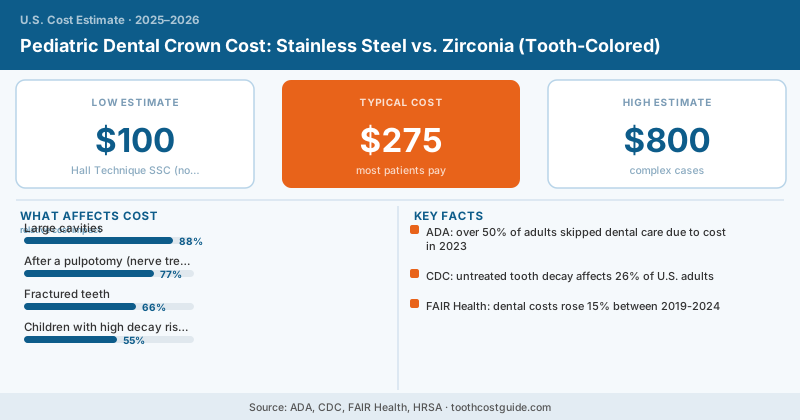
Pediatric Crown Costs at a Glance
| Crown Type | Cost Per Tooth | Placement Speed | Esthetic |
|---|---|---|---|
| Stainless steel crown (SSC) | $200–$400 | Single visit, 15–30 min | Silver/metallic |
| Zirconia crown (NuSmile, Kinder Krowns) | $400–$800 | Single visit, 20–45 min | Tooth-colored, natural-looking |
| Hall Technique SSC (no drilling) | $200–$350 | Single visit, 10–20 min | Silver/metallic |
| Dental school (pediatric dept.) | $100–$250 | Single visit | Varies by type |
Why Baby Teeth Sometimes Need Crowns
This is the question most parents ask first — and understandably so. The AAPD (American Academy of Pediatric Dentistry) clinical guidelines identify several situations where a crown is the correct treatment rather than a filling:
Large cavities. When decay involves two or more surfaces of a primary tooth, or when the remaining tooth structure is too thin to support a filling without fracturing, a crown is indicated. Fillings in these situations fail at high rates — especially in children, where perfect cooperation and moisture control are hard to achieve. A crown protects the entire remaining structure.
After a pulpotomy (nerve treatment). When decay has reached the pulp of a baby tooth, a pulpotomy (removal of the pulp from the crown portion of the tooth) is performed. Post-pulpotomy, the tooth becomes more brittle and prone to fracture. The AAPD guidelines specify that stainless steel crowns should routinely follow pulpotomy in primary molars — a filling is not adequate. According to AAPD clinical guidelines, SSC placement following pulp therapy in primary molars shows significantly better long-term outcomes compared to composite or amalgam restorations.
Fractured teeth. A broken primary tooth with significant structure loss needs a crown to restore function.
Children with high decay risk. In children with severe early childhood caries (rampant decay affecting multiple teeth), crowns on multiple teeth may be placed at once — often under general anesthesia for very young children.
Stainless Steel Crowns: The Standard
Stainless steel crowns have been used in pediatric dentistry for over 60 years. They’re the most studied, most durable option for primary teeth — and the standard of care for posterior primary teeth in most clinical scenarios.
Placement: The dentist removes the decayed tooth structure, reduces the height and width of the tooth slightly to create space for the crown, then selects a prefabricated SSC from a set of standardized sizes, crimps and adapts the margins, and cements it permanently. The whole process takes 15–30 minutes after the tooth is anesthetized.
Durability: An SSC placed on a primary molar at age 4 typically lasts until that molar naturally falls out at age 10–12. It doesn’t crack, doesn’t fall off, and doesn’t need monitoring for decay underneath (the full coverage seals the tooth). Parents commonly describe them as “bulletproof.”
The esthetic concern: They’re silver, which makes them visible when the child smiles or laughs. On back molars, this is rarely an issue. On front teeth (though SSCs are less often used anteriorly), it can be. This is the primary driver of interest in zirconia.
Zirconia Crowns: Tooth-Colored, More Involved
NuSmile, Kinder Krowns, and EZCrowns are among the major zirconia crown brands used in pediatric dentistry. Cost: $400–$800 per tooth.
Zirconia is a ceramic material that’s tooth-colored and highly durable — the same material used in adult dental crowns. The pediatric versions come prefabricated in sizes designed for primary teeth.
The tradeoff: Zirconia requires slightly more tooth reduction than SSC to create space for the ceramic material. The placement technique is similar, but the finishing steps take longer, and technique-sensitive cementation matters more for zirconia. Total appointment time is typically 20–45 minutes.
When zirconia is worth it: Front teeth (upper incisors) are the primary indication. Children with significant anterior cavities — common in severe early childhood caries — develop visible cosmetic concerns with SSCs. Tooth-colored zirconia crowns on upper front teeth are now widely used and produce results that genuinely look natural. Some parents request them on visible upper molars as well.
When SSC is better: Back molars, where esthetics aren’t the primary concern and where the bite forces are highest. SSC is more forgiving of heavy occlusal contact than zirconia, which can fracture under extreme force.
Some pediatric dentists use the Hall Technique for large cavities in primary molars: a stainless steel crown is fitted over the tooth without removing decay or drilling — small orthodontic separators create space between teeth first, then the crown is cemented over the cavity. Clinical research referenced in AAPD publications shows this approach achieves outcomes comparable to conventional crown placement in controlled studies, with less child distress and shorter appointments. It’s not universally offered, but for anxious children or cooperative patients with suitable lesions, it’s worth asking your pediatric dentist about specifically.
Medicaid, CHIP, and Private Insurance Coverage
Medicaid/CHIP: Stainless steel crowns are covered in all states for children enrolled in Medicaid or CHIP — they’re recognized as medically necessary restorative care. Zirconia crown coverage varies: some state Medicaid programs cover it at the same rate as SSC; others cover SSC only. Call your state’s Medicaid dental coordinator or ask the pediatric dentist’s billing team before assuming.
Private insurance: Most plans cover SSC at 50–80% after deductible under the restorative category. Zirconia crowns may be covered at the SSC rate (with the parent paying the difference), or fully covered, or classified as cosmetic and denied. The CDT codes are D2930 (SSC) and D2934 (resin-based crown on primary tooth, which some plans recognize for zirconia). Getting pre-authorization before the appointment protects you from surprise bills.
Behavior Management and Dental Anxiety
Crown placement requires a child to cooperate for 20–45 minutes in an open mouth position. Pediatric dentists are trained in behavior management techniques — tell-show-do, voice control, positive reinforcement — and most children do fine with local anesthesia alone.
For very young children (under 3), children with significant dental anxiety, or cases requiring multiple crowns at once, treatment under nitrous oxide sedation ($50–$150 extra) or general anesthesia may be appropriate. General anesthesia adds $1,000–$3,000+ to the total cost but allows all necessary work to be completed in one appointment — which is often more humane than repeated difficult appointments.
Dental cost estimates in this guide reflect U.S. national averages for 2025–2026. Pediatric crown costs vary by practice type, region, and insurance. Always request an itemized treatment plan and confirm coverage with your insurer before scheduling. Behavior management fees (nitrous oxide, sedation) are billed separately from the crown itself and may or may not be covered depending on your plan. Dental schools with accredited pediatric dentistry programs offer supervised care at significantly reduced cost and are appropriate for cooperative children with straightforward cases.
Frequently Asked Questions
Most dental insurance plans cover stainless steel crowns on primary teeth at 50–80% of the allowed fee, since they're classified as a restorative procedure rather than cosmetic. Medicaid and CHIP cover stainless steel crowns in all states. Zirconia crowns are covered in some Medicaid programs (coverage varies state by state) and by some private insurers, but many plans classify them as a cosmetic upgrade over the SSC standard and deny or reduce the benefit. Ask your insurer specifically: 'Do you cover D2934 (white/tooth-colored crown on primary tooth) at the same rate as D2930 (stainless steel crown)?' Get the answer before the appointment.
Yes — when the baby tooth's root resorbs naturally as the permanent tooth descends, the crown comes out with the tooth just like an uncrowded primary tooth would. The crown doesn't block or interfere with permanent tooth eruption. What *does* interfere with permanent tooth development is untreated infection or premature extraction of the primary tooth (which is why space maintainers are sometimes needed after early loss). A crown protects the tooth *in place* until its natural replacement time.
The Hall Technique is a method of placing stainless steel crowns without drilling — the crown is cemented directly over the decayed tooth after placing small orthodontic separators between the teeth. It's used by some pediatric dentists for cooperative children with large cavities in primary molars. Clinical research, including a long-term study cited in AAPD publications, found Hall Technique crowns had comparable outcomes to conventional crowns with less child distress and shorter appointment time. It's not appropriate for all cases, but for children with high dental anxiety, it's worth asking about specifically.