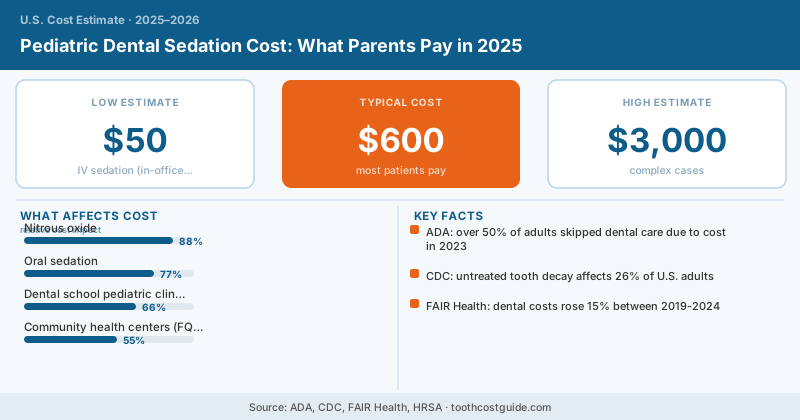
42% of children ages 6–17 have had at least one cavity in their permanent teeth, according to the CDC — and getting those cavities treated often requires managing a scared, squirmy, or uncooperative child. Sedation dentistry for kids isn’t a luxury. For many families, it’s the only way to safely complete necessary dental work.
But sedation adds significant cost to an already expensive visit. Here’s exactly what each option costs, what your insurance might cover, and how to decide which level is appropriate for your child.
Pediatric Sedation Options and Costs
| Sedation Type | Cost Range | Appropriate For |
|---|---|---|
| Nitrous oxide (laughing gas) | $50–$150 per visit | Mild anxiety, minor procedures |
| Oral sedation (liquid medication) | $150–$400 per visit | Moderate anxiety, longer procedures |
| IV sedation (in-office) | $400–$800 per visit | High anxiety, complex multi-tooth work |
| General anesthesia (hospital/surgery center) | $1,000–$3,000+ total | Young toddlers, special needs, extensive work |
Note: These costs are for sedation alone, added on top of the dental procedures themselves. A toddler needing fillings on six baby teeth under general anesthesia could have a total bill of $3,000–$6,000 including all procedures.
Nitrous Oxide: The Most Common (and Affordable) Option
Nitrous oxide — “laughing gas” — is the go-to sedation for children with mild to moderate anxiety. It’s administered through a nose mask, takes effect in 3–5 minutes, and wears off equally quickly once removed.
Cost: $50–$150 per visit. Some pediatric dentists include it in their treatment fees; others bill it separately.
The American Academy of Pediatric Dentistry (AAPD) endorses nitrous oxide as safe and effective for children 3 and older. It doesn’t require fasting, and kids can return to school the same day.
Many dental insurance plans cover nitrous oxide at 50–80% for medically necessary cases (significant anxiety, gag reflex, special needs). For routine use or parental preference, it may be excluded.
Oral Sedation: The Middle Ground
Oral sedation involves giving your child a liquid sedative medication — typically midazolam (Versed) — about 30–45 minutes before the procedure. The child becomes drowsy and relaxed but remains conscious and able to breathe independently.
Cost: $150–$400 per visit for the medication and monitoring. This is generally on top of procedure costs.
The AAPD reports that oral sedation is one of the most commonly used techniques in pediatric dentistry for moderately anxious or uncooperative young children. Your child will need an adult to drive them home and may be groggy for several hours.
Fasting requirements typically apply — usually nothing to eat or drink for 4–6 hours before the appointment.
Ask the pediatric dentist: (1) What medication will be used? (2) What monitoring equipment is in the office? (3) What’s their emergency protocol? The AAPD requires trained personnel and equipment for reversal agents during any sedation procedure. You have every right to ask.
IV Sedation: Deeper Sedation in the Office
IV sedation delivers sedative medication directly into the bloodstream, producing a deeper level of sedation than oral medications. The child may not remember the procedure at all (amnesia is a common side effect of benzodiazepine sedatives).
Cost: $400–$800 per visit for sedation alone, billed by the dentist or an anesthesiologist they bring into the practice.
Not all pediatric dental offices offer IV sedation — it requires specialized training and additional monitoring equipment. Look for offices where the dentist is board-certified in pediatric dentistry and has additional sedation training.
General Anesthesia: Hospital or Surgery Center
For very young children (under age 3), children with significant developmental or behavioral needs, or cases involving extensive dental work (10+ teeth), general anesthesia in a hospital or ambulatory surgery center may be the safest option.
This is the most expensive path. Here’s a typical cost breakdown:
- Dental procedures: $1,500–$3,500 (multiple fillings, crowns, extractions)
- Anesthesiologist fee: $500–$1,500
- Facility fee (hospital or surgery center): $500–$1,500
- Total out of pocket without insurance: $2,500–$6,500+
With insurance, general anesthesia at a hospital is often covered under your medical plan (not dental), significantly reducing the cost. The facility fee and anesthesiologist bill go to medical insurance; only the dental procedures go to dental insurance.
If your child needs general anesthesia for dental work, submit the anesthesiologist and facility bills to your health insurance, not your dental insurance. This is a common billing error that can cost families thousands. Confirm with both insurers before the procedure.
Does Dental Insurance Cover Pediatric Sedation?
Coverage varies dramatically by plan. Here’s the general landscape:
Nitrous oxide: Covered at 50–80% by many plans when medically necessary (anxiety disorder, special needs, gag reflex). Elective use may be excluded.
Oral sedation: Similar to nitrous — often covered partially for medical necessity, excluded for preference.
IV sedation and general anesthesia for dental work: This is where it gets complicated. Most dental plans have a sedation benefit capped at $100–$500 per year. The anesthesia and facility costs usually flow to the medical plan if performed in a hospital or surgery center.
Under the Affordable Care Act, pediatric dental coverage is an essential health benefit — but the sedation coverage specifics vary significantly between plans.
According to a 2022 AAPD survey, sedation-related costs were cited by parents as the top barrier to completing recommended dental treatment for anxious or special-needs children.
Finding Lower-Cost Options
Dental school pediatric clinics: Many dental schools have pediatric departments with residents trained in behavioral management and sedation. Costs run 40–60% below private practice. Wait times can be longer.
Community health centers (FQHC): Federally qualified health centers provide pediatric dental care on a sliding fee scale based on income. They must accept Medicaid and CHIP patients. Find one at findahealthcenter.hrsa.gov.
Medicaid and CHIP: If your family qualifies, Medicaid/CHIP dental coverage often includes sedation for medically necessary procedures. Coverage varies by state but is generally more comprehensive for children than adult Medicaid dental.
Timing multiple procedures: If your child needs several fillings, scheduling them all in one sedation session is far more cost-effective than multiple visits with separate sedation fees each time.
Is Sedation Worth It?
For most families who need it — yes. Untreated cavities in baby teeth cause pain, infection, and can affect the development of permanent teeth. If dental anxiety or your child’s age makes treatment impossible without sedation, sedation is the less expensive option compared to delayed treatment.
The AAPD also emphasizes that children who have positive dental experiences early — even if sedation is required — are more likely to maintain regular dental care as adults, which reduces lifetime dental costs substantially.
Frequently Asked Questions
Nitrous oxide (laughing gas) typically costs $75–$200 per appointment when added to a routine dental procedure. This is the most affordable sedation option and is often partially covered by dental insurance, leaving parents with $25–$100 out-of-pocket depending on their plan.
Most dental insurance plans cover 50–80% of nitrous oxide sedation costs, but coverage for oral sedation and general anesthesia varies significantly by plan and is often considered a specialty service. Many plans exclude general anesthesia entirely unless deemed medically necessary, which can leave parents paying $500–$1,500+ out-of-pocket for deeper sedation options.
Recovery from oral sedation typically takes 30–60 minutes, while general anesthesia may require 1–2 hours of monitoring before discharge. Children usually return to normal activities the next day, though parents should plan for a quiet afternoon and avoid strenuous play for at least 24 hours post-procedure.