42% of children referred for Phase 1 orthodontics don’t actually need it. That number comes from a landmark study published in the American Journal of Orthodontics and Dentofacial Orthopedics, and it’s one of the most important pieces of context a parent can have before agreeing to a $3,000 treatment plan for a seven-year-old.
Phase 1 (also called early interceptive orthodontics) is real treatment for specific, well-defined skeletal and dental problems. It’s also sometimes recommended more broadly than clinical evidence supports. Knowing the difference could save you thousands — or prevent your child from needing more complex treatment at 14.
Cost Breakdown
| Treatment | Typical Cost |
|---|---|
| Phase 1 limited braces (partial) | $1,500–$3,500 |
| Palate expander (RPE) alone | $800–$2,000 |
| Phase 1 braces + expander | $2,500–$4,500 |
| Phase 2 comprehensive treatment (Phase 1 patients) | $1,500–$3,000 additional |
| Comprehensive treatment (no Phase 1) | $3,000–$7,000 |
| Orthodontic consultation | $100–$250 (often free) |
When Phase 1 Is Genuinely Indicated
The American Association of Orthodontists recommends children have an orthodontic screening by age 7 — not to start treatment at 7, but to identify the small subset of cases where early intervention changes outcomes. Those cases include:
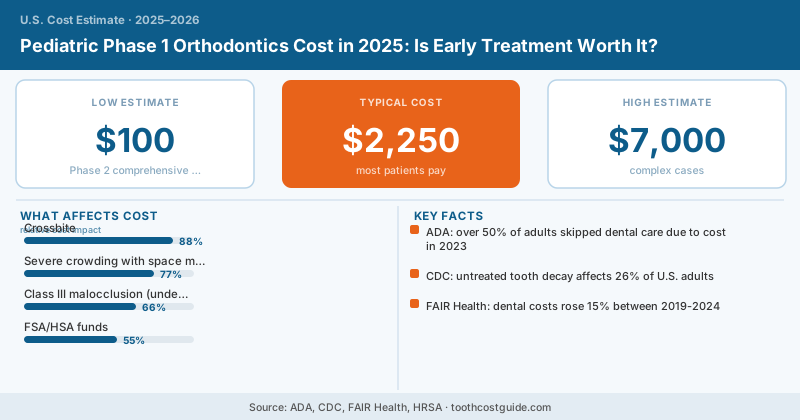
Crossbite — When upper teeth bite inside lower teeth, the jaw grows asymmetrically in response. A palate expander or crossbite correction in childhood can correct skeletal patterns that would require jaw surgery in adulthood. This is the clearest indication for Phase 1 treatment.
Severe crowding with space management — If early tooth loss from decay is causing space collapse, a space maintainer or limited expansion can preserve arch space. Actual Phase 1 braces for “too crowded” in a 7-year-old are rarely indicated — mixed dentition crowding often resolves as permanent teeth erupt.
Anterior open bite from thumb sucking or tongue thrust — If a habit is causing skeletal change before age 8, early intervention can redirect growth. After age 9–10, the window narrows.
Class III malocclusion (underbite) — Jaw relationships are easier to modify during active growth. Protraction face mask treatment in childhood can reduce or eliminate the need for jaw surgery later.
For these specific issues, Phase 1 treatment provides genuinely different outcomes than waiting. For mild crowding, spacing, and overbites that don’t involve skeletal components, the evidence for Phase 1 is weaker — these cases typically respond equally well to comprehensive treatment at 11–13.
Phase 1 doesn’t eliminate Phase 2. Most children who complete Phase 1 treatment still need comprehensive treatment at 11–14 when all permanent teeth have erupted. The total two-phase cost — $4,000–$7,500 — is often more than a single comprehensive treatment at the right age ($3,000–$7,000). Before agreeing to Phase 1, ask your orthodontist: “Will this child still need full braces later? And what is the combined total cost?” Get that in writing.
Getting a Second Opinion — And Why It Matters
Phase 1 recommendations vary more across orthodontists than almost any other pediatric dental decision. The AAPD’s own clinical guidelines note that Phase 1 is indicated in specific situations and caution against routine early treatment without skeletal justification.
If you receive a Phase 1 recommendation, a second opinion from a different orthodontist is reasonable and common practice. Ask specifically:
- “What clinical finding requires treatment now rather than at age 11?”
- “What happens if we watch and wait until the permanent teeth come in?”
- “Will my child definitely need Phase 2 after this?”
- “What is your fee for Phase 2, and is any Phase 1 credit applied?”
Many orthodontists offer initial consultations for free or at low cost ($100–$250). The consult for a second opinion is almost always worth it.
Insurance Coverage for Phase 1
The American Association of Orthodontists reports that orthodontic coverage is available through approximately 50% of dental insurance plans. Phase 1 coverage is complicated:
Most plans with orthodontic benefits include a lifetime maximum (typically $1,000–$2,000) that applies to orthodontic treatment broadly — not per phase. If insurance pays out during Phase 1, the lifetime maximum is partially or fully consumed, leaving less for Phase 2 comprehensive treatment.
Some plans specifically exclude Phase 1 or limit coverage to one “course of orthodontic treatment” per lifetime. Read the orthodontic benefit section carefully before starting.
FSA/HSA funds can be used for both Phase 1 and Phase 2 orthodontics. Many orthodontic offices offer interest-free payment plans for the portion not covered by insurance.
Be cautious if an orthodontist recommends Phase 1 treatment at a general screening or school dental fair rather than following a proper clinical examination with full records (photographs, panoramic x-ray, cephalometric x-ray). A complete orthodontic workup before recommending treatment is standard of care. Recommendations made from a quick look in the mouth, without diagnostic records, shouldn’t be the basis for starting a $3,000 treatment plan.
When Waiting Is the Right Choice
For most mild-to-moderate issues in a 7-to-9-year-old, monitoring every 6–12 months and deferring treatment until 11–13 is appropriate and evidence-supported. The permanent teeth erupt, you get a clearer picture of arch development, and comprehensive treatment addresses everything at once.
Waiting doesn’t mean ignoring. Your child’s dentist or orthodontist should be checking bite development at regular intervals. The goal is to catch the specific situations (crossbite, skeletal Class III, habit-related skeletal change) where the window for intervention matters — and let everything else wait.
Bottom Line
Phase 1 orthodontics costs $1,500–$4,500 and is genuinely valuable for specific skeletal and bite problems caught before growth patterns set. For other cases, waiting for comprehensive treatment at 11–13 achieves the same outcome at lower total cost. Get a second opinion, ask what happens if you watch and wait, and confirm the total two-phase cost before committing. The right question isn’t “is Phase 1 cheaper?” — it’s “does my child’s specific problem require treatment now?”
Frequently Asked Questions
Phase 1 orthodontics typically costs between $1,500 and $4,500 for children ages 6–10, depending on your location, the orthodontist's experience, and the complexity of your child's case. Most practices in urban areas fall in the $2,500–$3,500 range, while rural areas may be slightly lower.
Many dental insurance plans cover 50% of Phase 1 orthodontics after meeting a deductible, though some plans cover only 25% or exclude early interceptive treatment entirely. Out-of-pocket costs typically range from $750–$2,250 after insurance, but you should verify your specific plan's orthodontic benefits and lifetime maximums before starting treatment.
Phase 1 is genuinely needed only for specific skeletal or dental problems like severe crowding, crossbites, or underbites that interfere with growth—not for minor cosmetic issues or slight crowding that may self-correct. Before committing to a $3,000 plan, ask your orthodontist which specific condition your child has, whether waiting until all permanent teeth erupt would change the treatment plan, and get a second opinion if you're uncertain.