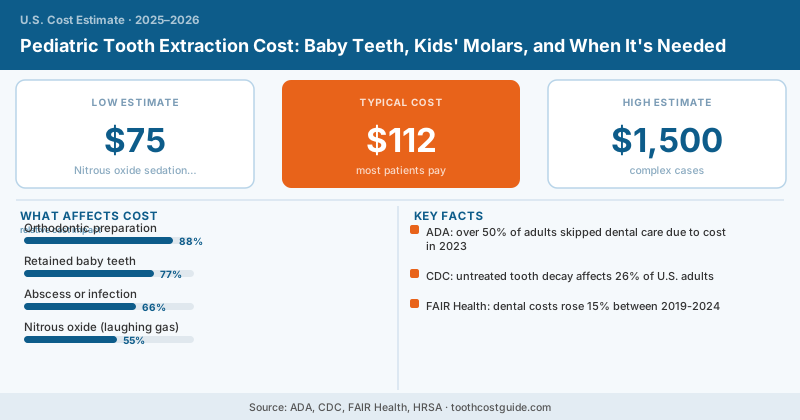
Most kids lose their baby teeth naturally. But when decay, overcrowding, or orthodontic planning gets involved, the dentist may recommend pulling a tooth — and parents suddenly face questions about cost, sedation, and whether a space maintainer is needed afterward.
| Procedure | Typical Cost |
|---|---|
| Simple baby tooth extraction | $75–$175 |
| Simple permanent tooth extraction (child) | $100–$250 |
| Surgical extraction (impacted or fragile root) | $180–$400 |
| Nitrous oxide sedation for extraction | $75–$150 additional |
| Oral conscious sedation (child) | $200–$500 additional |
| General anesthesia in dental office (full procedure) | $500–$1,500+ |
| Space maintainer after extraction | $200–$500 per area |
When Kids Need an Extraction
Not every loose baby tooth needs professional help — most will come out on their own. But extractions are genuinely necessary in several situations:
Severe decay (cavities that reach the nerve): When decay has progressed too far for a filling or baby root canal (pulpotomy), extraction is often the only remaining option. The American Academy of Pediatric Dentistry (AAPD) estimates that dental caries affects approximately 23% of children aged 2–11 in the U.S.
Orthodontic preparation: If a child has significant crowding, an orthodontist may recommend extracting baby teeth to guide erupting permanent teeth into better positions. This is called serial extraction and is typically planned over several years.
Retained baby teeth: Sometimes a baby tooth doesn’t fall out on its own even after the permanent tooth has erupted. The retained tooth can push the permanent tooth out of alignment and needs to come out.
Abscess or infection: A severe infection at the root of a baby tooth can threaten the developing permanent tooth beneath it. Extraction removes the infection source.
The Sedation Decision: This Is Where Costs Multiply
A straightforward baby tooth extraction with just local anesthetic runs $75–$175. That fee is manageable. What drives pediatric dental costs up significantly is sedation — and for young children or anxious kids, sedation is often clinically appropriate.
Nitrous oxide (laughing gas): The mildest option. The child inhales a mix of nitrous oxide and oxygen through a small nose mask, feels relaxed but stays awake and responsive. Most kids tolerate it well. Adds $75–$150 to the procedure cost.
Oral conscious sedation: A liquid sedative (usually midazolam or hydroxyzine) given 30–60 minutes before the procedure. The child is drowsy but awake. Requires monitoring and a parent escort home. Adds $200–$500.
In-office general anesthesia: For children under 3, very anxious children, or those needing multiple extractions in one visit, a pediatric anesthesiologist administers IV general anesthesia in the dental office. Effective and humane — but the anesthesiologist fee alone can run $500–$1,500.
Hospital or surgical center: For children with special healthcare needs or very extensive dental work, procedures may be performed in a hospital operating room under general anesthesia. Insurance may cover more of this cost when medical necessity is documented.
The American Academy of Pediatric Dentistry supports the use of sedation when behavioral management techniques alone are insufficient to provide safe, quality care. Sedation is not just about comfort — for a toddler with severe cavities in multiple teeth, attempting treatment without sedation can be traumatic and clinically inadequate. The cost is justified when the alternative is poor care or dental trauma that creates lifelong anxiety.
Insurance Coverage for Kids’ Extractions
Dental insurance typically covers pediatric extractions, including for baby teeth. Most plans cover:
- Simple extractions at 70–80% after deductible
- Surgical extractions at 50–80% after deductible
- Sedation coverage varies widely — nitrous oxide is often covered; general anesthesia for behavioral management is sometimes denied unless medical necessity is documented
CHIP (Children’s Health Insurance Program) covers dental care including extractions in most states. Medicaid covers extractions for eligible children in all states. If cost is a barrier, verify your child’s eligibility for these programs — income thresholds are higher than many parents expect.
What Happens After — The Space Maintainer Question
Here’s what parents often don’t plan for: after a baby molar is extracted, the dentist may recommend a space maintainer. This is a small wire appliance that holds the gap open, preventing adjacent teeth from drifting into the space before the permanent tooth erupts.
Cost: $200–$500 per space, usually covered at 50–80% by dental insurance under orthodontic or preventive benefits.
Without a space maintainer, teeth can shift into the gap, causing crowding of the permanent tooth when it eventually erupts — potentially requiring orthodontic treatment later. Not every extraction needs one (front tooth extractions rarely do), but molar extractions in younger children often do.
Extracting a decayed baby tooth isn’t always the cheapest option when you factor in what comes after. A baby root canal (pulpotomy) plus a stainless steel crown runs $300–$600 — more than an extraction. But it preserves the tooth and avoids the cost of a space maintainer. In many cases, the total cost of extraction plus space maintainer equals or exceeds the cost of the pulpotomy. Ask your dentist to run both cost scenarios before deciding.
Reducing the Bill
- Dental schools with pediatric programs: Pediatric dentistry residents perform extractions and sedation procedures at 30–50% below private practice rates
- FQHC clinics: Sliding-scale fees often bring out-of-pocket costs to near zero for qualifying families
- Multiple extractions in one visit: If several teeth need extraction, doing them together under one sedation event is dramatically cheaper than separate visits
- CHIP/Medicaid enrollment: Worth confirming eligibility before paying privately — benefits often exceed what parents expect
Frequently Asked Questions
A simple baby tooth extraction typically costs $75–$175 per tooth at a general dentist's office. If the tooth is impacted or requires surgical removal, costs can rise to $200–$300 or more depending on complexity and whether sedation is needed.
Most dental insurance plans cover 80% of necessary extractions after you meet your deductible, leaving you responsible for the remaining 20% out-of-pocket. However, some plans classify extractions as basic care (covered at 80–100%) while others may have waiting periods or exclude extractions for cosmetic/orthodontic reasons—check your plan details to confirm coverage.
A dentist may recommend extraction if the baby tooth has severe decay, is causing pain, is blocking permanent teeth from erupting (crowding), or is part of an orthodontic treatment plan to guide proper alignment. Most healthy baby teeth fall out on their own by age 12–13, so extraction is typically reserved for these specific problems.