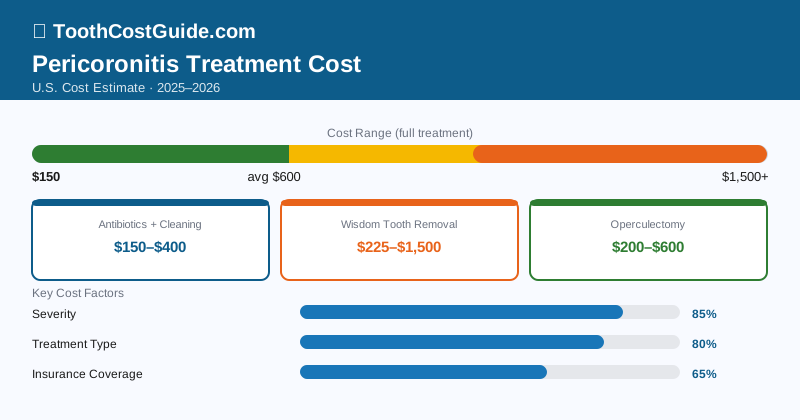
Pericoronitis is an infection of the gum flap covering a partially erupted wisdom tooth. The flap traps food and bacteria, gets inflamed, and when it gets infected — that’s pericoronitis. First episode, mild case: probably $150–$300 in antibiotics and irrigation. Recurring or severe? The definitive fix is extraction, running $300–$700 per tooth. Most dental professionals don’t hesitate to recommend extraction after the second episode.
| Treatment | Cost (No Insurance) |
|---|---|
| Emergency exam + X-ray/panoramic | $100–$350 |
| Antibiotics (amoxicillin or metronidazole) | $10–$60 |
| Pericoronitis irrigation/debridement | $75–$200 |
| Operculectomy (gum flap removal only) | $200–$400 |
| Wisdom tooth extraction (soft tissue) | $250–$450 per tooth |
| Wisdom tooth extraction (bony impaction) | $400–$700 per tooth |
| IV sedation (if desired, oral surgeon) | $300–$800 additional |
Conservative vs. Definitive: A Decision Framework
The first episode of pericoronitis on a wisdom tooth that might still erupt can reasonably be managed conservatively: antibiotics to knock out the acute infection, irrigation to flush the gum flap, wait and see. Total cost: $150–$300.
The second episode on the same tooth is a different conversation. If that wisdom tooth is impacted — meaning it can’t erupt fully because of angle, bone, or the adjacent molar — there is no amount of antibiotics that will prevent a third episode. The structural problem remains. Extraction is the answer.
An operculectomy — surgically removing the gum flap without extracting the tooth — is occasionally appropriate for well-positioned wisdom teeth expected to eventually erupt. It’s less common than extraction and costs $200–$400. It eliminates the flap but not the tooth, so if the tooth stays problematic, extraction is still coming.
What Drives the Price
How impacted the tooth is. A wisdom tooth partially erupted through soft tissue is easier to extract ($250–$450) than one buried in bone ($400–$700). More bone removal means longer surgery and higher fees.
Who does the extraction. General dentists handle straightforward soft-tissue cases. Complex bony impactions typically go to an oral and maxillofacial surgeon, who charges 20–40% more. The referral also adds another consultation visit.
How many teeth you remove. If all four wisdom teeth are problematic or at risk, removing them together in one appointment — often with IV sedation — costs $1,000–$3,000 total. Four separate procedures for four separate teeth costs more over time than one combined removal.
Sedation. Local anesthesia only is included in the extraction fee. Nitrous oxide adds $50–$150. IV sedation through an oral surgeon adds $300–$800 — often worthwhile for surgical impactions or anxious patients.
What the First Treatment Visit Looks Like
For uncomplicated pericoronitis, the dentist prescribes amoxicillin 500 mg three times daily or metronidazole 500 mg twice daily for 5–7 days. They’ll also irrigate under the gum flap with saline or chlorhexidine to flush out debris and bacteria. Relief typically comes within 48–72 hours. The infection resolves. The structural problem does not.
The conversation about extraction usually happens at this appointment or a follow-up. Most oral surgeons prefer to reduce the active infection first with antibiotics, then extract electively once inflammation has settled — extracting through an active infection carries higher complication risk.
What Insurance Covers
- Emergency exam and X-ray: 80–100% under diagnostic/preventive benefits
- Antibiotics: Covered under pharmacy benefits; GoodRx gets cost to $4–$20 without insurance
- Wisdom tooth extraction (erupted): 75–90% under basic oral surgery
- Wisdom tooth extraction (impacted): 60–80% under major oral surgery
- All four wisdom teeth: May exhaust annual maximums ($1,000–$2,000) — consider splitting across calendar years if the situation isn’t urgent
Estimated out of pocket with insurance:
- Conservative treatment (antibiotics + irrigation): $30–$80
- Single soft-tissue impaction extraction: $75–$150
- Single bony impaction at 70% coverage: $120–$210
Without insurance: Dental schools extract impacted wisdom teeth for $150–$300 per tooth — roughly half of private practice rates. Most have urgent care slots for acute infections.
Home Care While You Wait
Use a curved irrigation syringe ($5–$10 at pharmacies) to flush under the gum flap with warm saltwater or chlorhexidine every few hours. This removes the food and bacteria that feed the infection. Ibuprofen 400–600 mg every 6 hours manages pain and reduces inflammation. Take every prescribed antibiotic dose — don’t stop when the pain improves.
See a dentist within 24 hours of symptoms developing. Pericoronitis can worsen quickly, especially if you can’t clean the area around the partially erupted tooth.
Signs That Require Emergency Care
Pericoronitis is usually manageable at the dental level. It becomes dangerous when infection spreads.
Watch for: fever above 102°F, swelling extending below the jaw or into the neck, jaw stiffness or trismus (difficulty opening your mouth fully), or difficulty swallowing. Any of these warrant emergency care — call an ER, not a dental office.
Spreading pericoronitis can progress to submandibular space infection or Ludwig’s angina. It’s rare, but it happens to people who delay treatment.
Pericoronitis that recurs twice is a clear signal to extract the wisdom tooth. Conservative treatment with antibiotics buys time but doesn’t solve the underlying structural problem. The sooner you commit to extraction for a problematic tooth, the lower the total lifetime cost.
Pericoronitis with fever above 102°F, swelling extending below the jaw or into the neck, difficulty swallowing, or inability to open your mouth fully is a medical emergency. Go to an emergency room immediately — these are signs of spreading infection that can rapidly become life-threatening.
Pericoronitis costs $150–$300 to treat conservatively and $300–$700 per tooth to treat definitively with extraction. With dental insurance, extraction typically runs $100–$250 out of pocket. Dental schools cut costs by 50–60% for uninsured patients. Treat the acute infection first with antibiotics, then plan the extraction within 4–6 weeks once inflammation has resolved. Don’t let a second episode become a reason to procrastinate — it’s the same structural problem and the same answer.
Frequently Asked Questions
Treatment costs $150–$300 for a mild first episode managed with antibiotics and irrigation, while recurring or severe cases requiring wisdom tooth extraction run $300–$700 per tooth. Total pericoronitis care typically falls in the $150–$1,500 range depending on severity and whether extraction becomes necessary.
Most dental insurance plans cover antibiotic treatment and irrigation as preventive or basic care, though you may pay $50–$150 out-of-pocket depending on your deductible. Wisdom tooth extraction is usually covered at 50–80% under major restorative benefits, leaving you responsible for $100–$350 per tooth after insurance.
Mild first-time cases often resolve within 1–2 weeks with antibiotics (costing $10–$60), warm salt water rinses, and careful oral hygiene, avoiding extraction entirely. However, if pericoronitis recurs—which is common—dentists typically recommend extraction as the definitive solution to prevent repeated infections and complications.